- Prep
- 5 min
- Cook
- 15 min
- Total
- 20 min
- Servings
- 1
- Difficulty
- Beginner
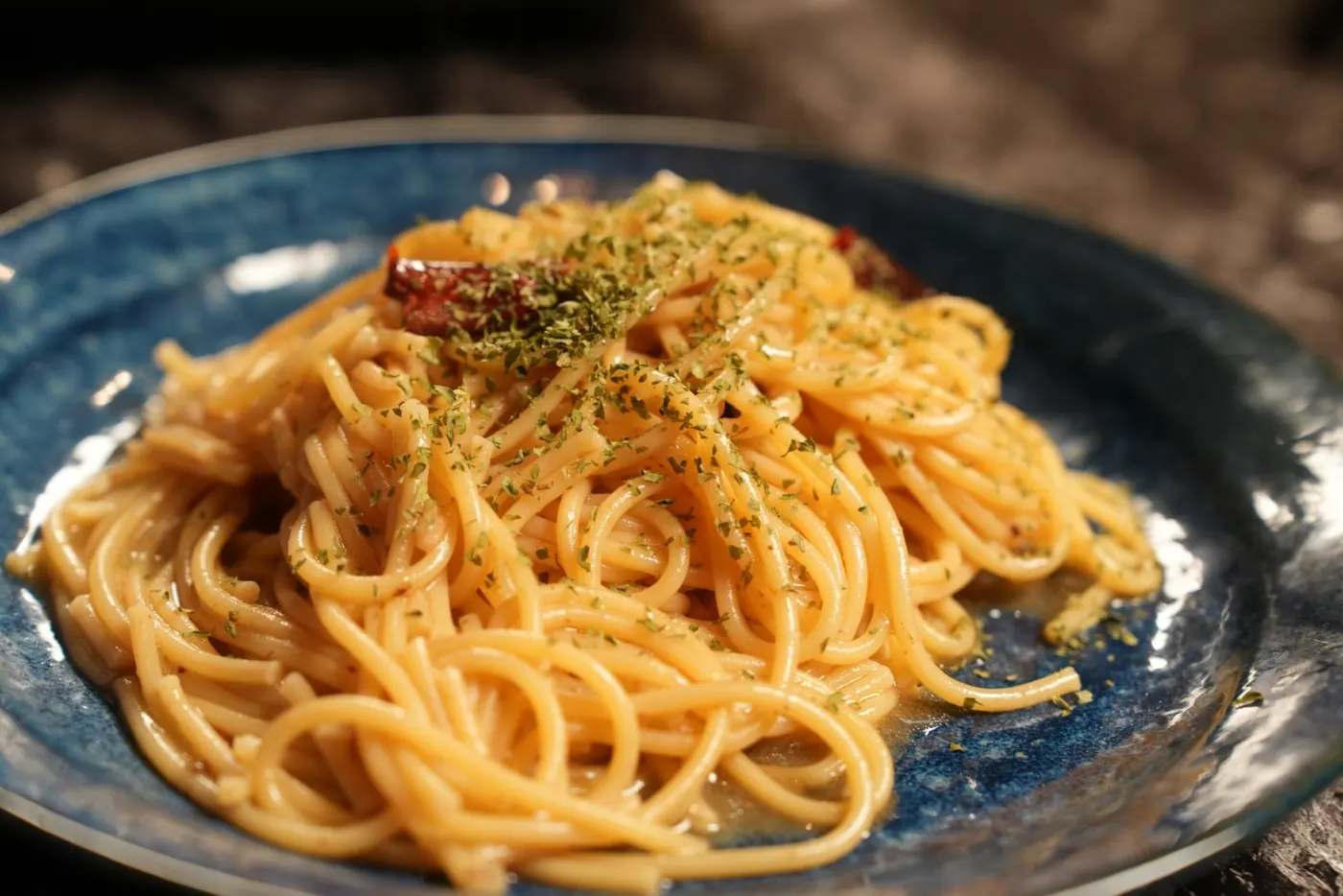
What is Japanese-Style Peperoncino?
Peperoncino (aglio, olio e peperoncino) is the simple Italian pasta with garlic, olive oil and chili. This is the Japanese-style (wafu) version, made in one pan: the spaghetti cooks right in the garlic oil with water and chicken bouillon, and a little soy sauce goes on at the end. Apart from the seasonings, the only add-ins are garlic and a dried chili pepper.
There's no separate pot of boiling water. The pasta soaks up the seasoned water as it cooks, and the starchy liquid left in the pan turns into a glossy sauce with the olive oil.
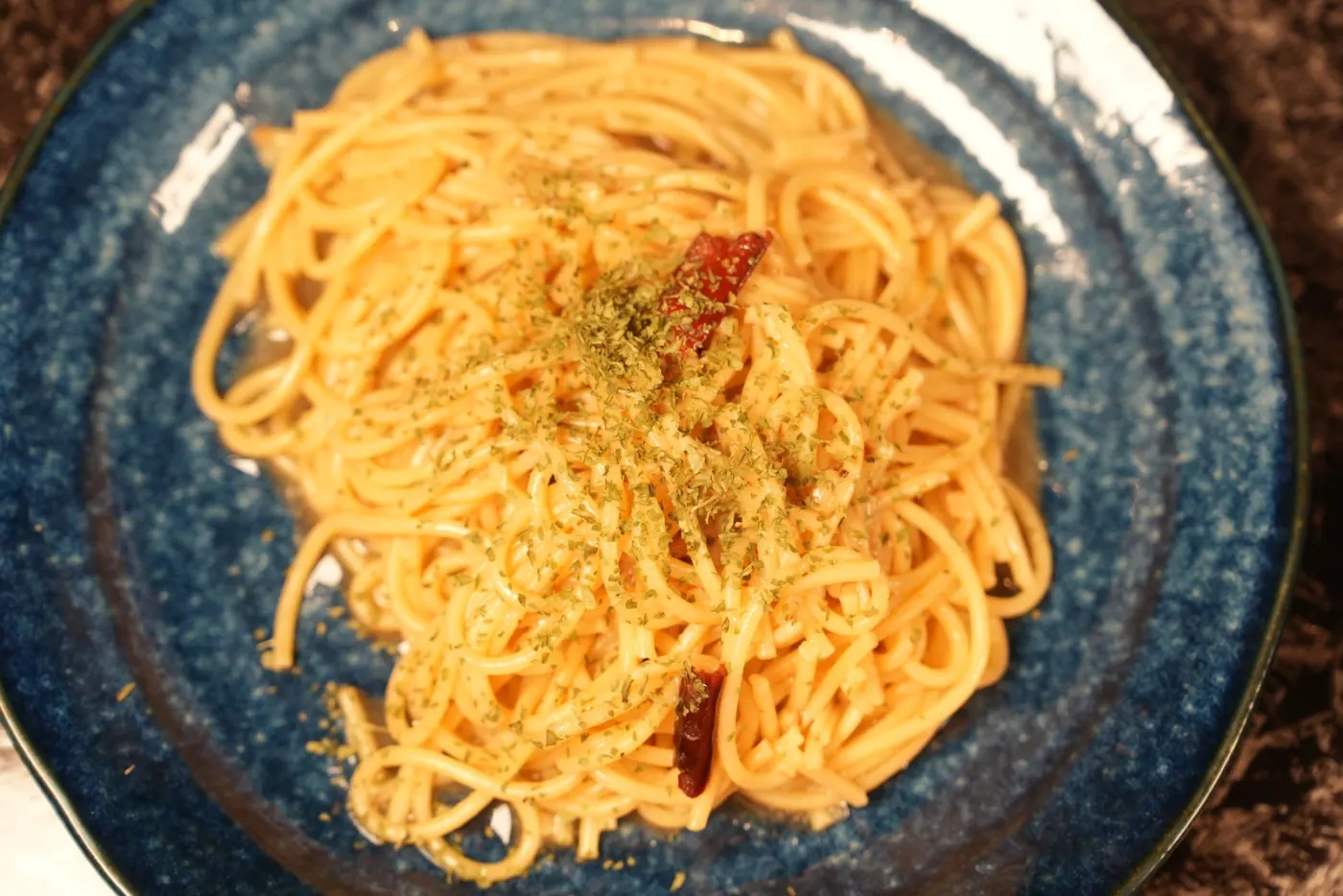
Why You'll Love This Recipe
- One pan, no draining - The pasta cooks right in the sauce
- Only two add-ins besides the seasonings - Garlic and a dried chili pepper
- More flavor than the classic - Chicken bouillon adds the savory taste plain peperoncino can lack
- A Japanese finish - A drizzle of soy sauce at the end
Key Points of This Recipe
- Chop the garlic roughly so it keeps some texture
- Add the chili pepper after the garlic has browned, because chili burns easily
- Cook the pasta in a small pan so all the water is absorbed
- Turn off the heat, add the second tablespoon of olive oil and stir quickly so the sauce emulsifies
Required Equipment
- Small frying pan (a larger one if you make 2 servings)
- Knife and cutting board
- Tongs or chopsticks
- Measuring cup
Japanese-Style Peperoncino Ingredients (Serves 1)
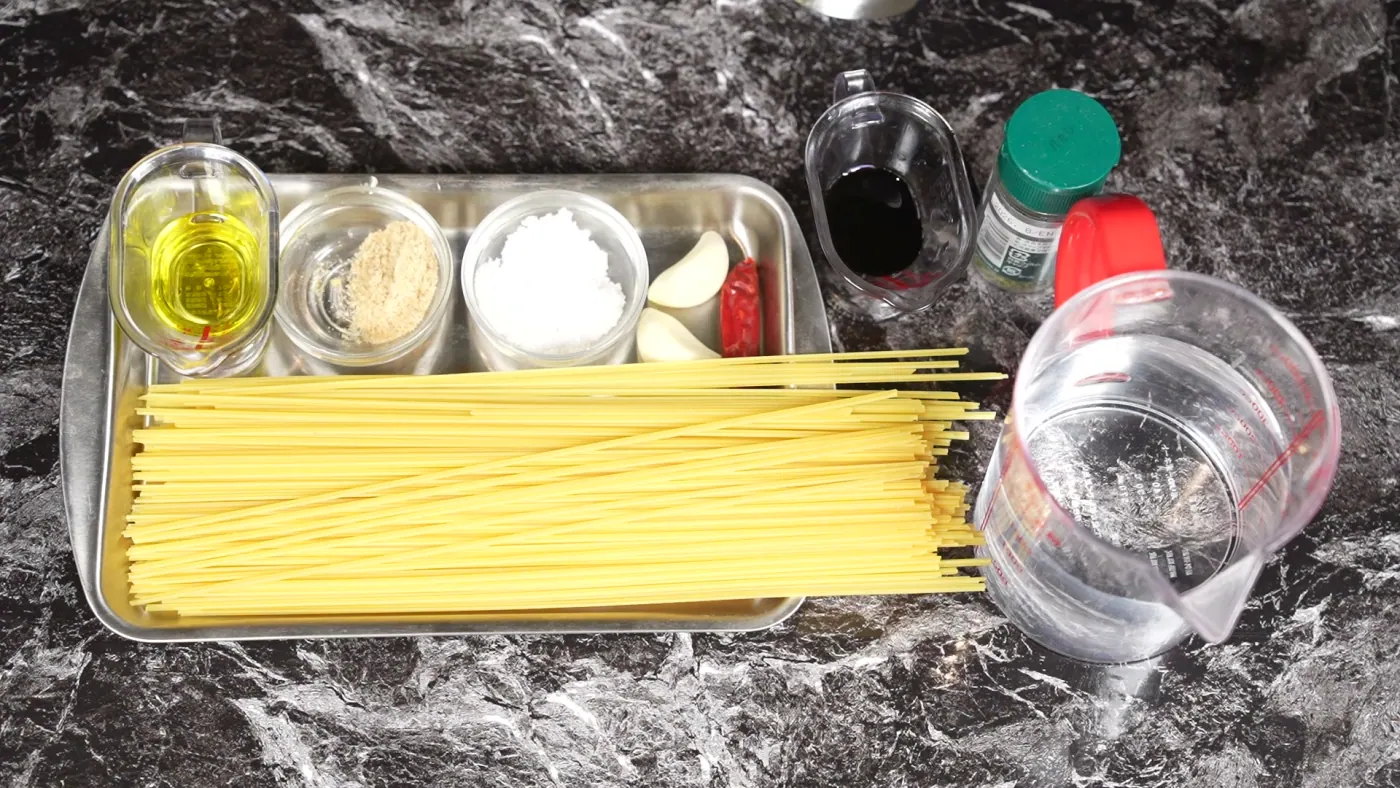
10 ingredients · 1 serving
Dried spaghetti, garlic, olive oil, dried red chili pepper, water, chicken bouillon powder, salt, parsley, A little soy sauce.
Full amounts in the recipe cardMaking more than one serving?
The water doesn't double with the pasta. Use a larger frying pan and:
- 2 servings: 500ml of water
- 3 servings: 700ml of water
Video Tutorial
The video shows how much the cooking liquid should cook down, and what the emulsified sauce looks like at the end.

How to Make Japanese-Style Peperoncino
Prep: Chop the Garlic
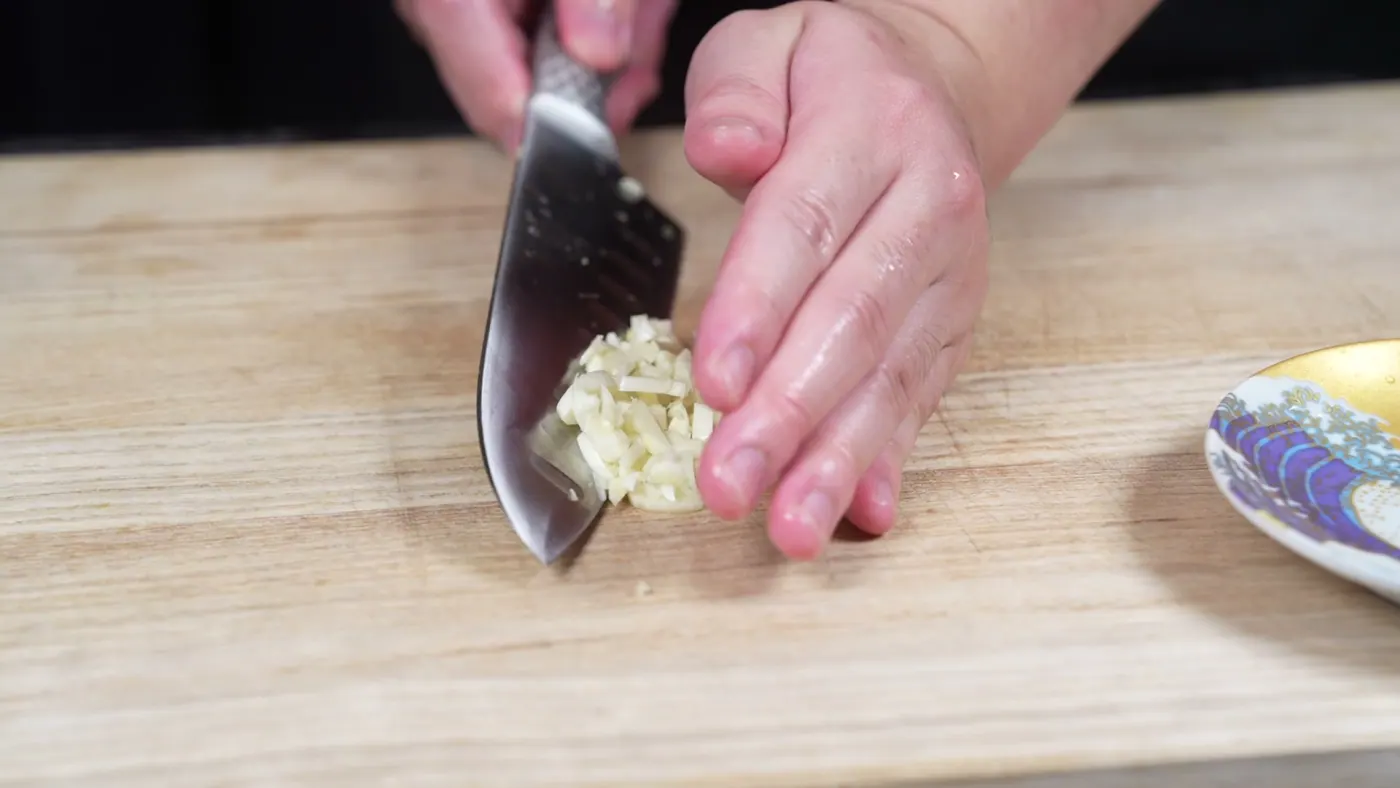
Chop the garlic roughly
Chop 2 cloves of garlic. There are only a few ingredients in this pasta, so chop the garlic roughly to leave some texture. That's the only cutting you need to do.
Make the Garlic Oil
Sauté the garlic in olive oil
This recipe is for one serving, so use a small frying pan. Add 1 tablespoon of olive oil and the chopped garlic, and sauté over high heat.
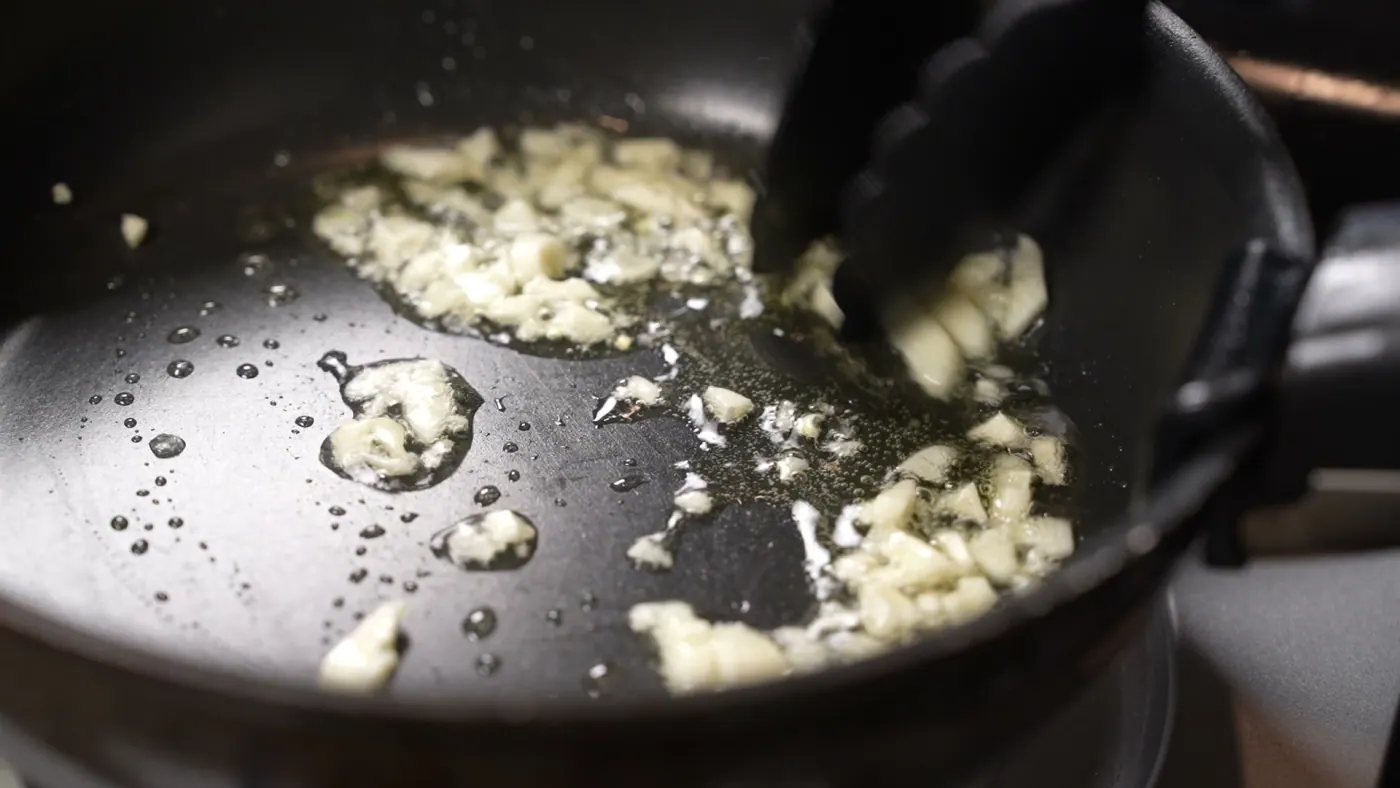
Brown the garlic at the side of the pan
Once the garlic starts to sizzle, move it to the side of the pan and fry it until it turns slightly brown. Be careful not to burn it.
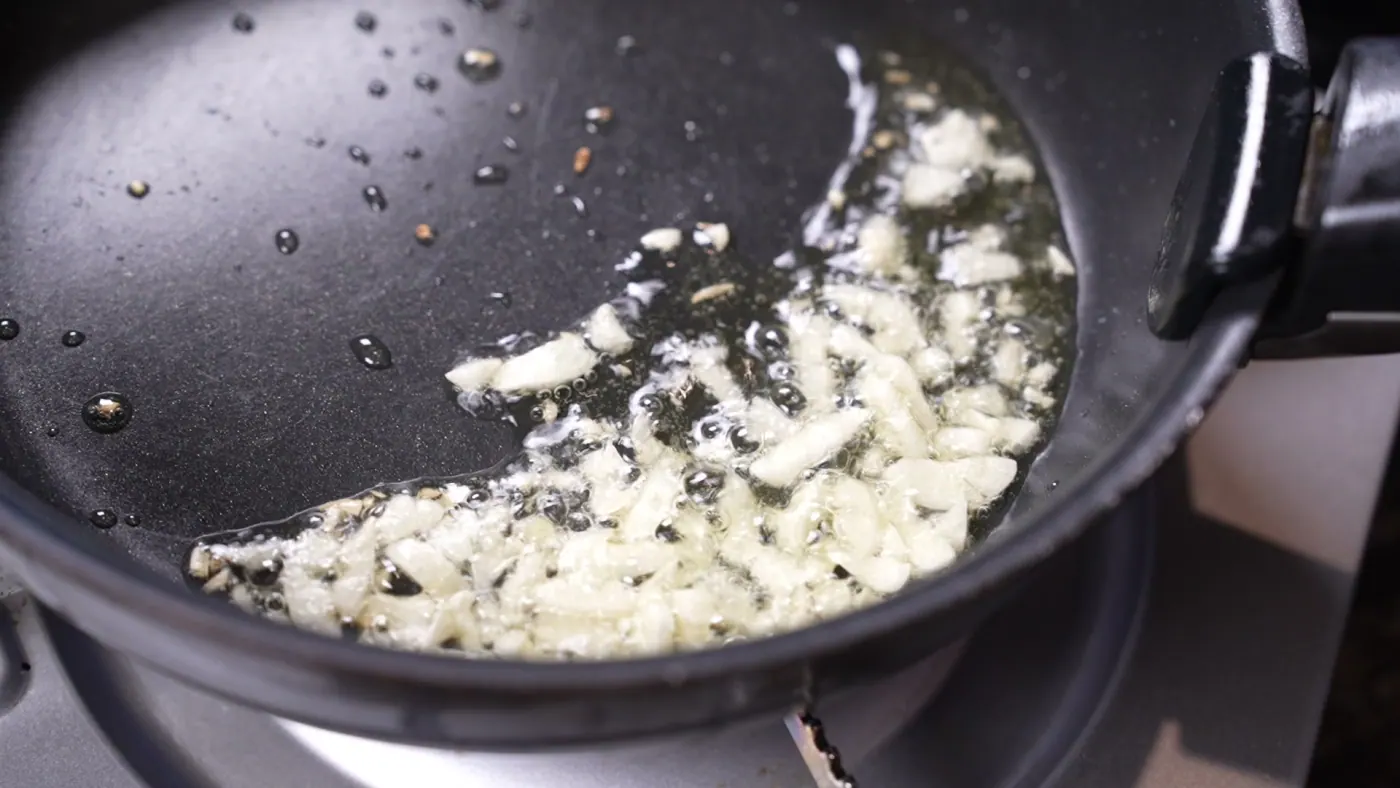
Add the dried chili pepper
Add 1 dried chili pepper. Chili peppers burn easily, so this is the best time to add them. If you're not fond of spicy food, use half.
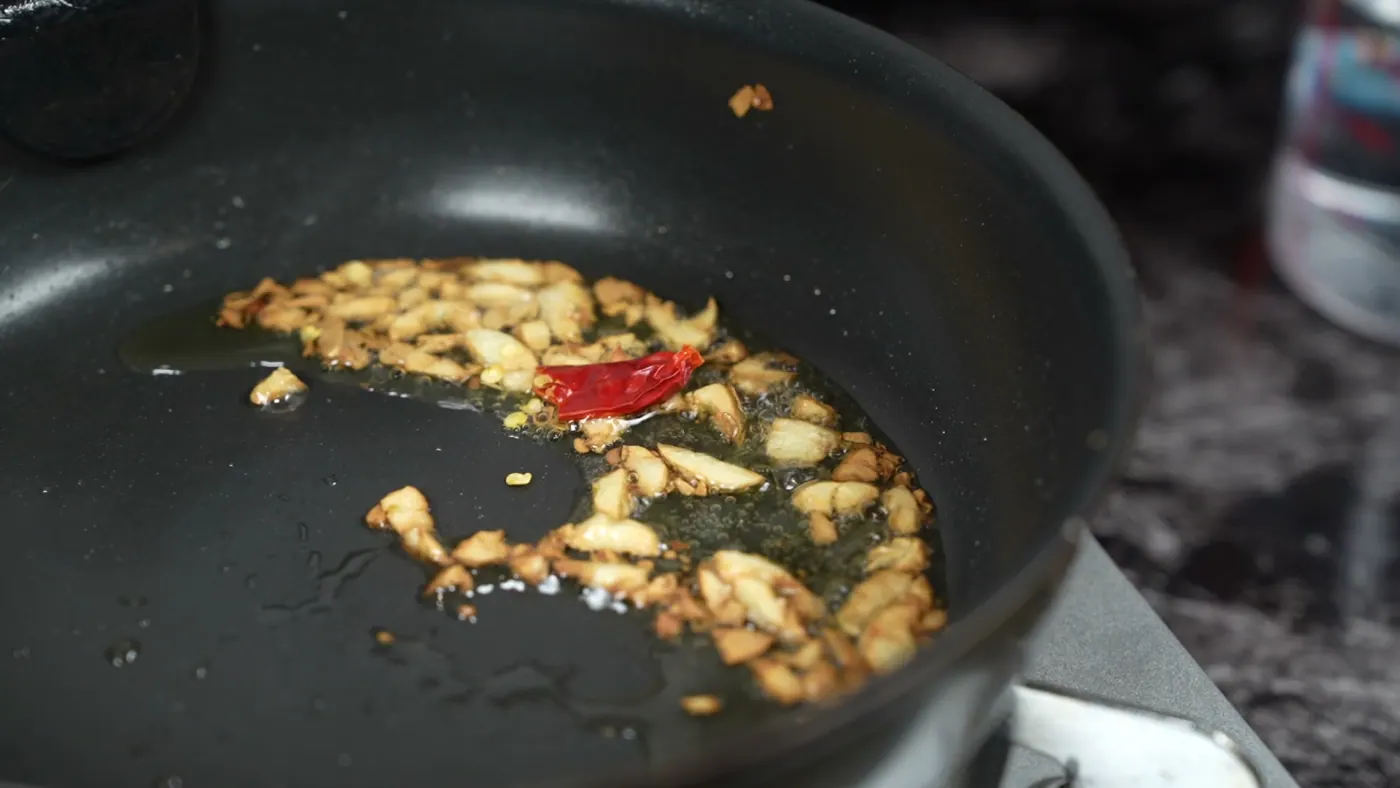
Cook the Pasta in the Pan
Add the water and seasonings
After the chili pepper has heated for a moment, pour 325ml of water straight into the frying pan. Add 2 teaspoons of chicken bouillon powder and 2 pinches of salt, and bring it to a boil.
Why chicken bouillon?
Authentic peperoncino uses only garlic, so it can lack savory flavor (umami) and taste a little plain. The bouillon adds that savory flavor to the whole dish.
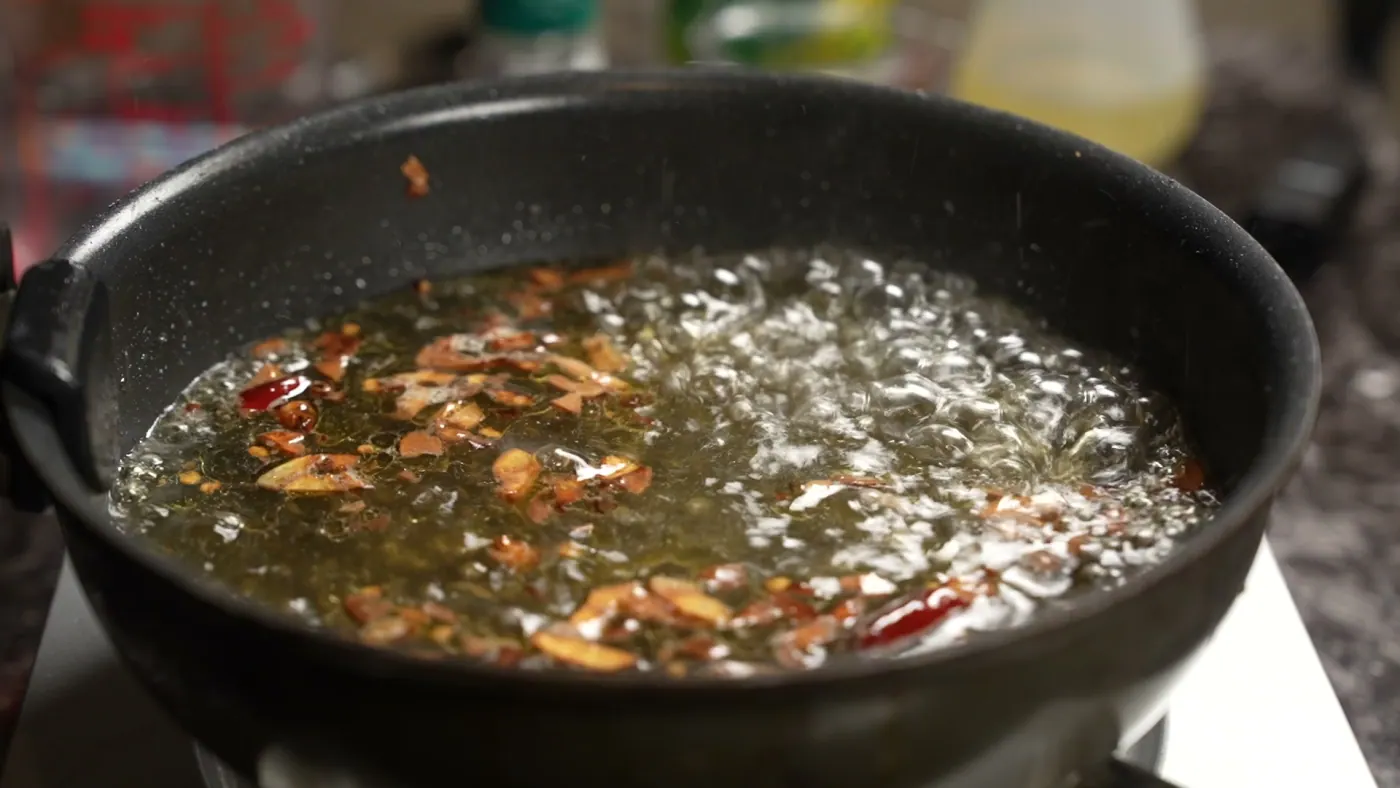
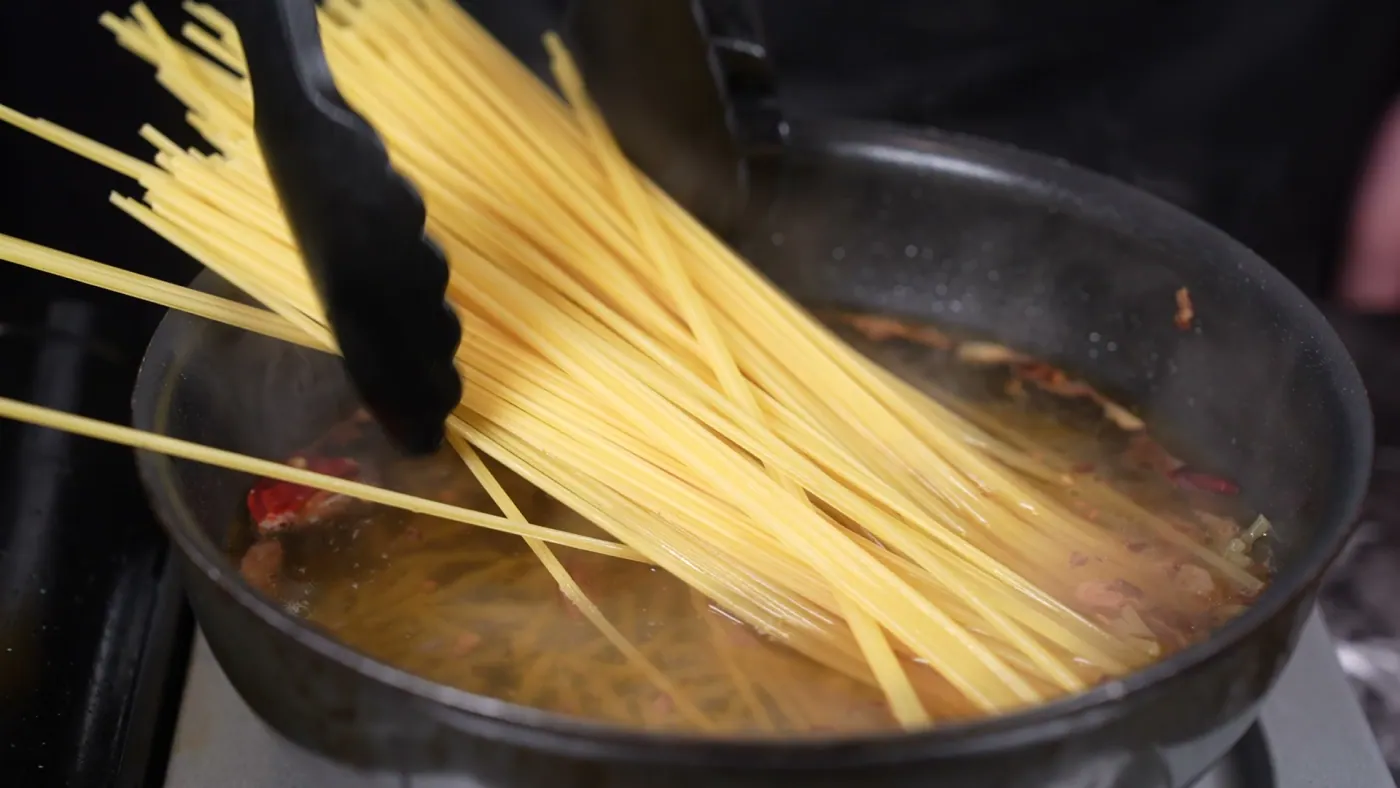
Add the spaghetti
Once the water boils, turn the heat down to medium-low and add the spaghetti. In a small pan the noodles will stick out at first, but they'll all fit in later.
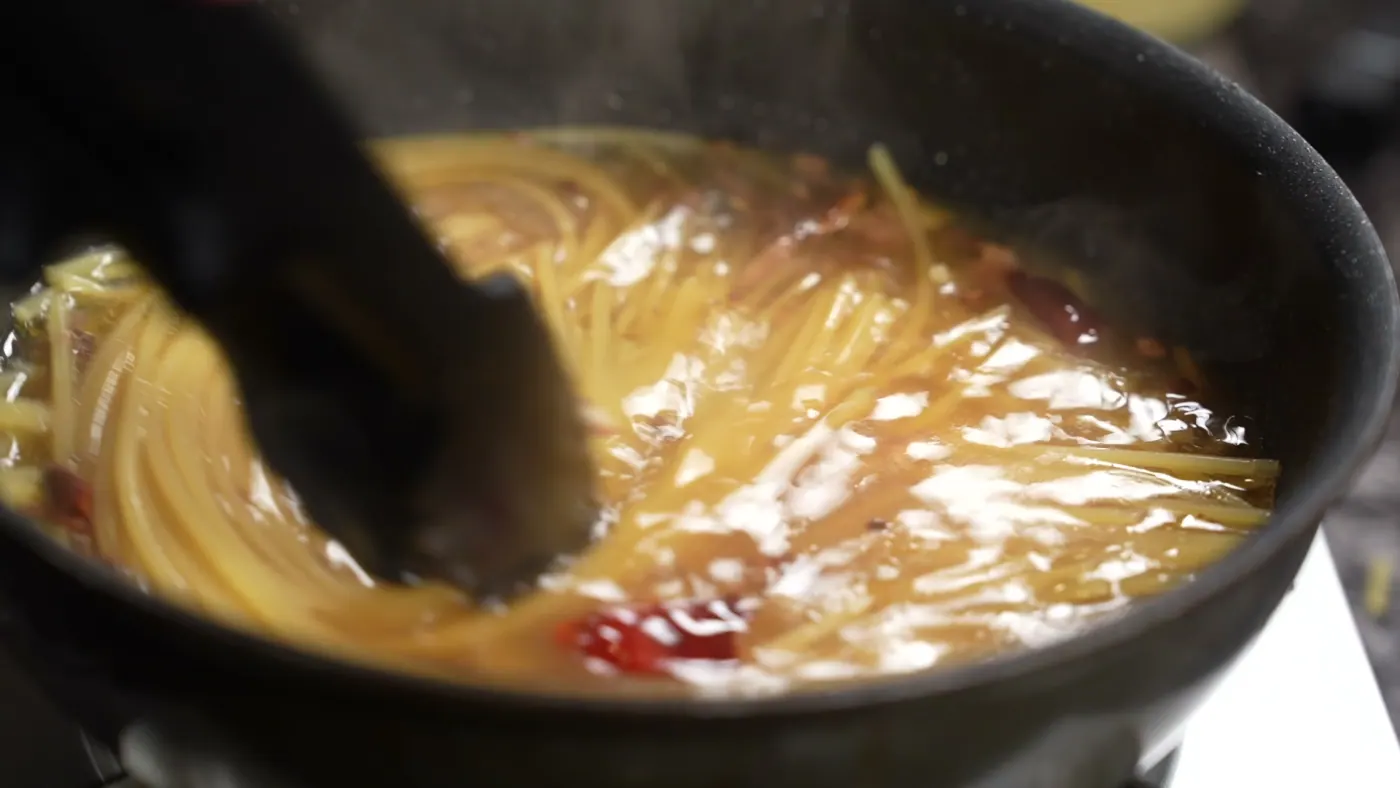
Push the noodles under and cook
Once the noodles soften a little, push them down so they're fully under the water. Cook for the time on the package.
The pan looks full of water now, but the pasta absorbs all of it.
Why one-pan pasta tastes so good
The flour from the pasta dissolves into the cooking liquid. Using that starchy liquid as the sauce gives it just the right thickness and helps it emulsify with the olive oil.
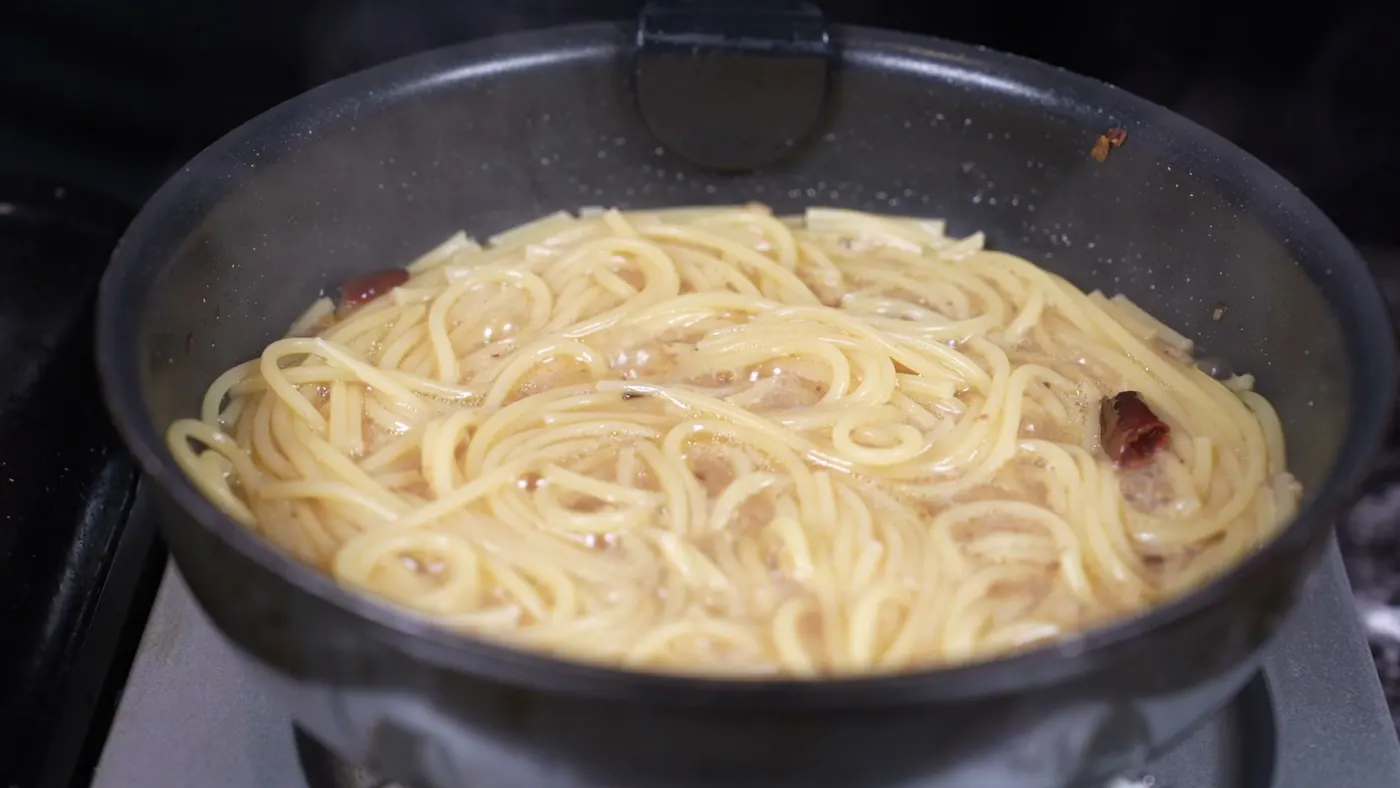
Check the pasta and the liquid
The liquid reduces as the pasta cooks. When the package time is up, taste the pasta to check it's done. Only a little liquid should be left in the pan.
Finish the Sauce
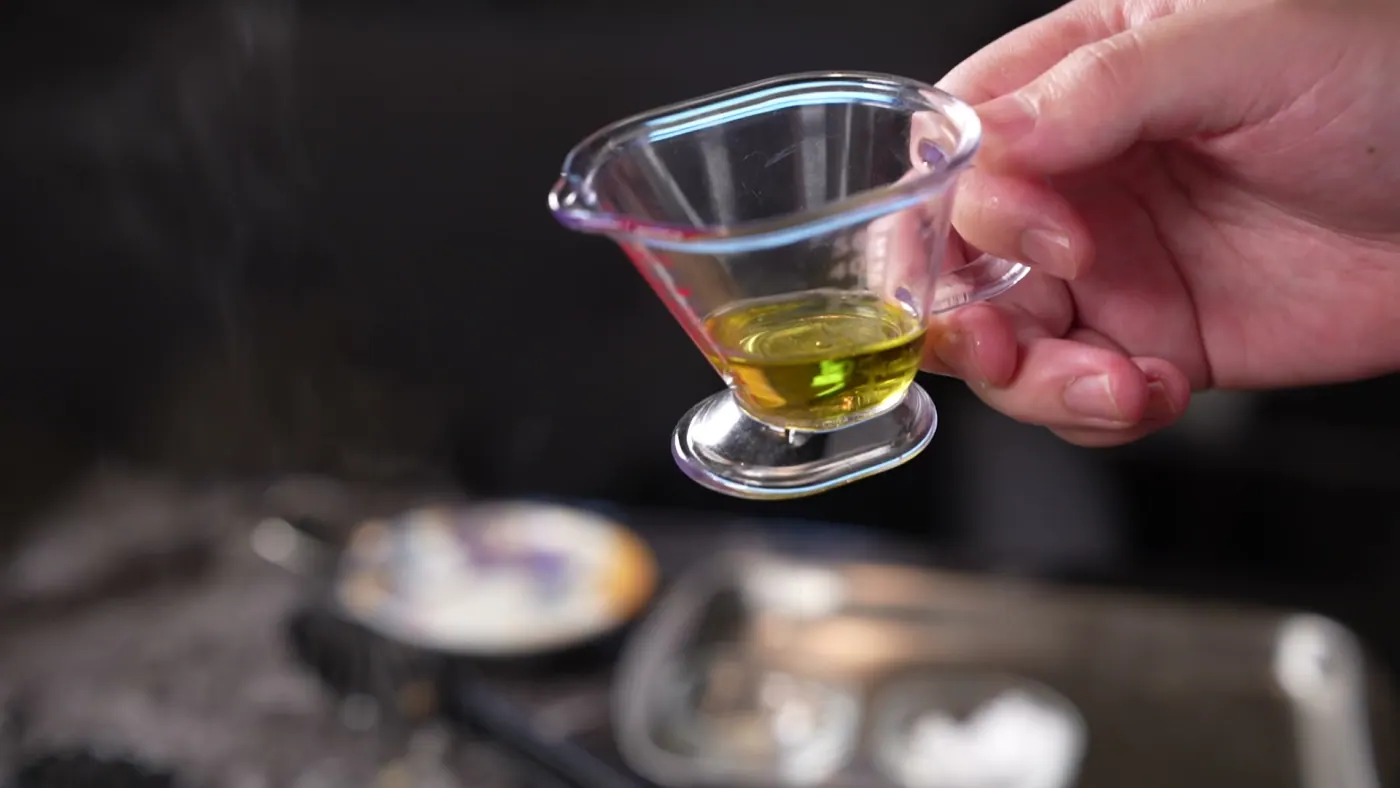
Add olive oil and emulsify
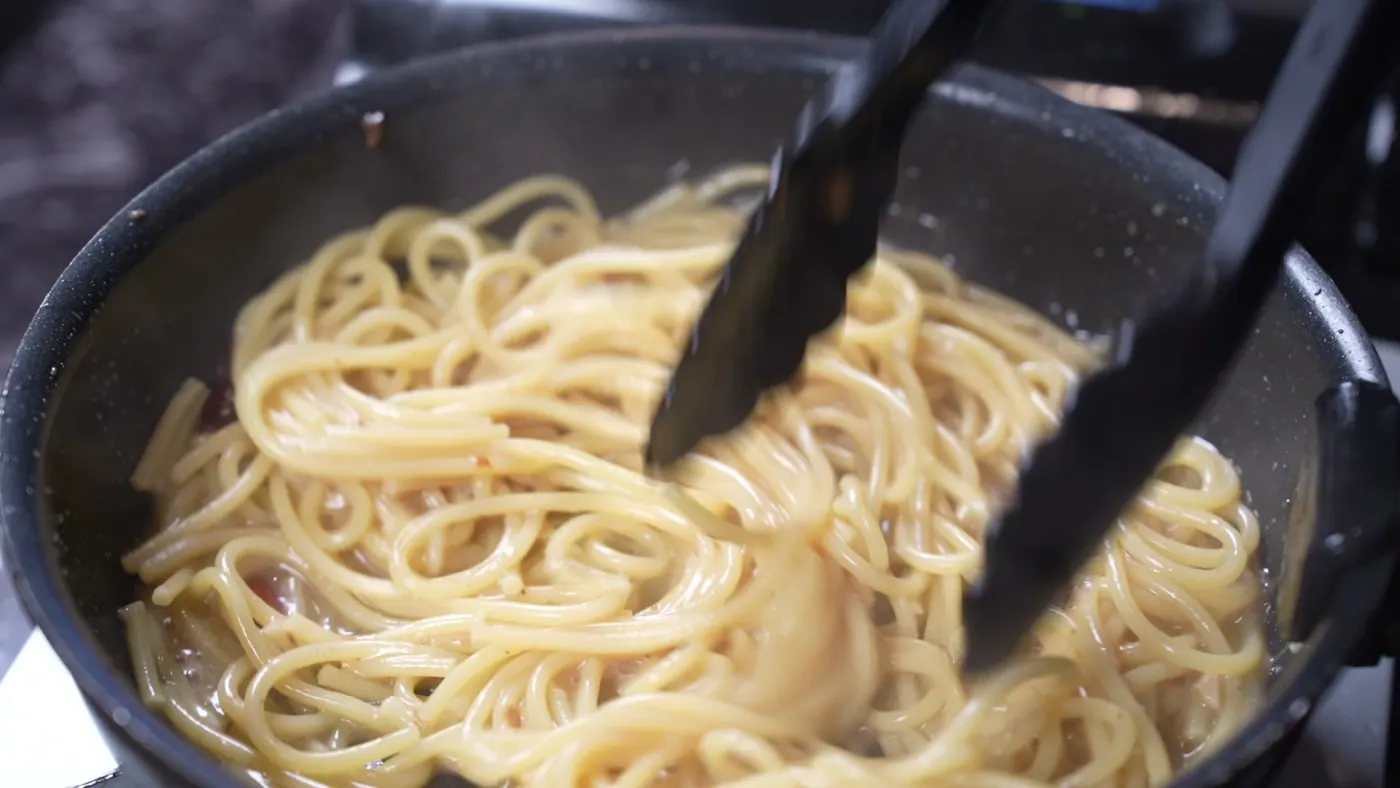
Turn off the heat and add 1 tablespoon of olive oil for aroma. Stir quickly so the cooking liquid and olive oil emulsify into a thick sauce.
Check the sauce and the salt
When the sauce looks creamy and emulsified, it's ready. Taste it and adjust the salt to your liking.
Serve
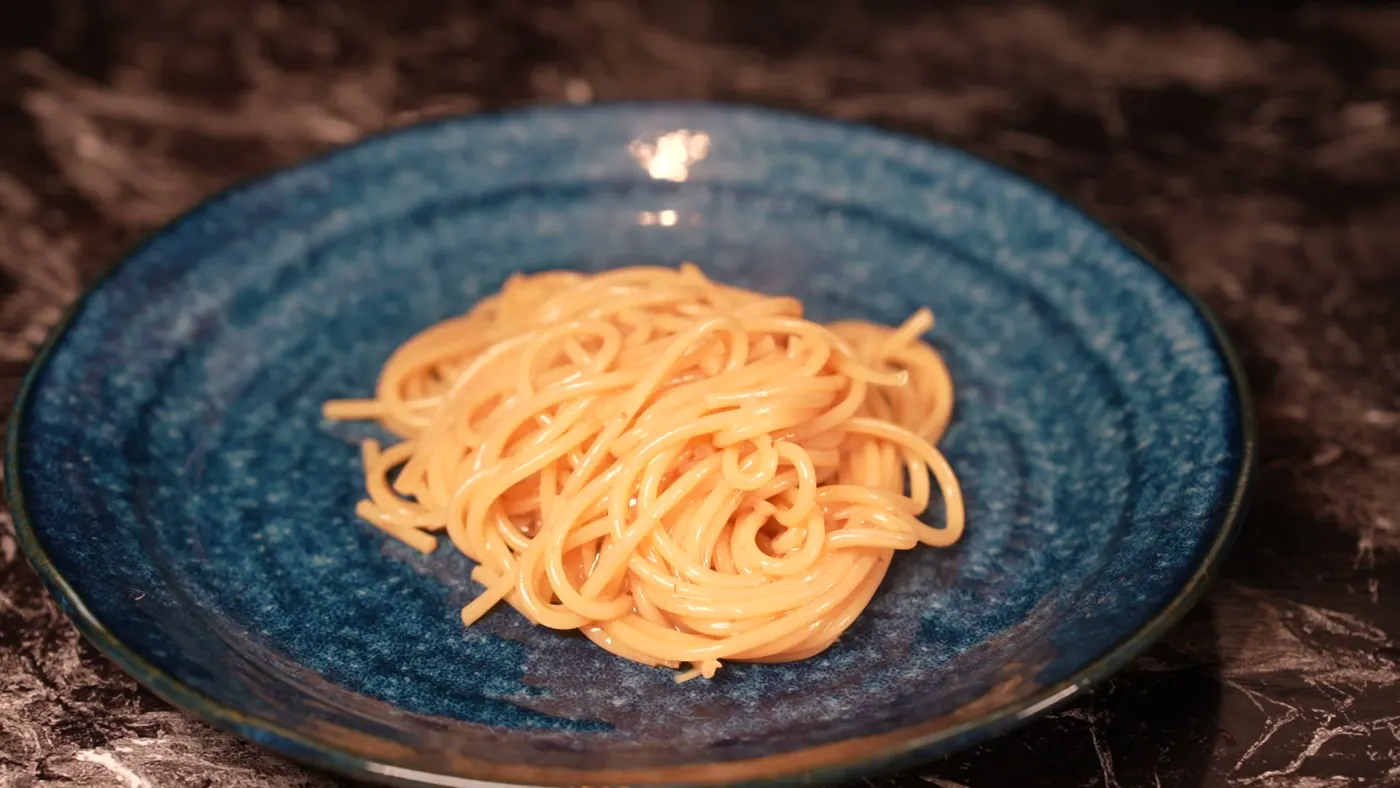
Twist the pasta onto a plate
Twist the pasta as you put it on the plate. It gives the pasta height and makes it look more appetizing. Pour the sauce left in the pan over the top and sprinkle with parsley.
Finish with soy sauce
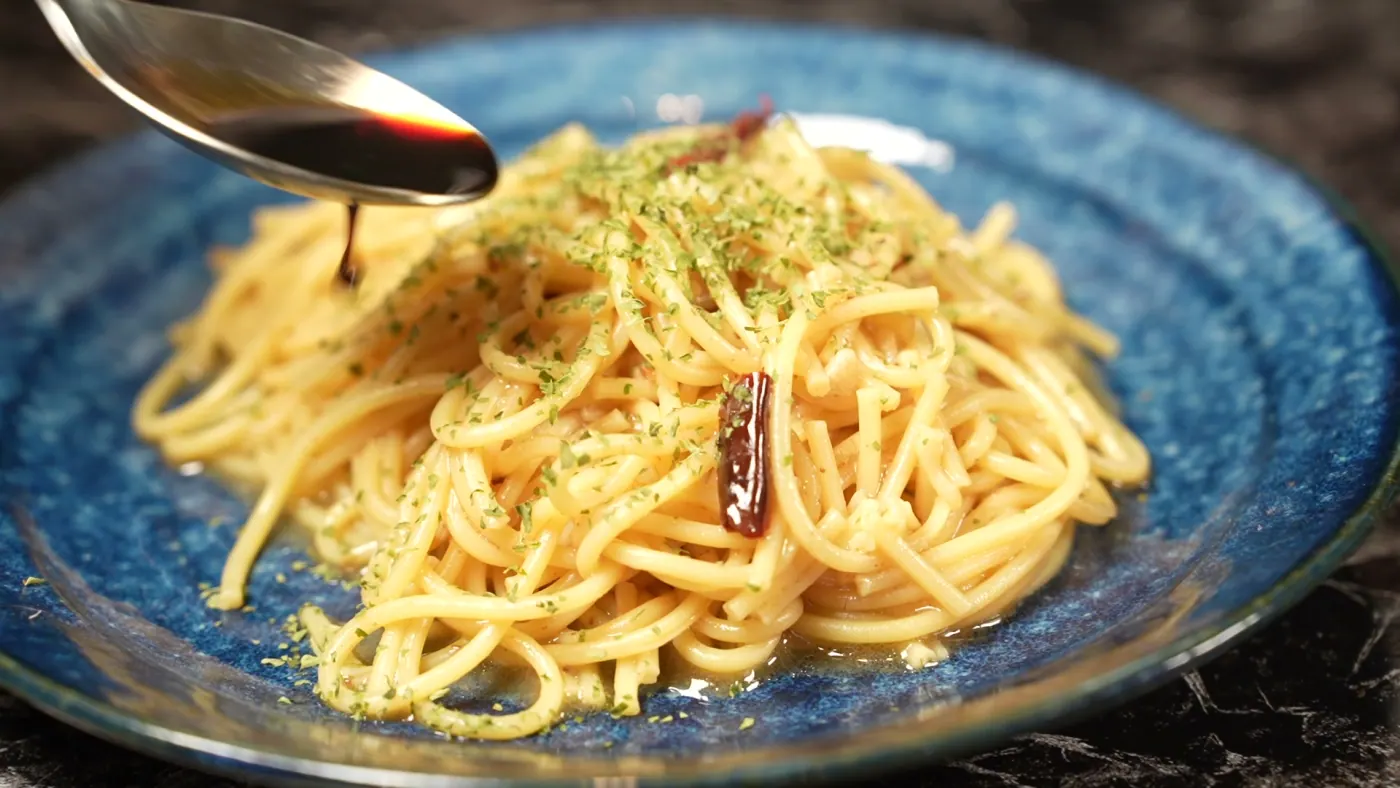
Pour a little soy sauce over the pasta. Soy sauce is full of savory flavor (umami), and it gives the pasta its Japanese-style taste.
Tips and Key Points
Use a small pan for one serving
In a small frying pan, the 325ml of water is just enough for the pasta to absorb as it cooks. For 2 servings, use a larger pan and 500ml of water.
Watch the garlic and add the chili late
Fry the garlic at the side of the pan until it's slightly brown, and add the chili pepper only after that. Both burn easily.
Turn off the heat before the last olive oil
Add the second tablespoon of olive oil off the heat and stir quickly. That's what turns the starchy liquid into a smooth, emulsified sauce.
Troubleshooting
Frequently Asked Questions
How is this different from Italian peperoncino?
Classic peperoncino uses only garlic, olive oil and chili, so it can taste a little plain. This version cooks the pasta in water with chicken bouillon for savory flavor, and finishes with a little soy sauce for a Japanese-style taste.
Won't there be too much water in the pan?
No. The pasta absorbs all of it as it cooks. When the package time is up, only a little liquid should be left, and that becomes the sauce.
How much water do I use for 2 or 3 servings?
Use a larger frying pan, with 500ml of water for 2 servings and 700ml for 3.
What should I do if I don't like spicy food?
Use half a dried chili pepper.
What should I do if the noodles don't fit in my pan?
That's fine. Once they soften a little, push them down into the water and they'll all fit.
Summary
Japanese-style peperoncino is made in one small pan: brown the garlic in olive oil, add the chili, then cook the spaghetti in water with chicken bouillon until it soaks up almost all of it. Off the heat, a second spoon of olive oil turns the starchy liquid into a glossy sauce, and a drizzle of soy sauce gives it a Japanese finish.
麺Noodles和風ペペロンチーノ
Japanese-Style Peperoncino (Wafu Pasta with Soy Sauce)
Peperoncino (aglio, olio e peperoncino) is the simple Italian pasta with garlic, olive oil and chili.
No ratings yet
Rate this recipe
- Prep
- 5 min
- Cook
- 15 min
- Total
- 20 min
- Servings
- 1
- Difficulty
- Beginner
Ingredients
Pasta
Garlic Oil
Cooking Liquid
To Finish
Ingredient amounts are multiplied; cooking times and pan size may need adjusting.
Instructions
Amounts mentioned in the steps are for the original recipe (1x) — use the scaled amounts above.
Prep: Chop the Garlic
Chop the garlic roughly
Chop 2 cloves of garlic. There are only a few ingredients in this pasta, so chop the garlic roughly to leave some texture. That's the only cutting you need to do.
Make the Garlic Oil
Sauté the garlic in olive oil
This recipe is for one serving, so use a small frying pan. Add 1 tablespoon of olive oil and the chopped garlic, and sauté over high heat.
Brown the garlic at the side of the pan
Once the garlic starts to sizzle, move it to the side of the pan and fry it until it turns slightly brown. Be careful not to burn it.
Add the dried chili pepper
Add 1 dried chili pepper. Chili peppers burn easily, so this is the best time to add them. If you're not fond of spicy food, use half.
Cook the Pasta in the Pan
Add the water and seasonings
After the chili pepper has heated for a moment, pour 325ml of water straight into the frying pan. Add 2 teaspoons of chicken bouillon powder and 2 pinches of salt, and bring it to a boil.
Add the spaghetti
Once the water boils, turn the heat down to medium-low and add the spaghetti. In a small pan the noodles will stick out at first, but they'll all fit in later.
Push the noodles under and cook
Once the noodles soften a little, push them down so they're fully under the water. Cook for the time on the package.
The pan looks full of water now, but the pasta absorbs all of it.
Check the pasta and the liquid
The liquid reduces as the pasta cooks. When the package time is up, taste the pasta to check it's done. Only a little liquid should be left in the pan.
Finish the Sauce
Add olive oil and emulsify
Turn off the heat and add 1 tablespoon of olive oil for aroma. Stir quickly so the cooking liquid and olive oil emulsify into a thick sauce.
Check the sauce and the salt
When the sauce looks creamy and emulsified, it's ready. Taste it and adjust the salt to your liking.
Serve
Twist the pasta onto a plate
Twist the pasta as you put it on the plate. It gives the pasta height and makes it look more appetizing. Pour the sauce left in the pan over the top and sprinkle with parsley.
Finish with soy sauce
Pour a little soy sauce over the pasta. Soy sauce is full of savory flavor (umami), and it gives the pasta its Japanese-style taste.
Video
Watch the video · 4:20Open on YouTube
Jump to a part of the video (6 chapters)
Video: https://youtu.be/l9arnsg-wSE
Nutrition estimated, per serving
- Calories
- 588 kcal
- Carbohydrates
- 78.3 g
- Protein
- 14.4 g
- Fat
- 26 g
- Saturated fat
- 3.6 g
- Fiber
- 6.3 g
- Sugar
- 3 g
- Sodium
- 2,078 mg
Estimated by us from the Standard Tables of Food Composition in Japan (MEXT, 2020). Optional ingredients and garnishes are not counted; soup and sauce are counted as fully eaten. Actual values depend on your brands and portion sizes. How we calculate this
Course: Noodles · Cuisine: Japanese · Keyword: Japanese-Style Peperoncino
Recipe from Japanese Cooking Ichie — https://japanesecookingichie.com/recipes/wafu-pasta/
Make it a meal
Add a side dish to round out the table.
Ratings & comments
No ratings yet — be the first to rate this recipe.
Comments