- Prep
- 10 min
- Cook
- 25 min
- Total
- 35 min
- Servings
- 2
- Difficulty
- Beginner
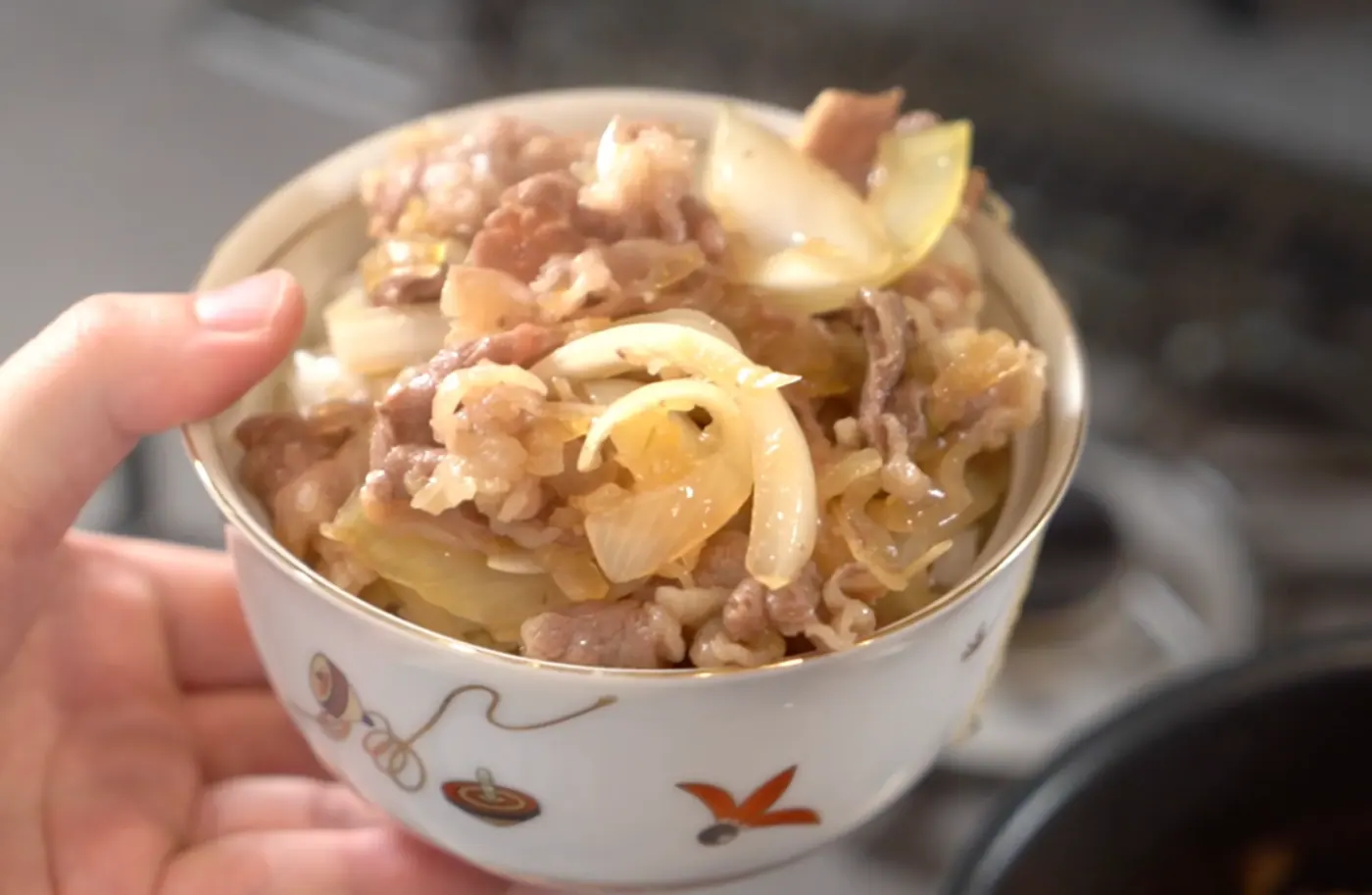
What is Gyudon?
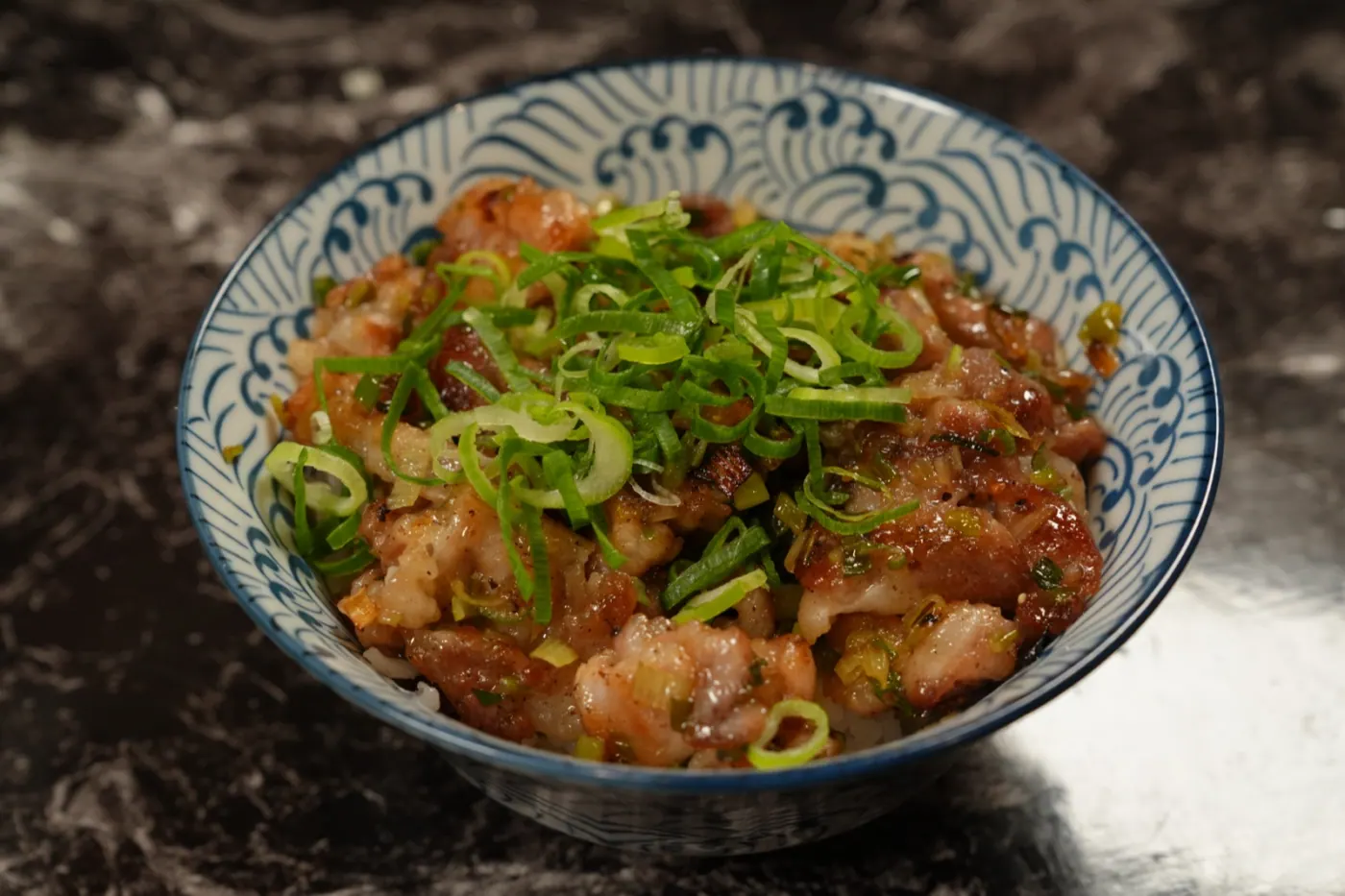
Gyudon is one of Japan's most beloved comfort foods—a hearty bowl of thinly sliced beef and onions simmered in a savory-sweet sauce, served over steamed rice. You can recreate this iconic dish at home with even better results than restaurants. The secret lies in how you use the onions.
The standout feature of this recipe is using onions in two different ways. By covering the simmering liquid with thinly sliced onions and ginger, the beef becomes incredibly tender and juicy. The enzymes in the onions help break down the beef fibers, while the ginger removes any unpleasant odors—a science-backed cooking technique.
Why You'll Love This Recipe
- Restaurant-quality at home - Recreate the authentic taste of Japanese beef bowl chains
- Tender and juicy - The onion and ginger technique makes the beef incredibly soft
- Simple ingredients - Made with beef, onions, ginger, and other everyday ingredients
- One-pot meal - Everything cooks in a single pot for easy cleanup
- Budget-friendly - More economical than dining out and satisfying for the whole family
Recipe Highlights
- Why we use onions in two different ways
- Science-backed technique of covering meat with thinly sliced onions and ginger
- Slow simmering to draw out sweetness and umami
- How to slice onions perpendicular to the grain
Equipment Needed
- Medium-sized pot or pan (about 10-11 inches in diameter)
- Knife and cutting board
- 2 serving bowls
- Chopsticks or wooden spoon
Gyudon Ingredients (Serves 2)
11 ingredients · 2 servings
Thinly sliced beef, medium onion, ginger, water, mirin, sake, soy sauce, sugar, dashi powder, cooked rice, pickled red ginger.
From scratch: how to make dashi · how to cook Japanese rice
Full amounts in the recipe cardIngredient Substitutions
- Beef: Choose cuts with some marbling for a juicier result. Lean cuts tend to dry out, so avoid those if possible
- Sake: Can substitute with Chinese cooking wine or white wine, or omit if needed
- Dashi powder: Using homemade dashi instead of water will enhance the umami flavor even more
- Pickled red ginger: Optional but adds a nice tangy accent to the dish
Video Tutorial
For a detailed visual guide, watch the video below. It demonstrates the two-step onion technique and tips for making the beef tender and juicy.

How to Make Gyudon
Prep: Cutting the Vegetables
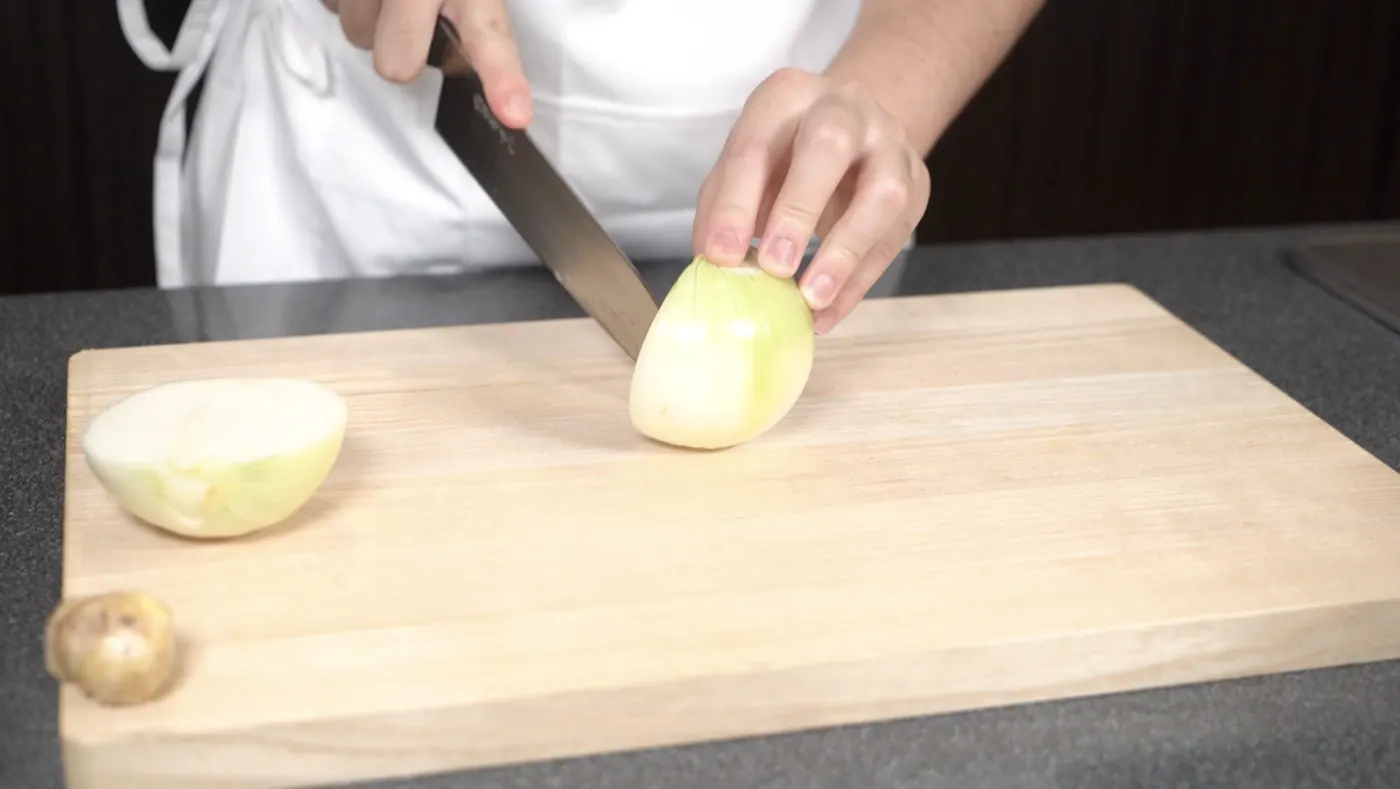
Halve the onion
Cut the onion in half and remove the core. The key feature of this recipe is using the onion in two different ways. I'll explain why shortly.
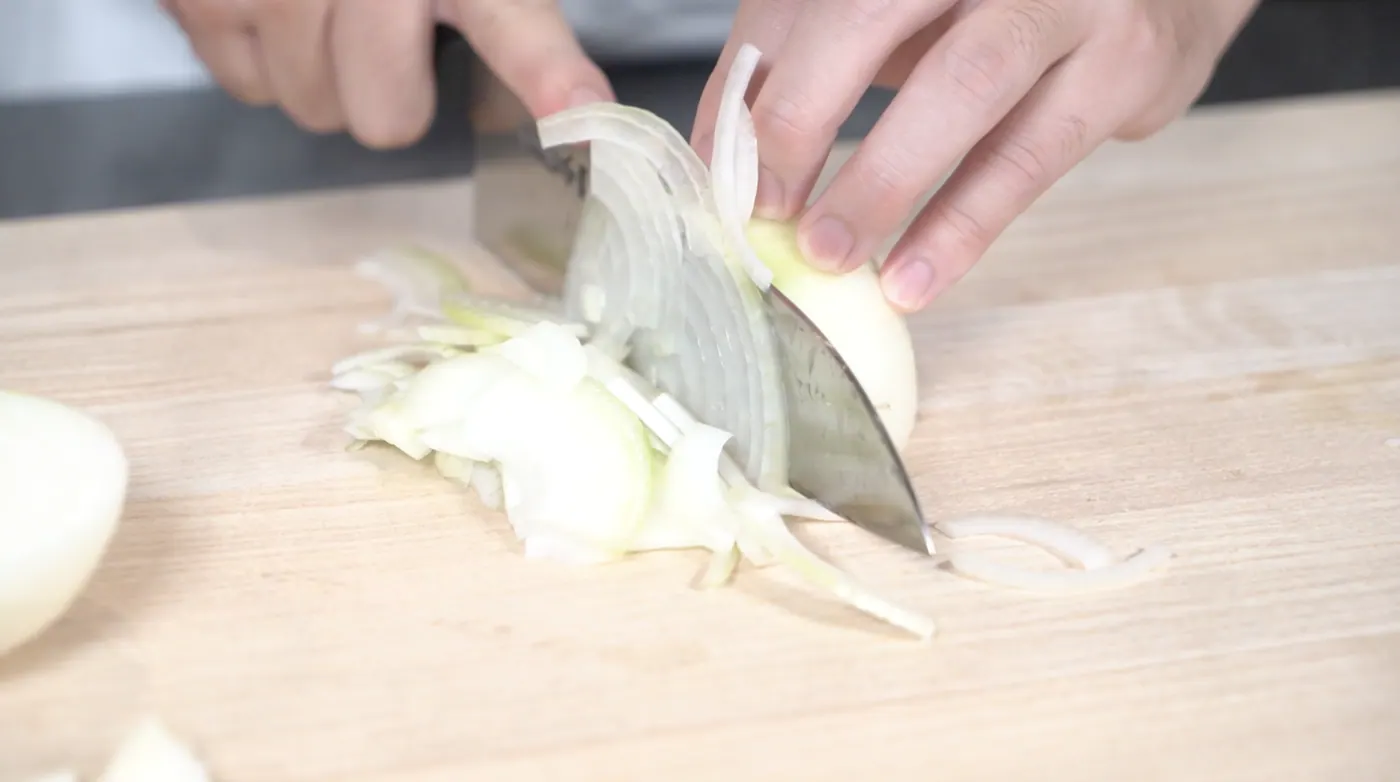
Thinly slice half of the onion
Cut half of the onion into quarters, then slice thinly perpendicular to the grain.
Why slice perpendicular to the grain?
Slicing onions perpendicular to their fibers:
- Helps flavors penetrate better
- Creates a softer texture
- Allows the meat-tenderizing enzymes to work more effectively
Cut the remaining onion into thick slices
Cut the remaining half into thicker slices, about ½ inch (1cm) wide. Separate the layers for even cooking.
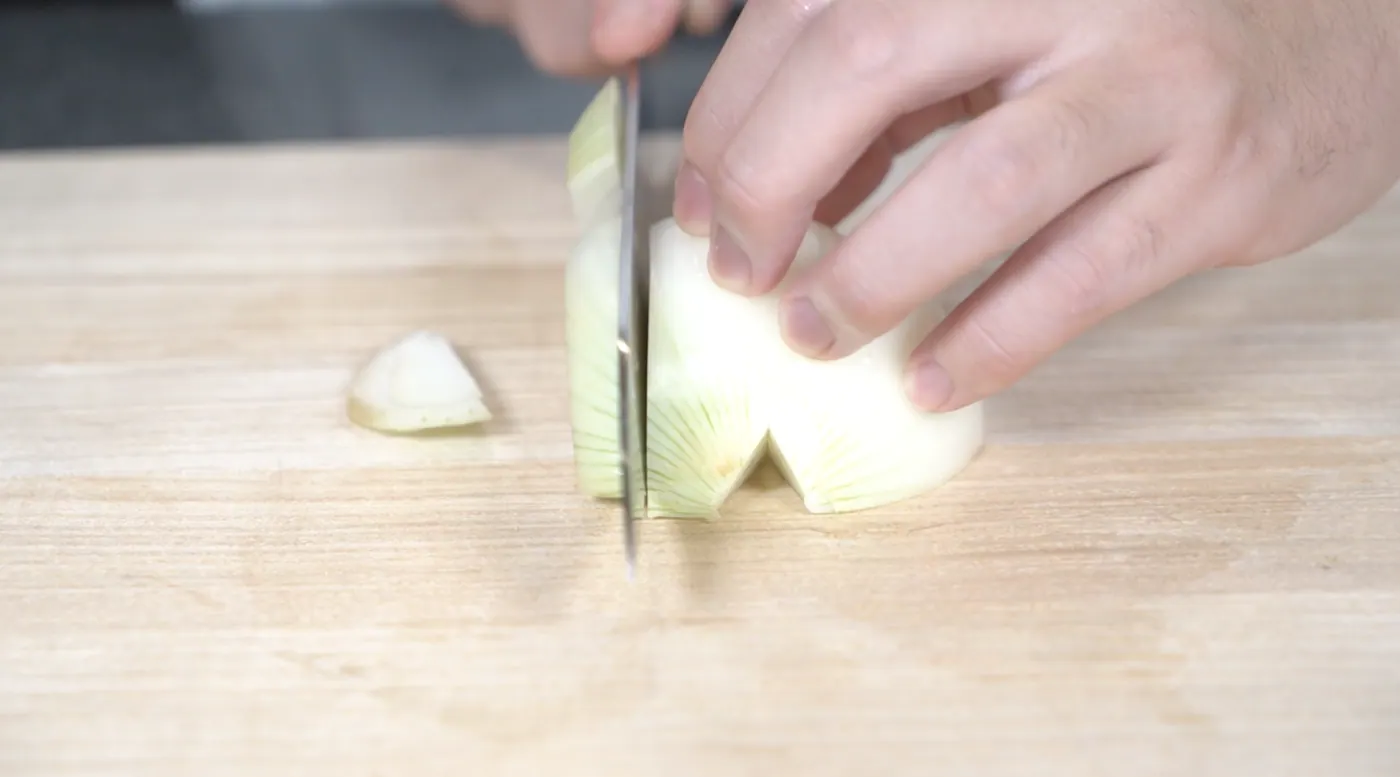
Why two different cutting methods?
- Thin slices: Used to tenderize the beef (early in cooking)
- Thick slices: Added for texture and bite (later in cooking)
This simple technique is what makes homemade gyudon exceptionally delicious!
Julienne the ginger
Slice the ginger thinly lengthwise, then stack the slices and cut into thin strips (julienne).
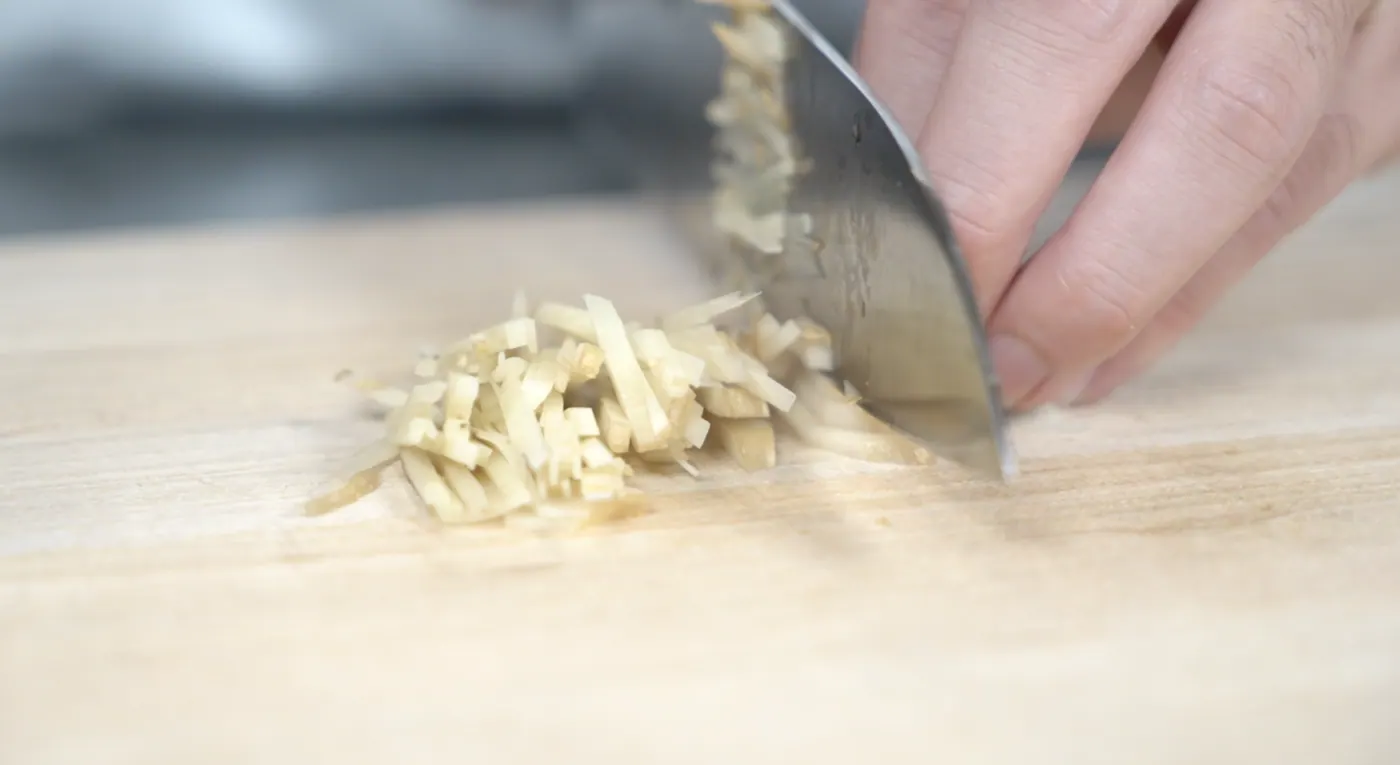
That's all the cutting we need to do!
Cooking Process
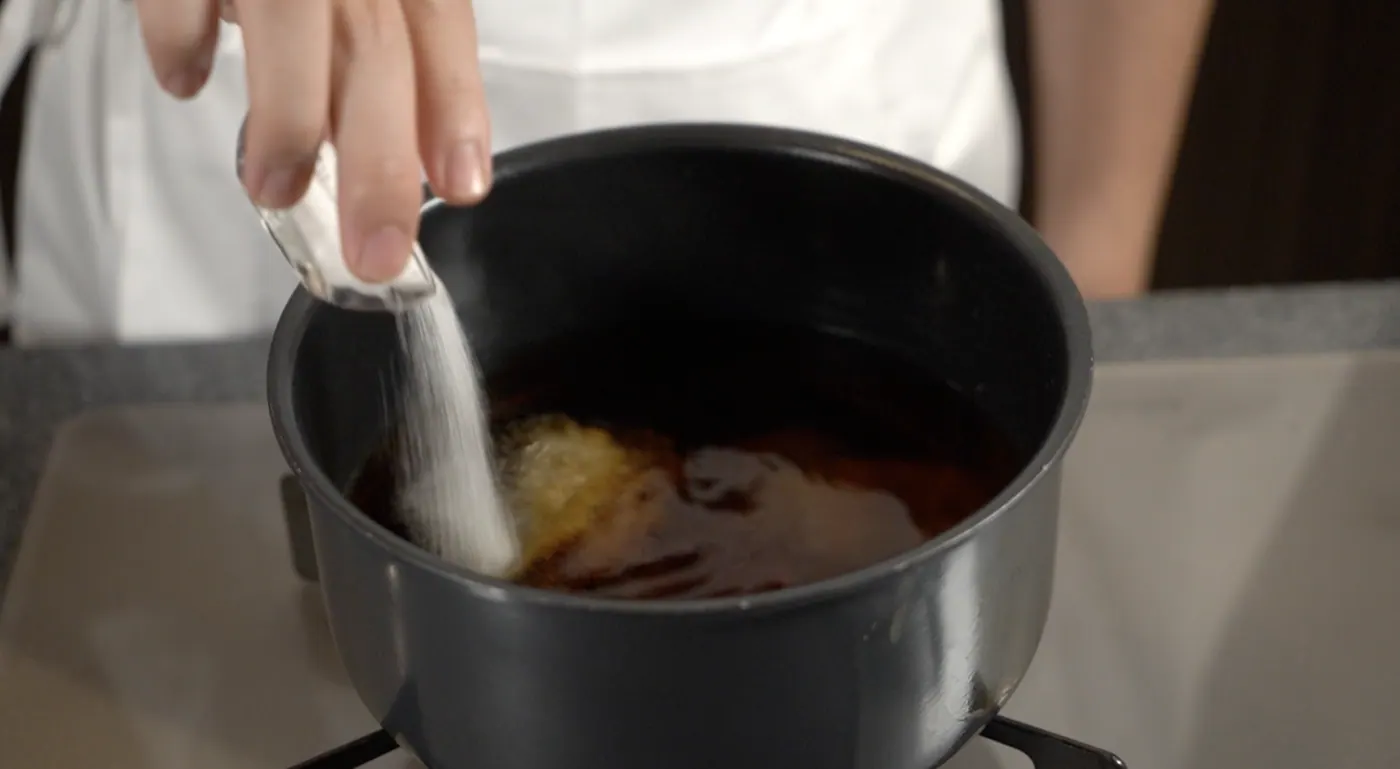
Add sauce ingredients to the pot
Combine the following in your pot:
- 2 cups (460ml) water
- 2 tablespoons mirin
- 3 tablespoons sake
- 3 tablespoons soy sauce
- 2 tablespoons sugar
While not essential, adding a small amount of dashi powder significantly boosts the umami flavor of your gyudon.
Add the beef
Prepare about 7 oz (200g) of thinly sliced beef. Choose cuts with some fat marbling for a juicier result. Lean meat alone tends to become dry.
Add the beef to the pot, separating the slices as you go. This helps keep the meat tender.
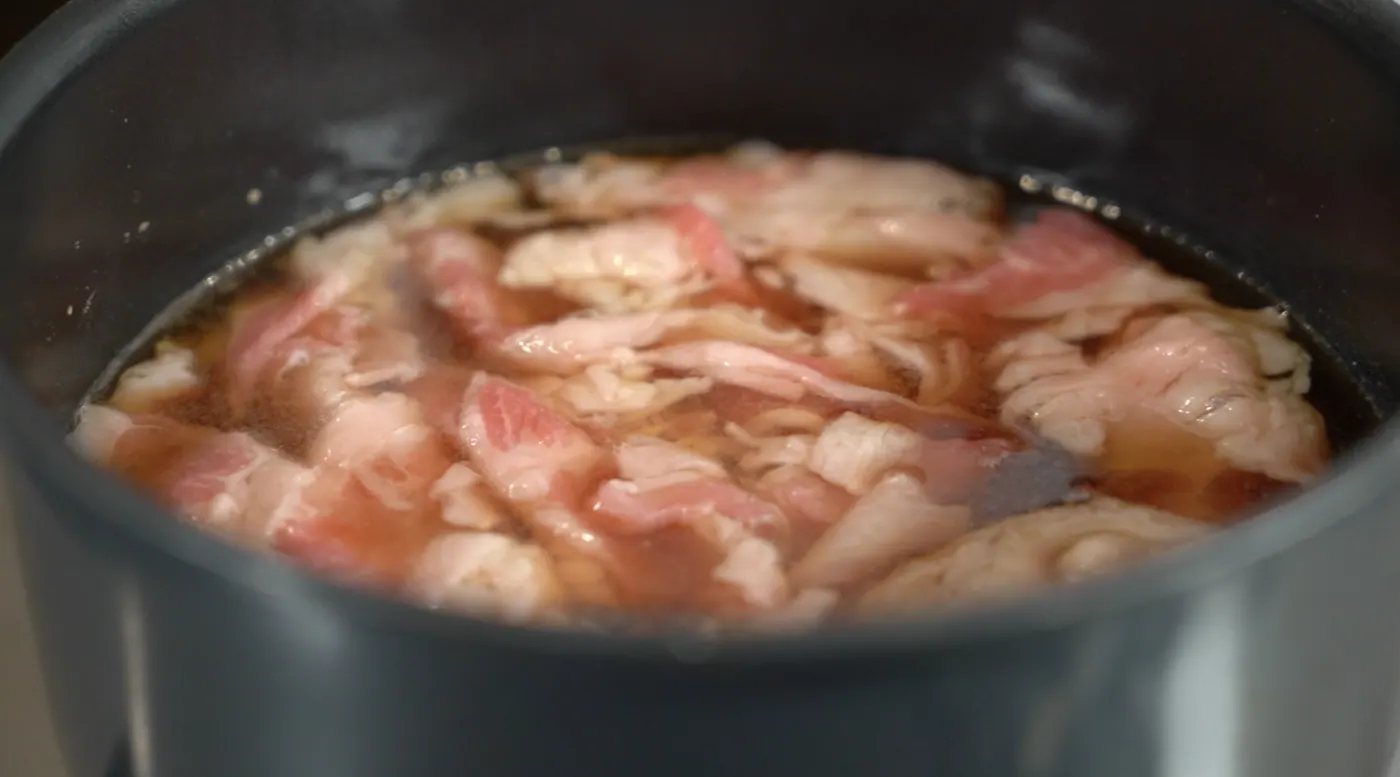
Remove the scum
Bring the pot to a simmer with the beef. As scum rises to the surface, carefully skim it off.
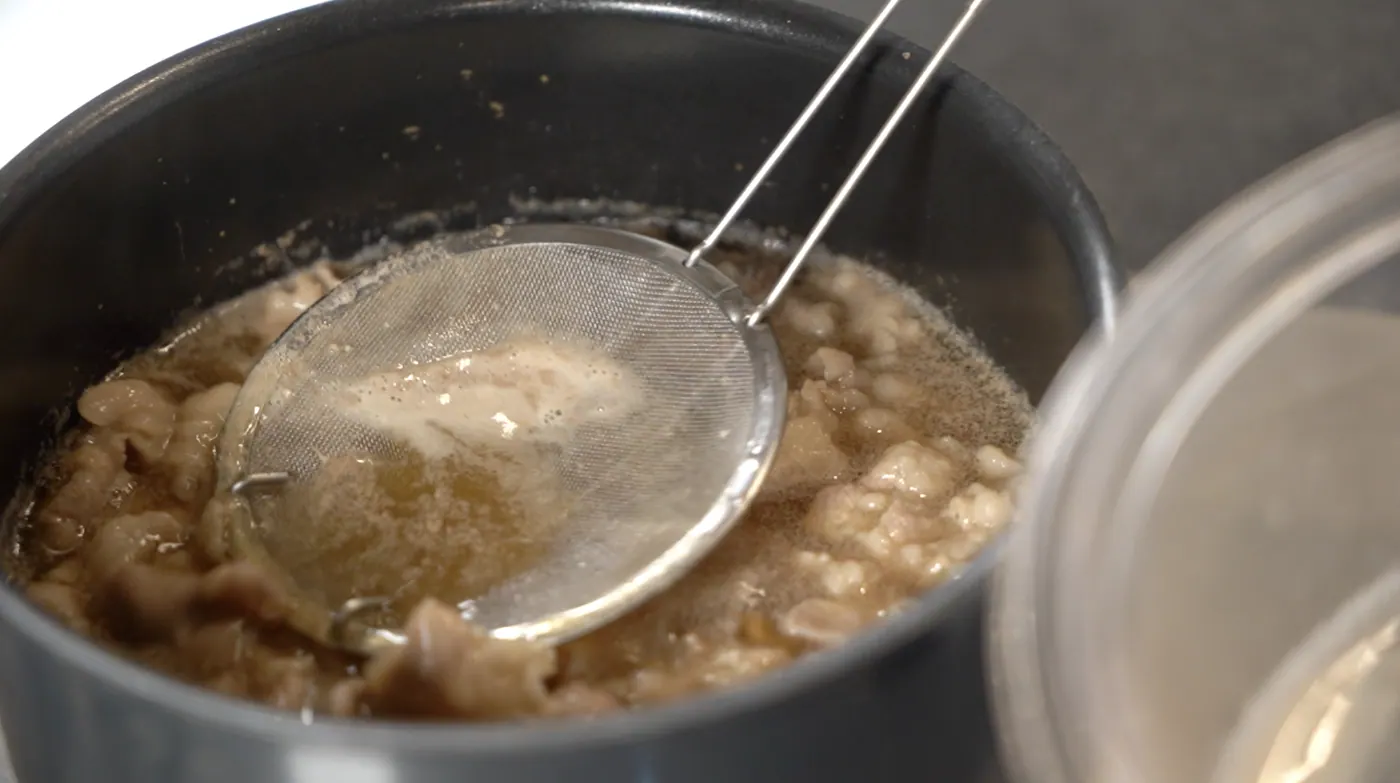
Why remove the scum?
Scum consists of blood and fat particles. Removing it:
- Eliminates bitter or metallic flavors
- Creates a cleaner appearance
- Reduces any unpleasant odors
After removing the scum, reduce the heat to medium-low. Overcooking will toughen the beef, so be careful.
Add thinly sliced onions and ginger (Most Important Step!)
Add the thinly sliced onions and julienned ginger to the pot.
The key here is to cover the surface of the liquid with the onions and ginger.
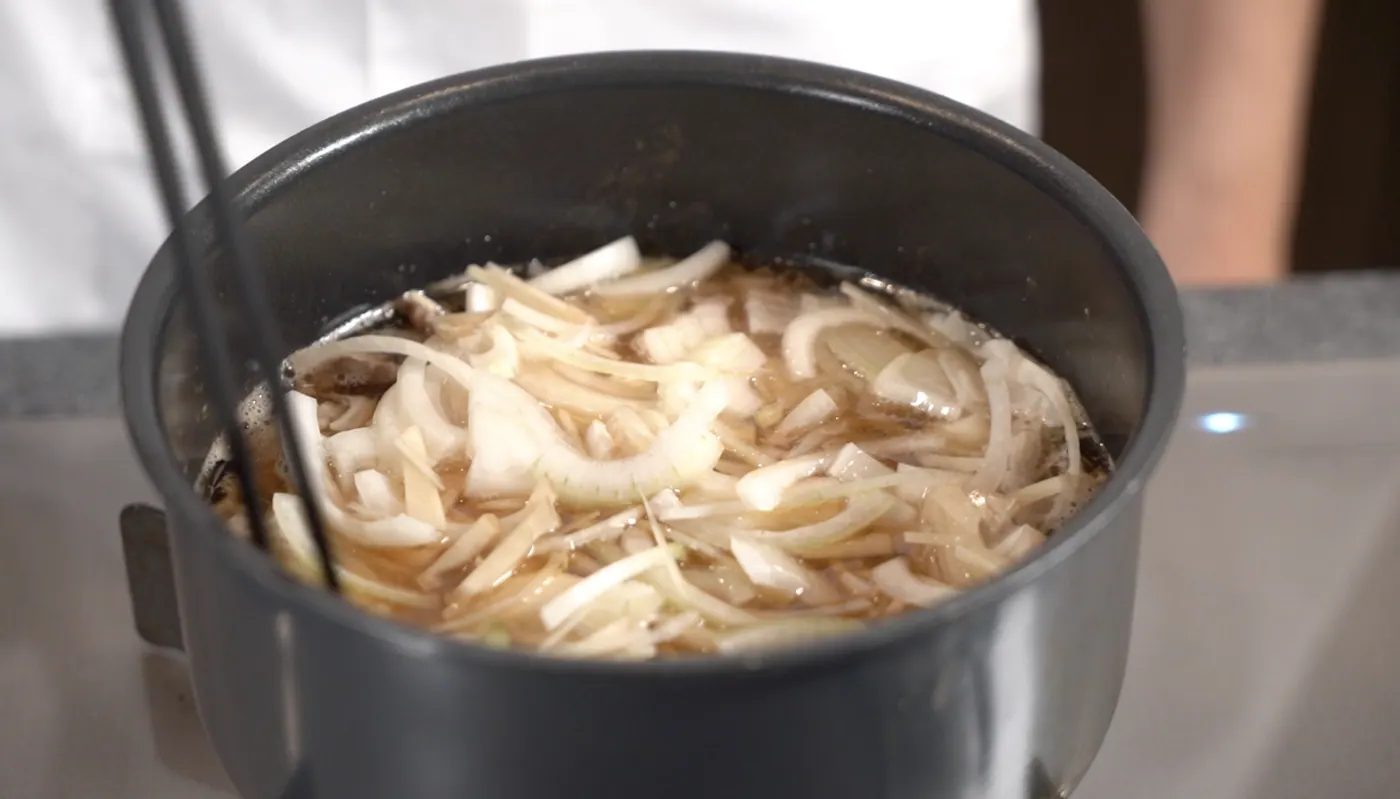
Why cover the liquid with onions and ginger?
This technique provides three major benefits:
- Keeps the meat submerged - Prevents the beef from becoming tough
- Onion enzymes work their magic - Break down beef fibers, making it tender
- Ginger removes odors - Eliminates any unpleasant smells from the beef
This is why we prepare thinly sliced onions, and it's the most important step in this recipe!
Simmer for 20 minutes on low to medium heat
Simmer for 20 minutes on low to medium heat. Twenty minutes may seem long, but this slow cooking allows the onion's sweetness to infuse the sauce while making the beef even more tender and juicy.
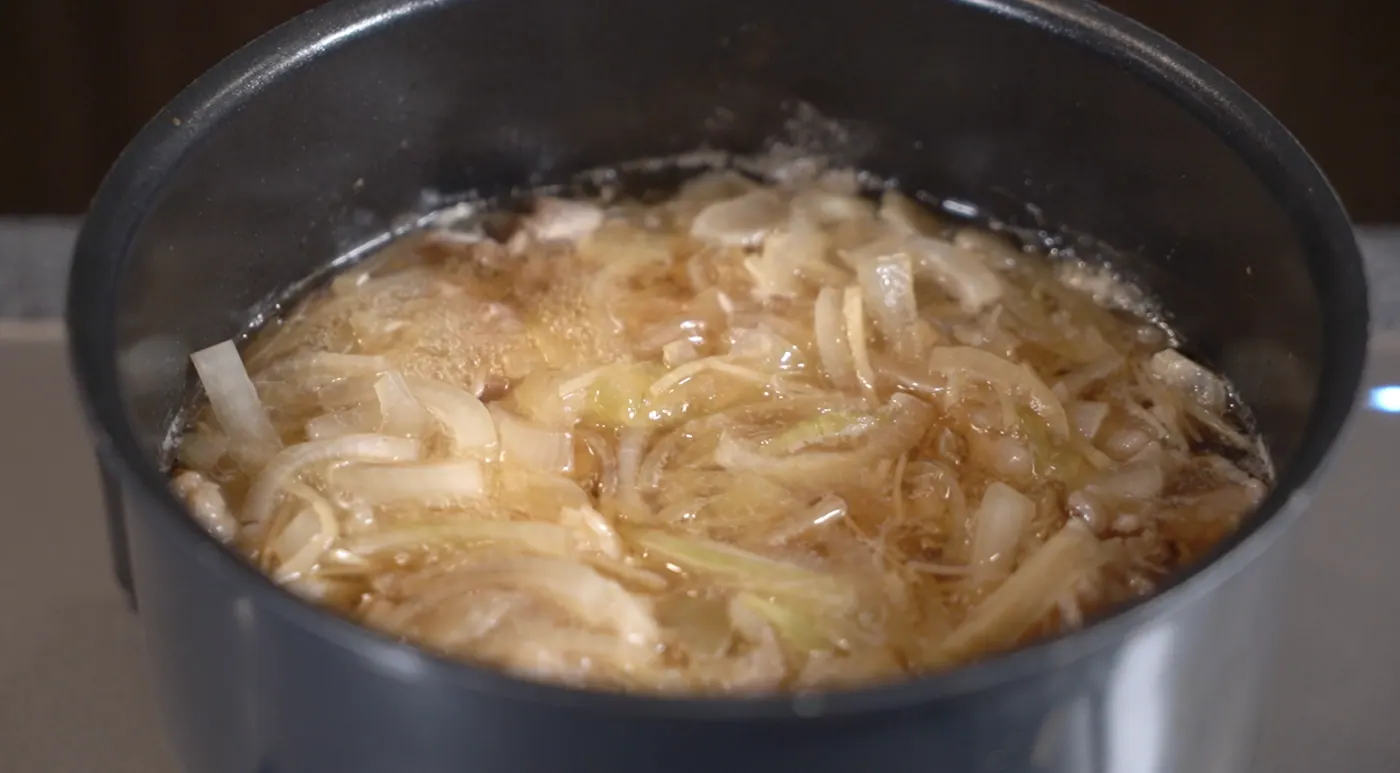
Why take the time?
The 20-minute simmer is well worth it:
- Extracts maximum sweetness from the onions
- Makes the beef incredibly tender
- Concentrates the umami in the sauce
Add the thick-sliced onions
When the liquid has reduced by about half, add the remaining thick-sliced onions. These provide texture and bite when eating.
How soft you want the onions is up to personal preference, so taste along the way. Simmer on medium heat for about 5 minutes.
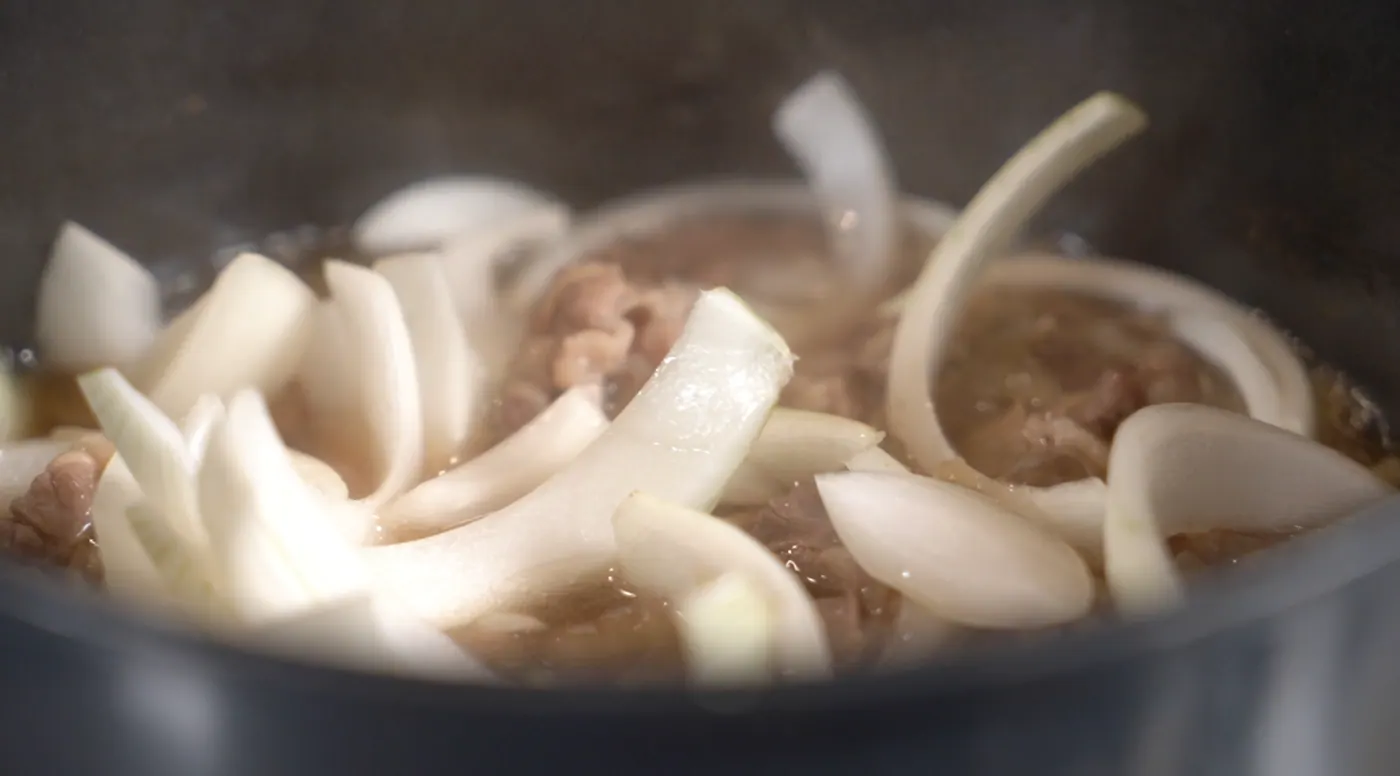
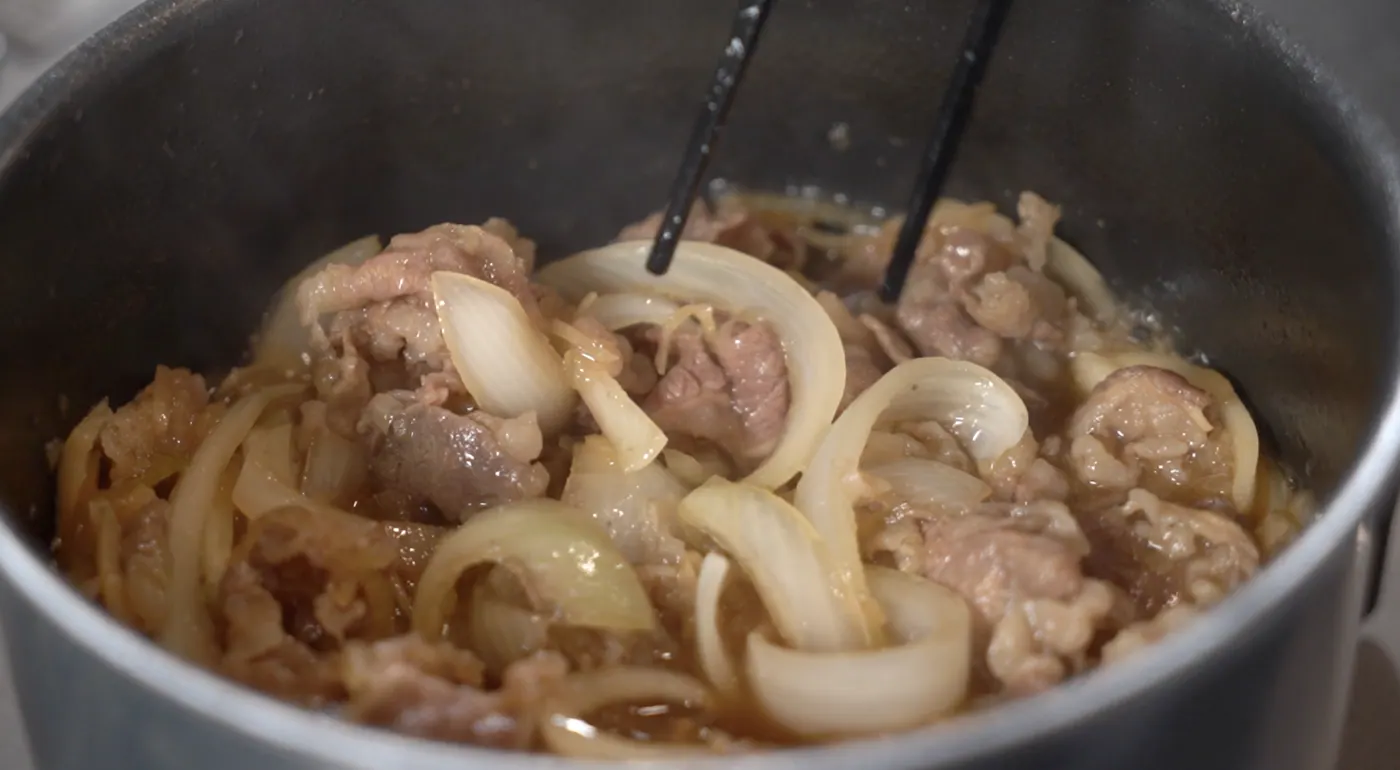
Finish
Once the onions reach your desired tenderness, your gyudon is ready!
Serving
Fill bowls with rice
Add a serving of steamed rice to each bowl.
Perfect Rice
See how to cook Japanese rice in a pot — no rice cooker needed.
Top with gyudon
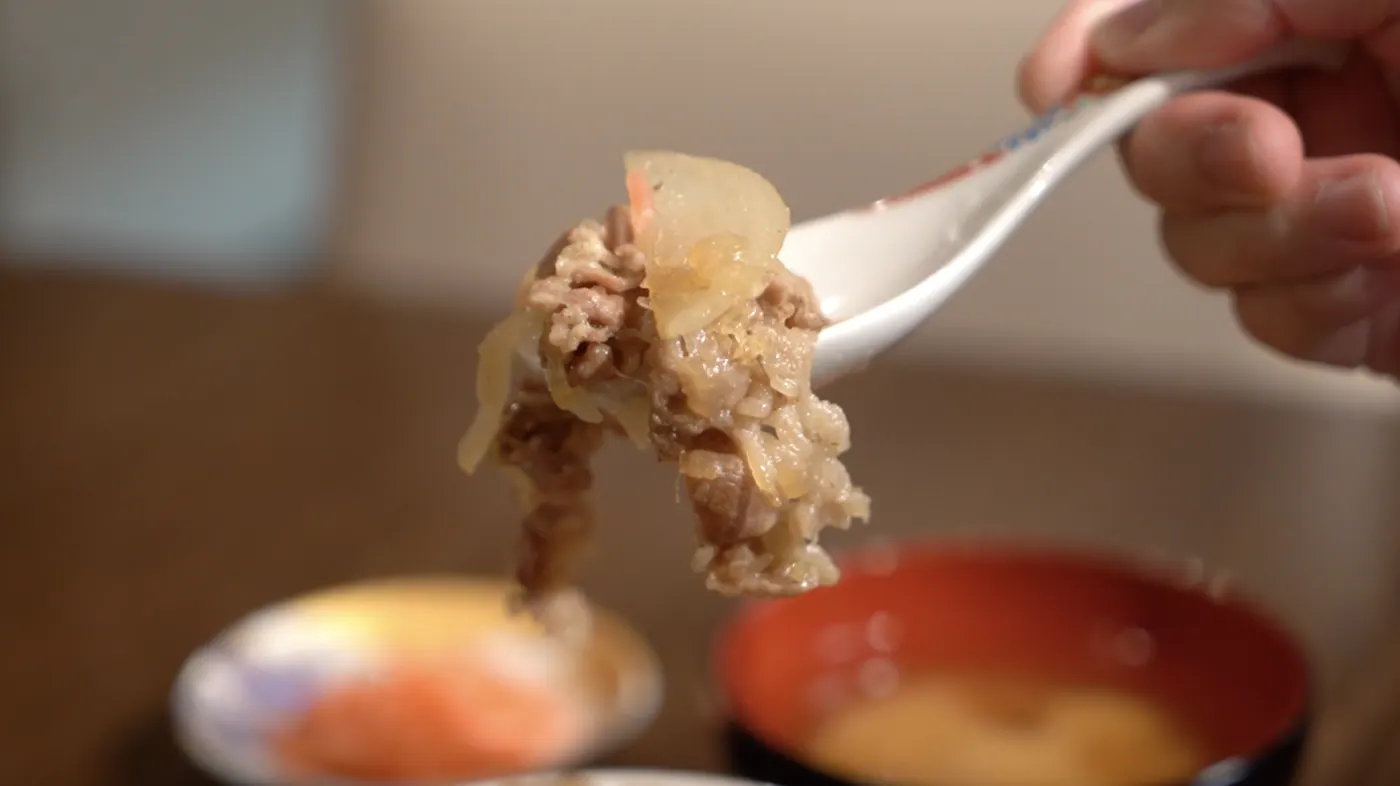
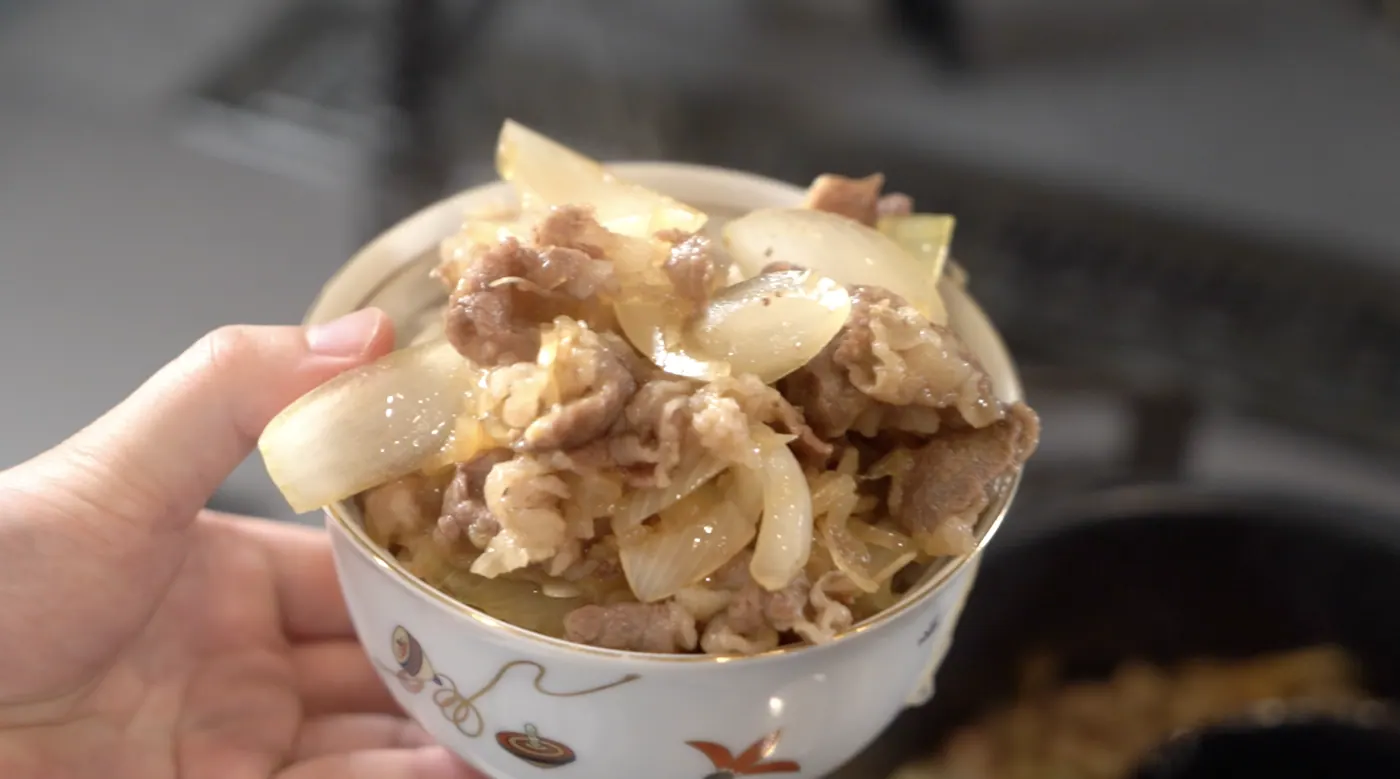
First, ladle some of the sauce over the rice. Then add the beef and onions on top.
Recommended Serving Method
Pour the sauce over the rice first, then add the toppings. This way, every bite is flavorful all the way to the bottom. The rice soaked in the sauce is absolutely delicious!
Add toppings
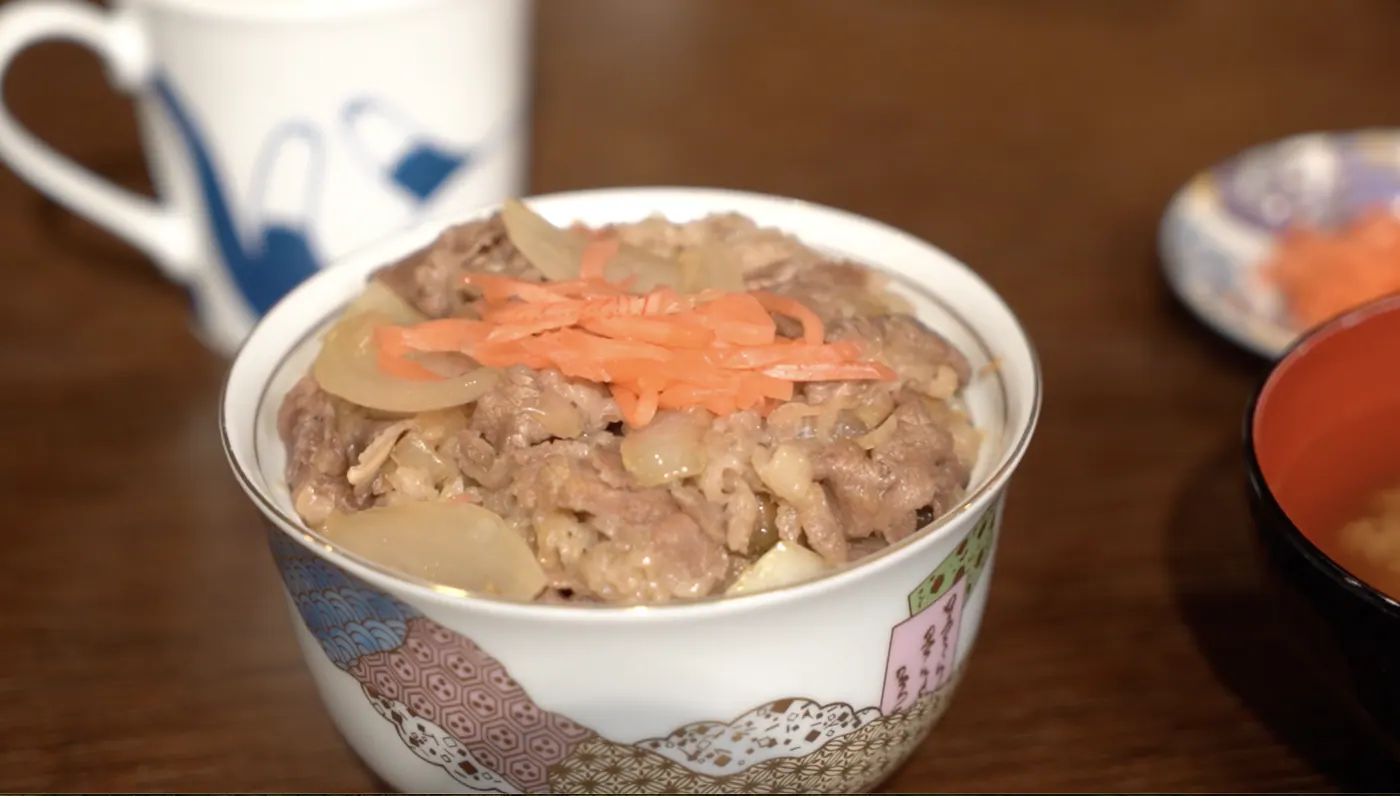
Garnish with pickled red ginger (beni shoga) if desired. It adds a nice tangy accent, but the dish is delicious without it too.
Tips and Tricks
Choosing the beef
When selecting beef, choose cuts with some fat marbling. Lean meat alone will become dry and tough. The right amount of fat is the secret to juiciness.
Separate the beef slices
When adding beef to the pot, separate the slices as you go. This helps keep the meat tender.
Remove scum thoroughly
Taking the time to remove all the scum creates a cleaner, more delicious gyudon without any bitter notes.
Cover the liquid with onions and ginger
This is the heart of this recipe. This simple extra step makes the beef incredibly tender and juicy.
Simmer slowly
Taking the full 20 minutes to simmer slowly extracts maximum sweetness from the onions and umami from the beef. Don't rush this step.
Adjust onion texture to taste
Cook the thick-sliced onions to your preferred texture. If you like them crisp, cook them briefly. If you prefer them soft, simmer them longer.
Troubleshooting
Common Questions
What should I do if my beef turned out tough?
The heat was likely too high or the cooking time too long. After removing the scum, be sure to reduce to medium-low heat and don't simmer for more than 20 minutes. Also, don't skip the step of covering the liquid with thinly sliced onions and ginger.
What should I do if the flavor is too mild?
The sauce may not have reduced enough. Simmer until the liquid reduces by about half to concentrate the flavors. Adding dashi powder also enhances the umami.
What should I do if the flavor is too strong?
You may have reduced it too much. Monitor the liquid level while cooking, and if it becomes too concentrated, add a little water to adjust.
What should I do if the onions fell apart completely?
You may have sliced them too thin or cooked them too long. Cut the thick-sliced onions to about ½ inch (1cm) width and remove from heat after about 5 minutes.
Conclusion
By slowly simmering onions and beef together, you create an exquisite gyudon where umami and tender juiciness shine through. The flavors of the sauce thoroughly permeate the dish.
The magic of this recipe lies in "using onions in two different ways." Covering the liquid with thinly sliced onions and ginger makes the beef tender and juicy, while the thick-sliced onions provide satisfying texture.
Simple yet effective, this one technique is the secret to creating restaurant-quality gyudon at home. Give it a try—I really want you all to experience this!
How to Store Gyudon
Leftover gyudon can be stored in an airtight container in the refrigerator for 2-3 days. Letting it sit allows the flavors to develop even more.
Reheating:
- Microwave: Heat at 600W for 1-2 minutes, checking as you go
- Stovetop: Reheat on low heat, adding a little water if needed
Freezing: You can also freeze gyudon. Divide into portions and store in freezer bags for up to 1 month. Thaw in the microwave or slowly in the refrigerator before reheating.
丼Rice Bowl牛丼
Gyudon (Japanese Beef Rice Bowl)
Gyudon is one of Japan's most beloved comfort foods—a hearty bowl of thinly sliced beef and onions simmered in a savory-sweet sauce, served over steamed rice.
No ratings yet
Rate this recipe
- Prep
- 10 min
- Cook
- 25 min
- Total
- 35 min
- Servings
- 2
- Difficulty
- Beginner
Ingredients
Main Ingredients
Sauce
For Serving
Ingredient amounts are multiplied; cooking times and pan size may need adjusting.
Instructions
Amounts mentioned in the steps are for the original recipe (1x) — use the scaled amounts above.
Prep: Cutting the Vegetables
Halve the onion
Cut the onion in half and remove the core. The key feature of this recipe is using the onion in two different ways. I'll explain why shortly.
Thinly slice half of the onion
Cut half of the onion into quarters, then slice thinly perpendicular to the grain.
Cut the remaining onion into thick slices
Cut the remaining half into thicker slices, about ½ inch (1cm) wide. Separate the layers for even cooking.
Julienne the ginger
Slice the ginger thinly lengthwise, then stack the slices and cut into thin strips (julienne).
That's all the cutting we need to do!
Cooking Process
Add sauce ingredients to the pot
Combine the following in your pot:
- 2 cups (460ml) water
- 2 tablespoons mirin
- 3 tablespoons sake
- 3 tablespoons soy sauce
- 2 tablespoons sugar
While not essential, adding a small amount of dashi powder significantly boosts the umami flavor of your gyudon.
Add the beef
Prepare about 7 oz (200g) of thinly sliced beef. Choose cuts with some fat marbling for a juicier result. Lean meat alone tends to become dry.
Add the beef to the pot, separating the slices as you go. This helps keep the meat tender.
Remove the scum
Bring the pot to a simmer with the beef. As scum rises to the surface, carefully skim it off.
After removing the scum, reduce the heat to medium-low. Overcooking will toughen the beef, so be careful.
Add thinly sliced onions and ginger (Most Important Step!)
Add the thinly sliced onions and julienned ginger to the pot.
The key here is to cover the surface of the liquid with the onions and ginger.
Simmer for 20 minutes on low to medium heat
Simmer for 20 minutes on low to medium heat. Twenty minutes may seem long, but this slow cooking allows the onion's sweetness to infuse the sauce while making the beef even more tender and juicy.
Add the thick-sliced onions
When the liquid has reduced by about half, add the remaining thick-sliced onions. These provide texture and bite when eating.
How soft you want the onions is up to personal preference, so taste along the way. Simmer on medium heat for about 5 minutes.
Finish
Once the onions reach your desired tenderness, your gyudon is ready!
Serving
Fill bowls with rice
Add a serving of steamed rice to each bowl.
Top with gyudon
First, ladle some of the sauce over the rice. Then add the beef and onions on top.
Add toppings
Garnish with pickled red ginger (beni shoga) if desired. It adds a nice tangy accent, but the dish is delicious without it too.
Video
Watch the video · 4:26Open on YouTube
Jump to a part of the video (11 chapters)
Video: https://youtu.be/osG3R8WWonc
Notes
Substitutions
- Beef: Choose cuts with some marbling for a juicier result. Lean cuts tend to dry out, so avoid those if possible
- Sake: Can substitute with Chinese cooking wine or white wine, or omit if needed
- Dashi powder: Using homemade dashi instead of water will enhance the umami flavor even more
- Pickled red ginger: Optional but adds a nice tangy accent to the dish
To store
- Leftover gyudon can be stored in an airtight container in the refrigerator for 2-3 days. Letting it sit allows the flavors to develop even more.
- Microwave: Heat at 600W for 1-2 minutes, checking as you go
- Stovetop: Reheat on low heat, adding a little water if needed
- Freezing: You can also freeze gyudon. Divide into portions and store in freezer bags for up to 1 month. Thaw in the microwave or slowly in the refrigerator before reheating.
Nutrition estimated, per serving
- Calories
- 692 kcal
- Carbohydrates
- 84.4 g
- Protein
- 25.2 g
- Fat
- 30.3 g
- Saturated fat
- 11.7 g
- Fiber
- 3.8 g
- Sugar
- 21.1 g
- Sodium
- 1,600 mg
Estimated by us from the Standard Tables of Food Composition in Japan (MEXT, 2020). Optional ingredients and garnishes are not counted; soup and sauce are counted as fully eaten. Actual values depend on your brands and portion sizes. How we calculate this
Course: Rice Bowl · Cuisine: Japanese · Keyword: Gyudon
Recipe from Japanese Cooking Ichie — https://japanesecookingichie.com/recipes/gyudon/
Make it a meal
Add a side dish to round out the table.

Ratings & comments
No ratings yet — be the first to rate this recipe.
Comments