- Prep
- 10 min
- Cook
- 15 min
- Total
- 25 min
- Servings
- 1
- Difficulty
- Beginner
What is Yakisoba?
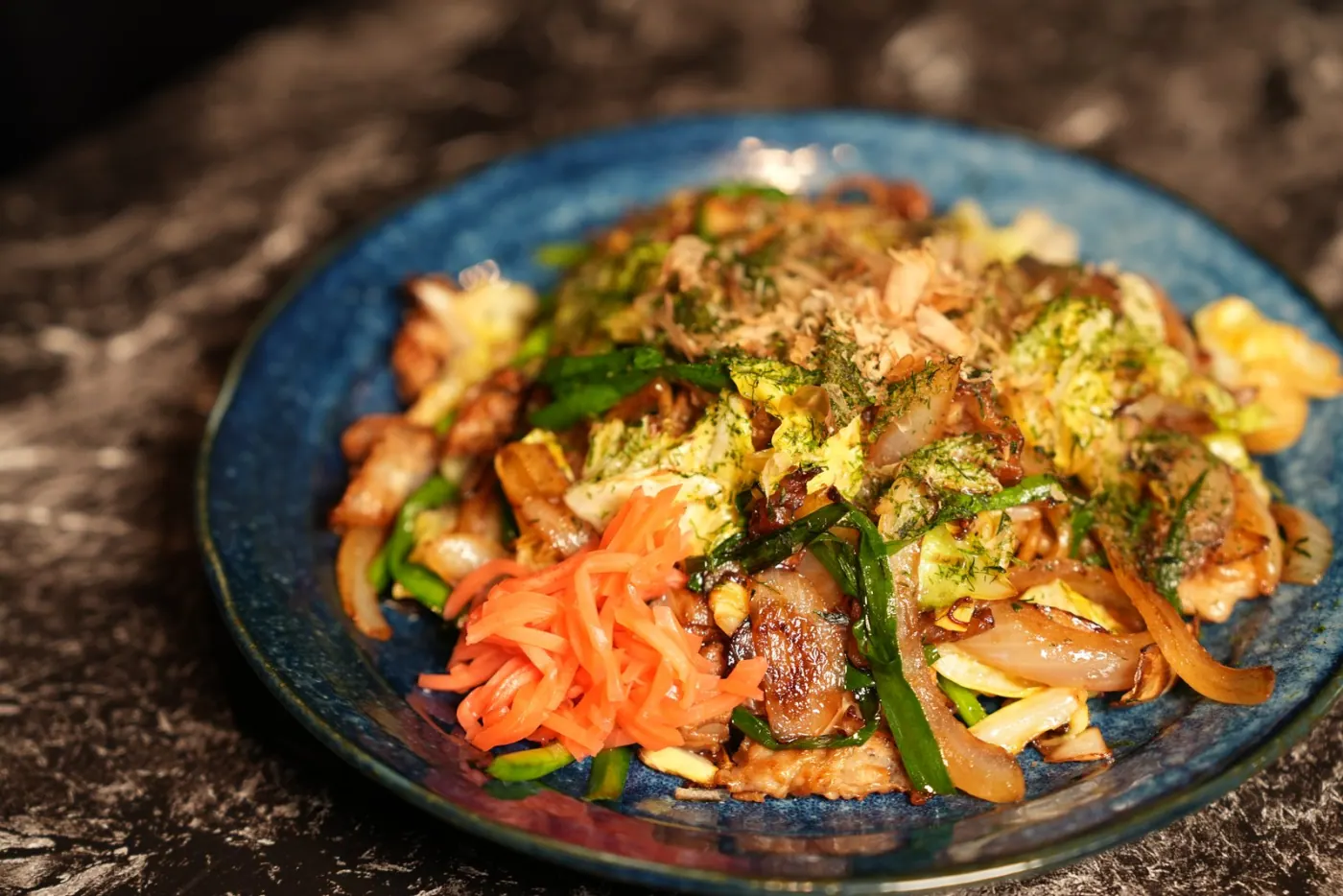
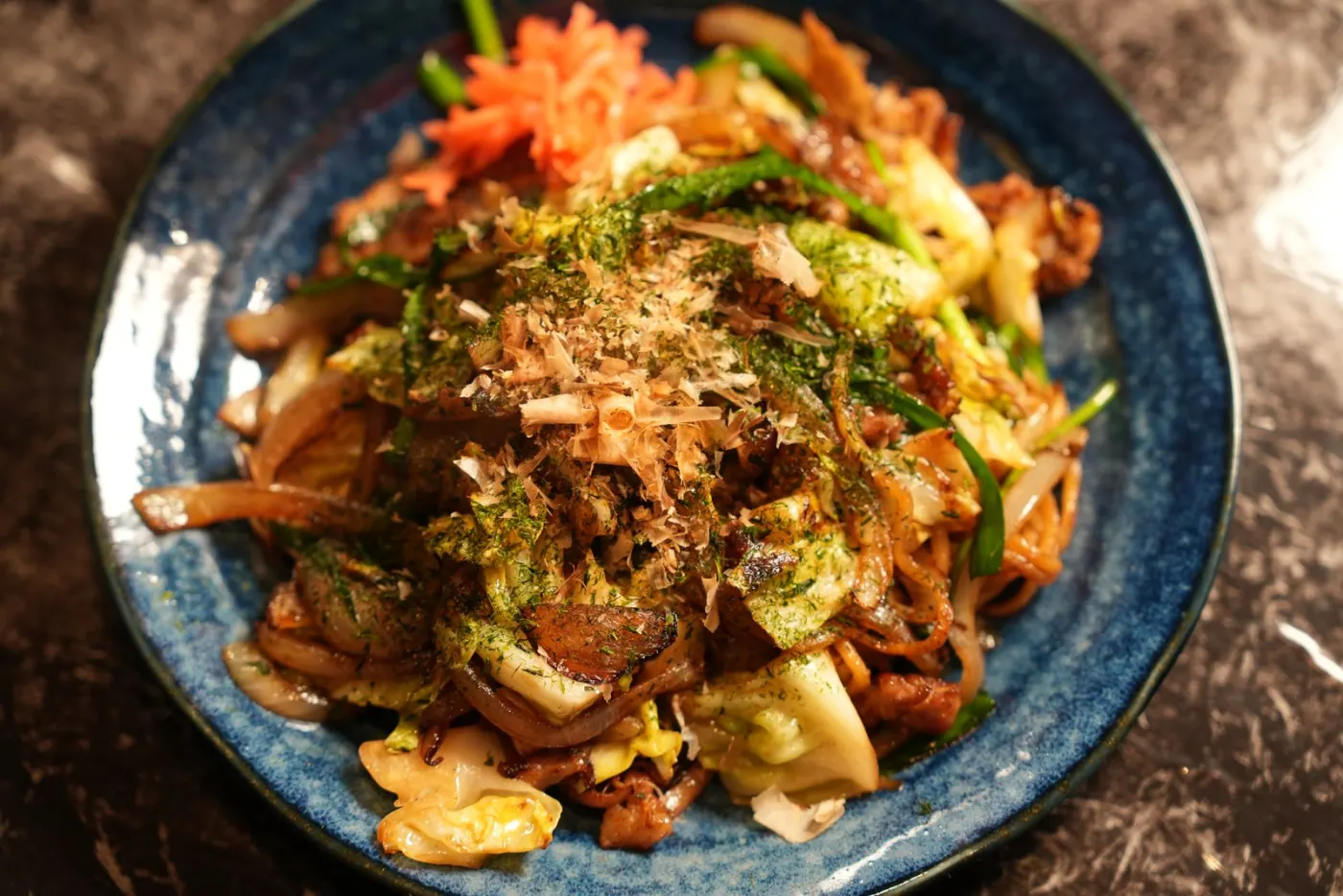
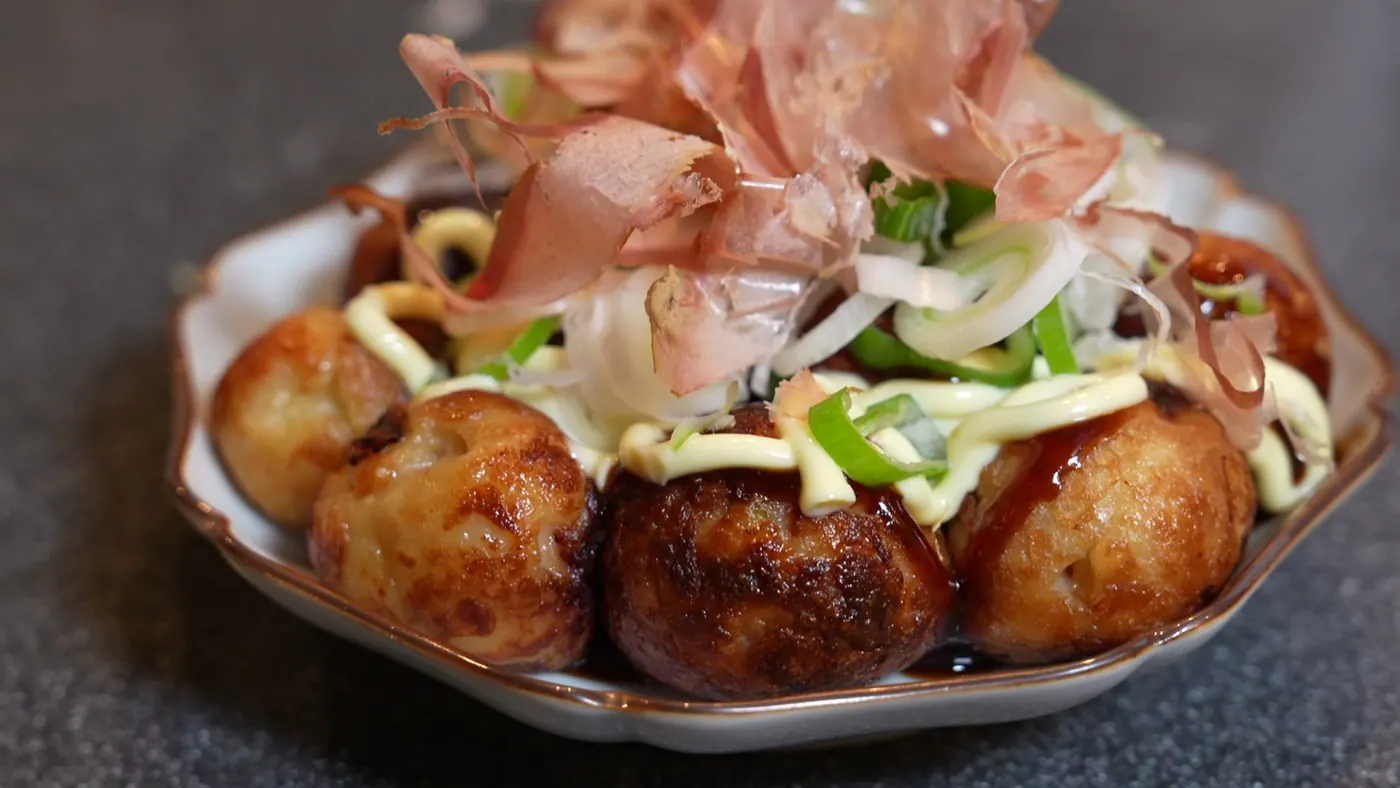
Yakisoba is a Japanese street food, as popular at festival stalls as takoyaki. This recipe makes street-style yakisoba at home: the noodles are seared in the pan first for a toasty flavor, then tossed with pork, vegetables and a rich sauce made from just Worcestershire sauce and oyster sauce.
Why You'll Love This Recipe
- Street-stall flavor - Searing the noodles first gives them a toasty aroma
- Two-sauce seasoning - Worcestershire sauce and oyster sauce make a rich flavor
- Lots of vegetables - Cabbage, onion and garlic chives with the pork
- Easy - One frying pan, medium heat
Key Points of This Recipe
- Sear the noodles on both sides and take them out before cooking the rest
- Cook the vegetables in order, starting with the one that takes longest
- Coat the cabbage in the pork fat until it turns glossy
- Cook the garlic chives for about 1 minute at the end
Required Equipment
- Frying pan
- Spatula
- Chopsticks
- Knife and cutting board
- A tray or plate (for the cut vegetables and the seared noodles)
Yakisoba Ingredients (Serves 1)
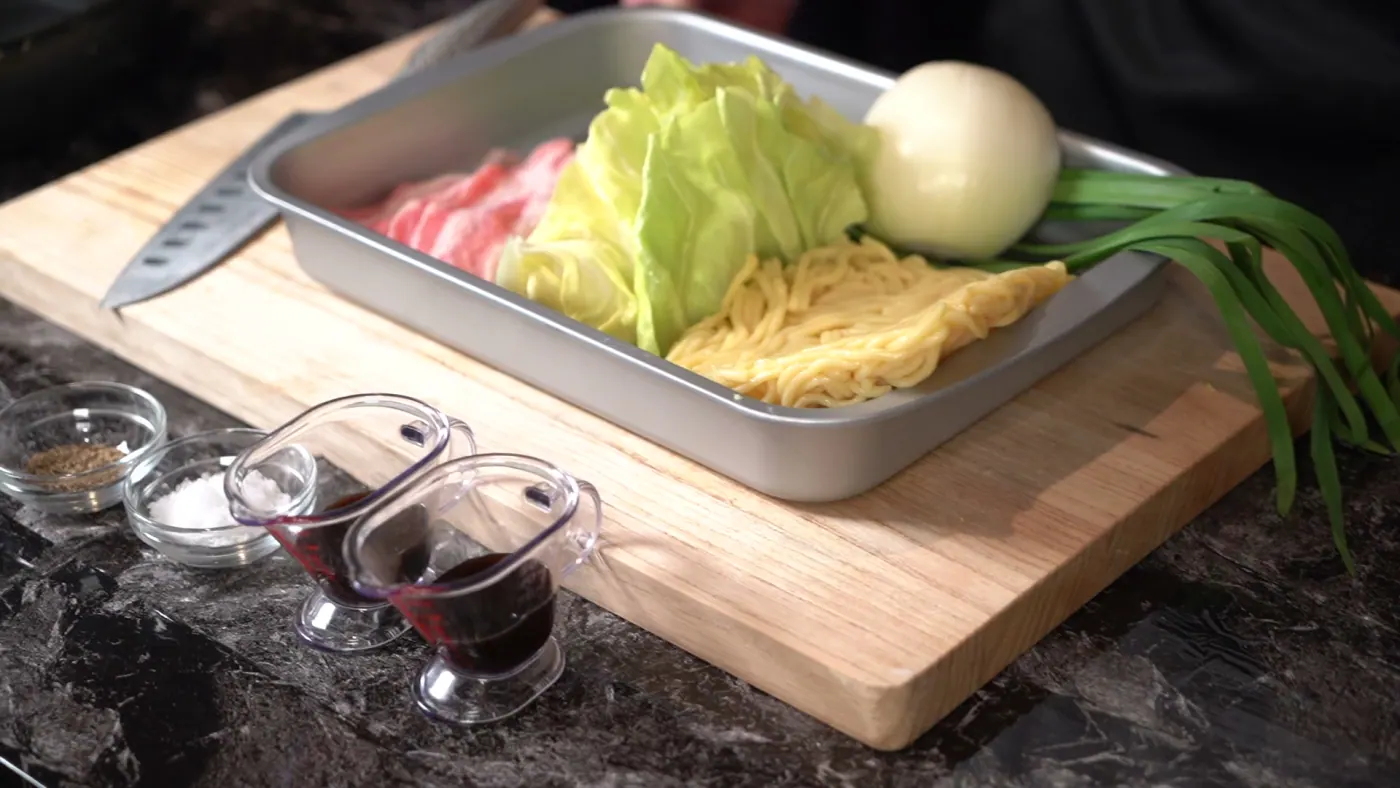
13 ingredients · 1 serving
Yakisoba noodles, thinly sliced pork belly, cabbage, garlic chives, onion, salt, black pepper, Worcestershire sauce, oyster sauce, vegetable oil, aonori, pickled ginger, bonito flakes.
Full amounts in the recipe cardIngredient Substitutions
- Carrots: You can add them too. Cook them before the onion, because they take longer to cook
Video Tutorial
The video shows how much to sear the noodles and how the cabbage looks when it's ready for the noodles.

How to Make Yakisoba
Prep: Cut the Ingredients
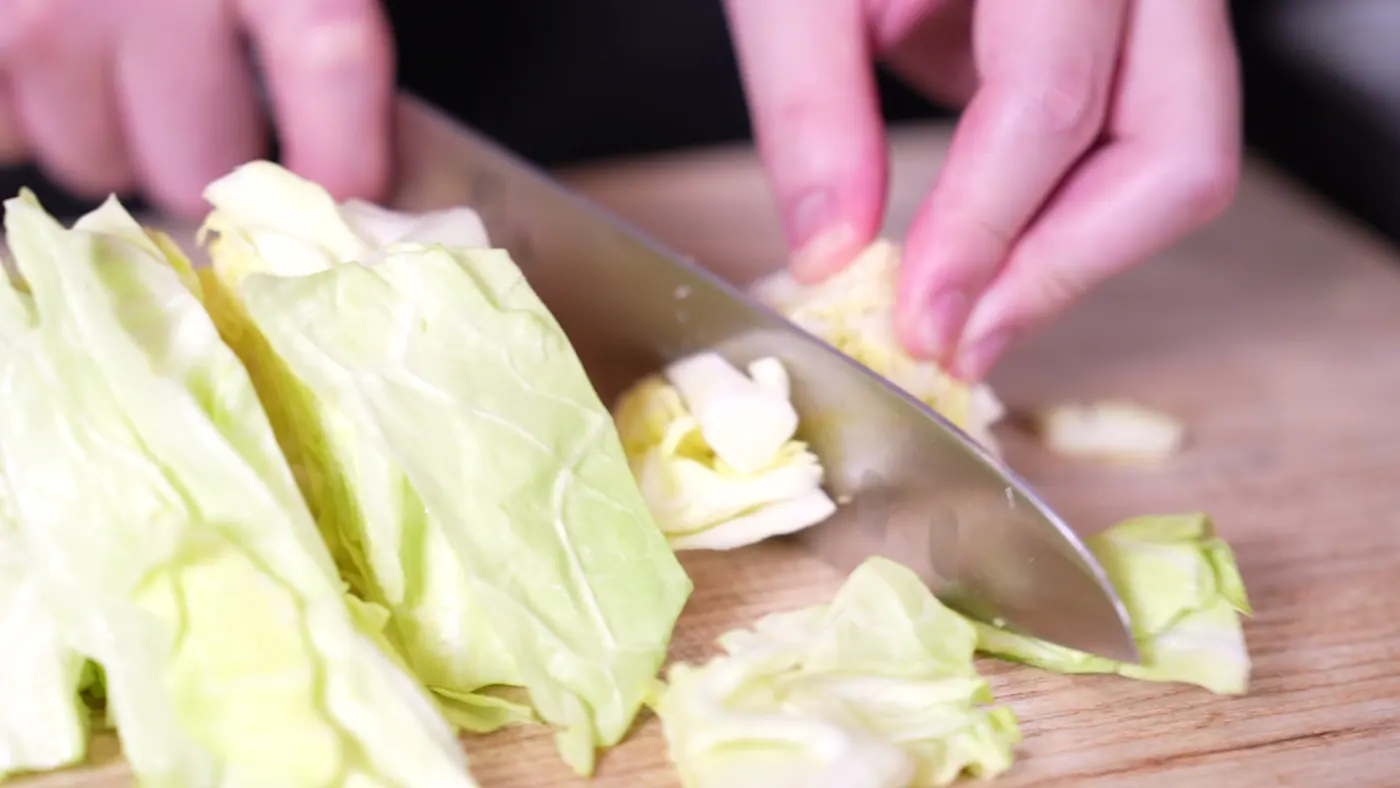
Cut the cabbage
Cut the cabbage into rough pieces so you can enjoy its texture. The core is hard, so slice it especially thin. Move the cabbage to a tray.
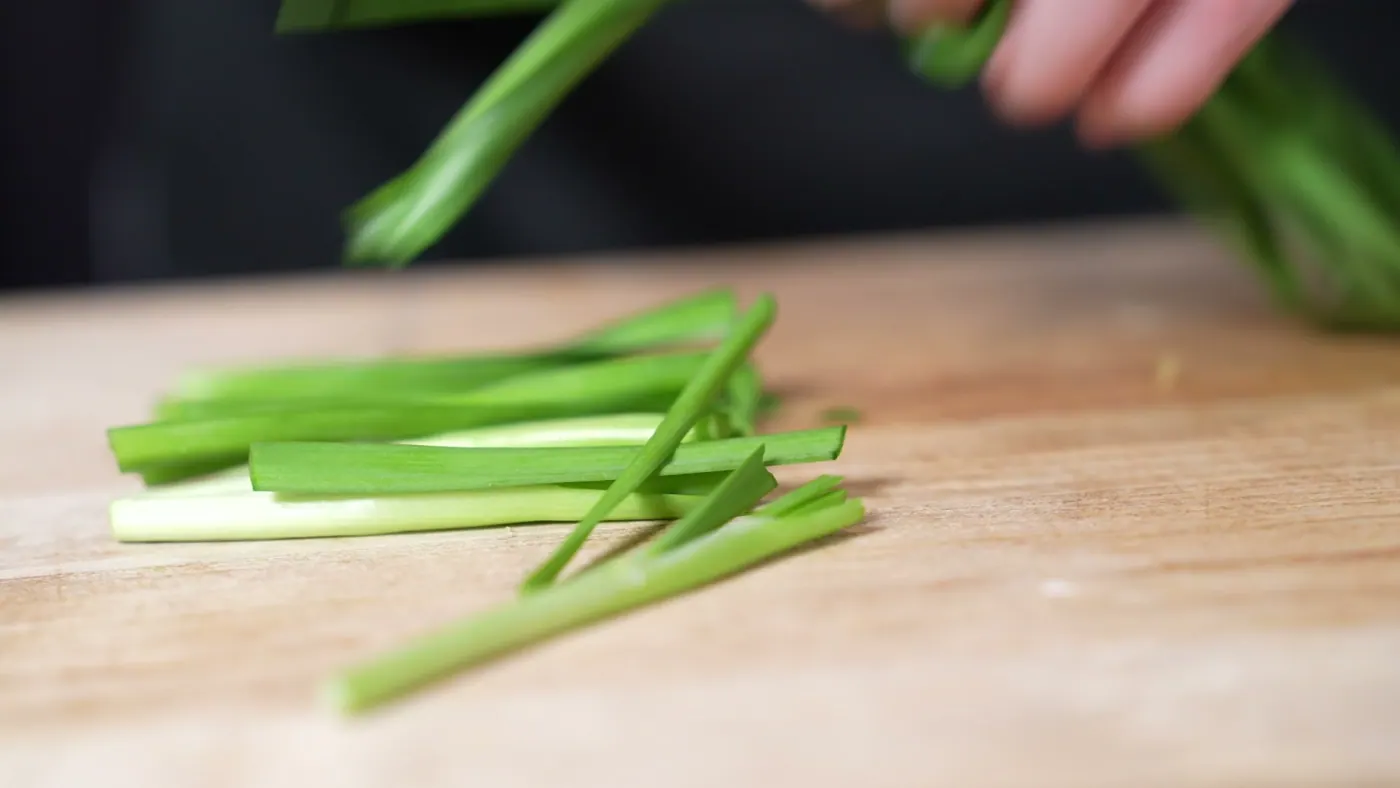
Cut the garlic chives
Cut the garlic chives into pieces about 3-4cm (about 1.5 inches) long.
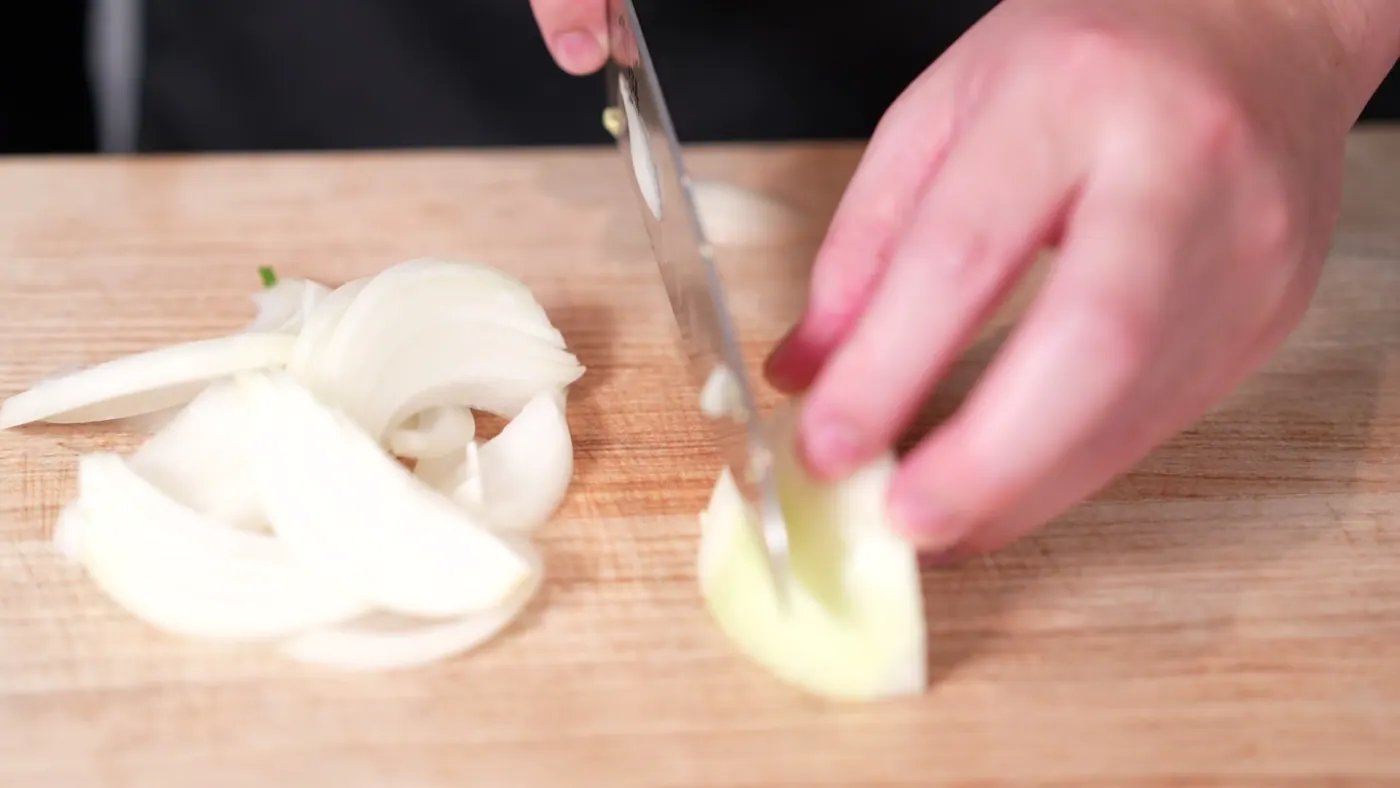
Slice the onion
Cut the onion into thin strips about 0.5cm (1/5 inch) wide. Strips about 0.5cm wide keep a little texture, and onion takes a while to cook, so don't cut them too thick.
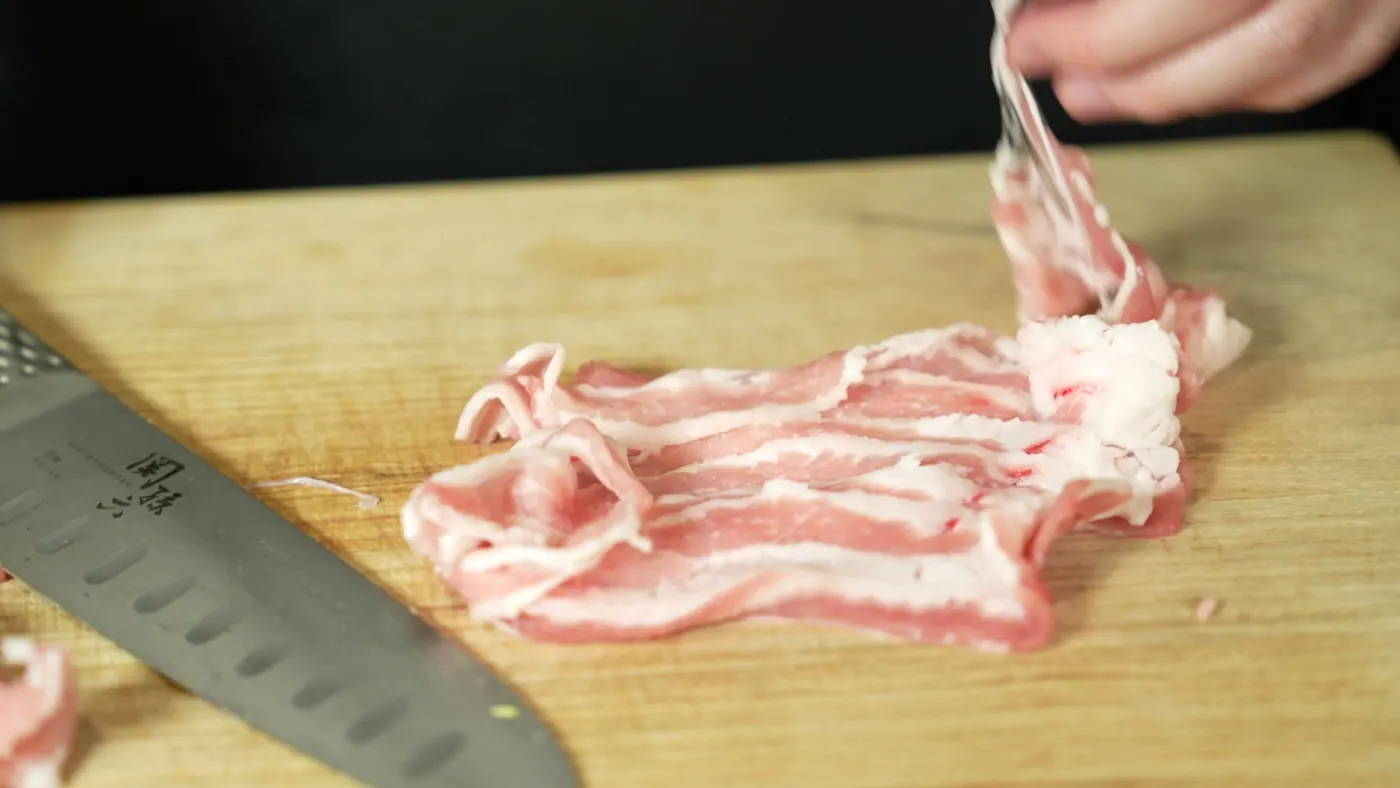
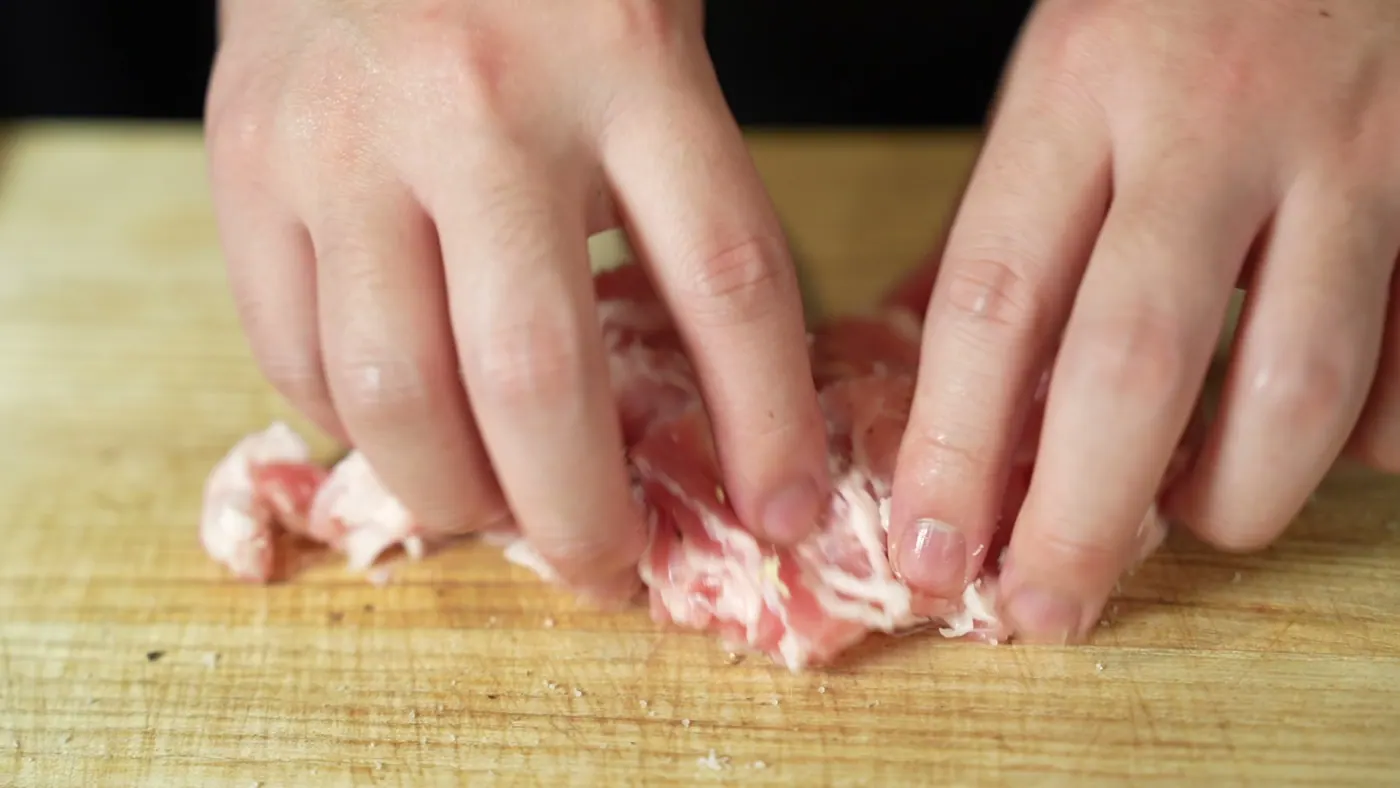
Cut and season the pork
Cut the pork into bite-sized pieces. Sprinkle a pinch of salt and a pinch of pepper over it, and rub them in well until they're spread over all the pork.
Sear the Noodles
Fry the noodles
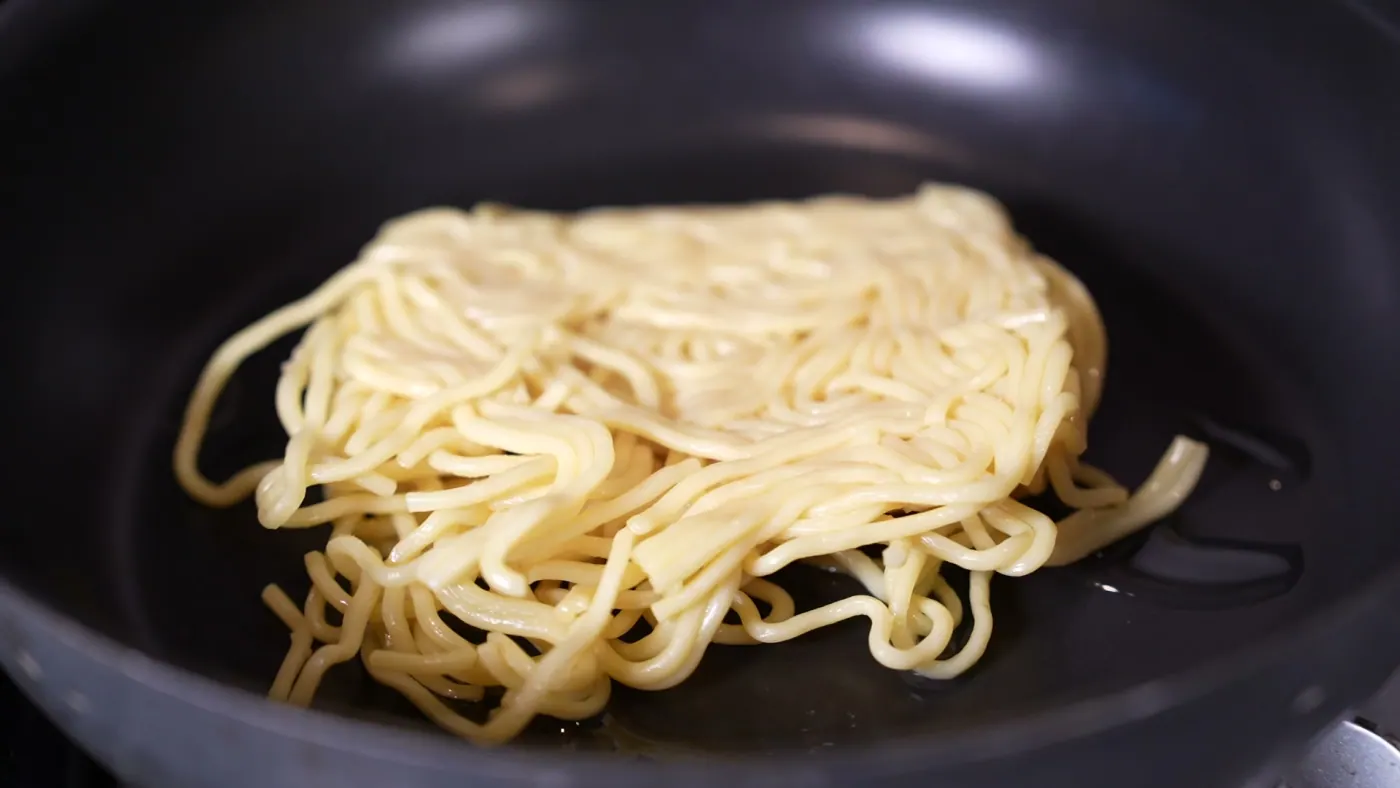
Set the frying pan on the stove, add 2 teaspoons of oil and turn the heat to medium. Fry the yakisoba noodles first. Searing the noodles gives them a toasty flavor, and it's the secret behind the yakisoba at Japanese street stalls.
Press and sear both sides
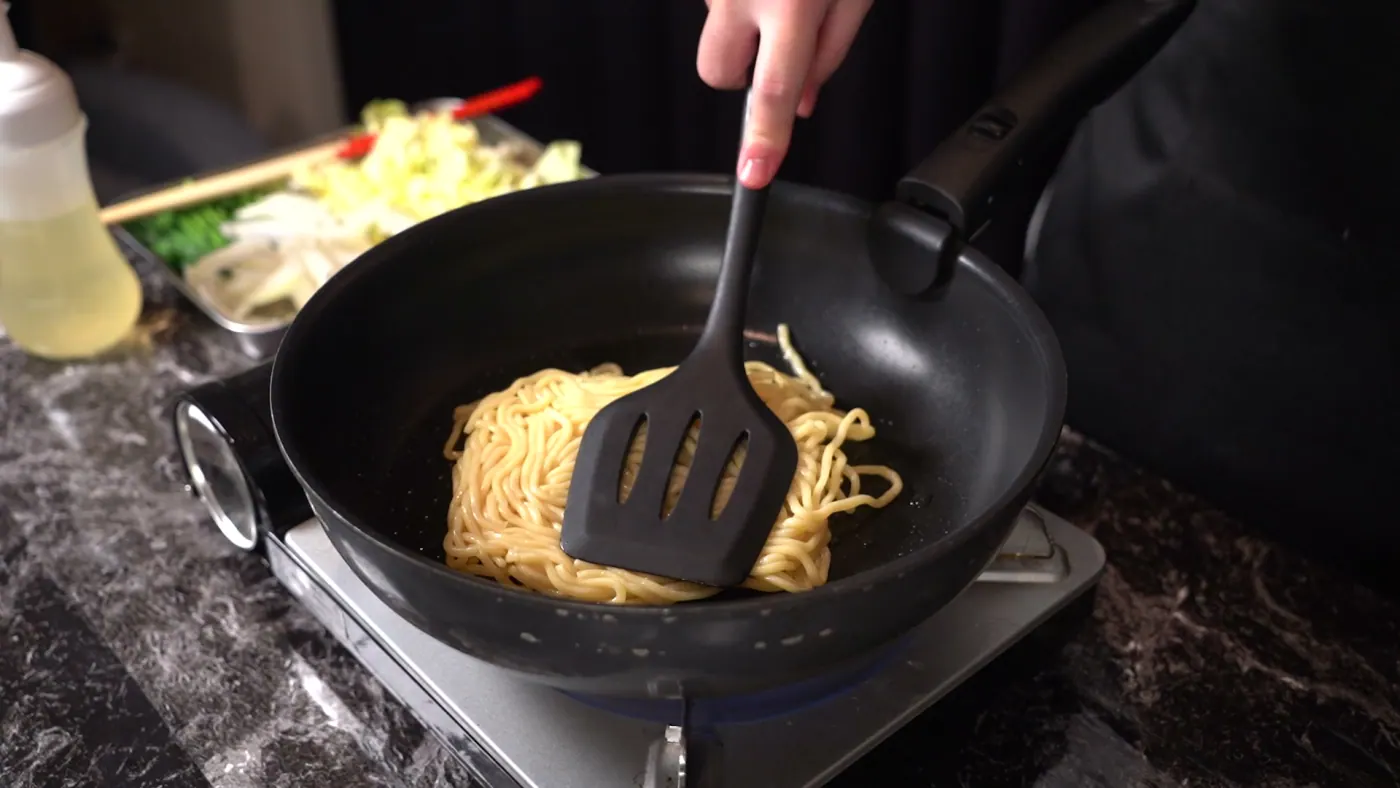
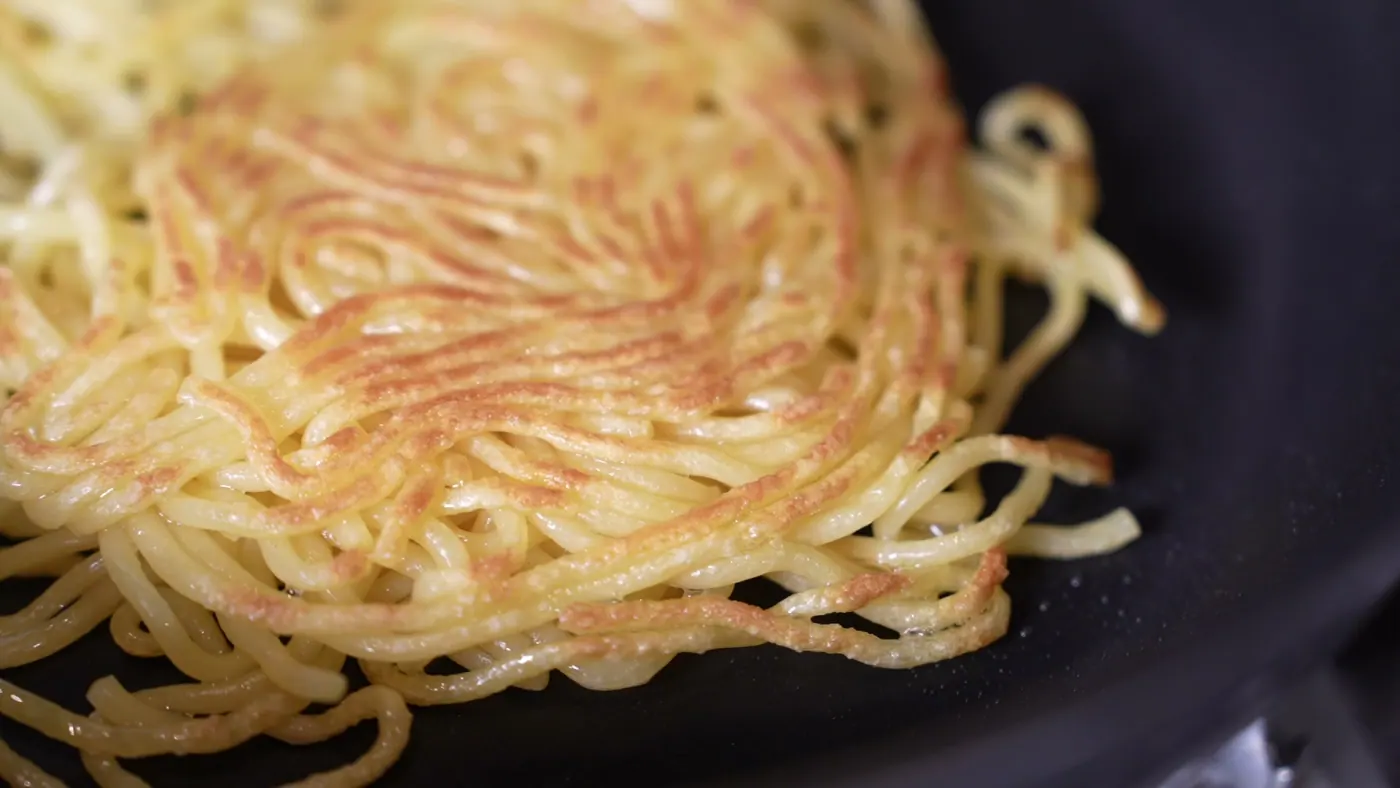
You want a good sear on the noodles, so press them down with the spatula now and then. After about 2-3 minutes, flip them over. Sear the other side the same way, pressing with the spatula.
Take the noodles out
Flip them again and check that both sides are well seared. Then take the noodles out of the pan and set them aside on a tray. If you leave them in, the vegetables won't cook properly.
Stir-Fry the Pork and Vegetables
Fry the pork
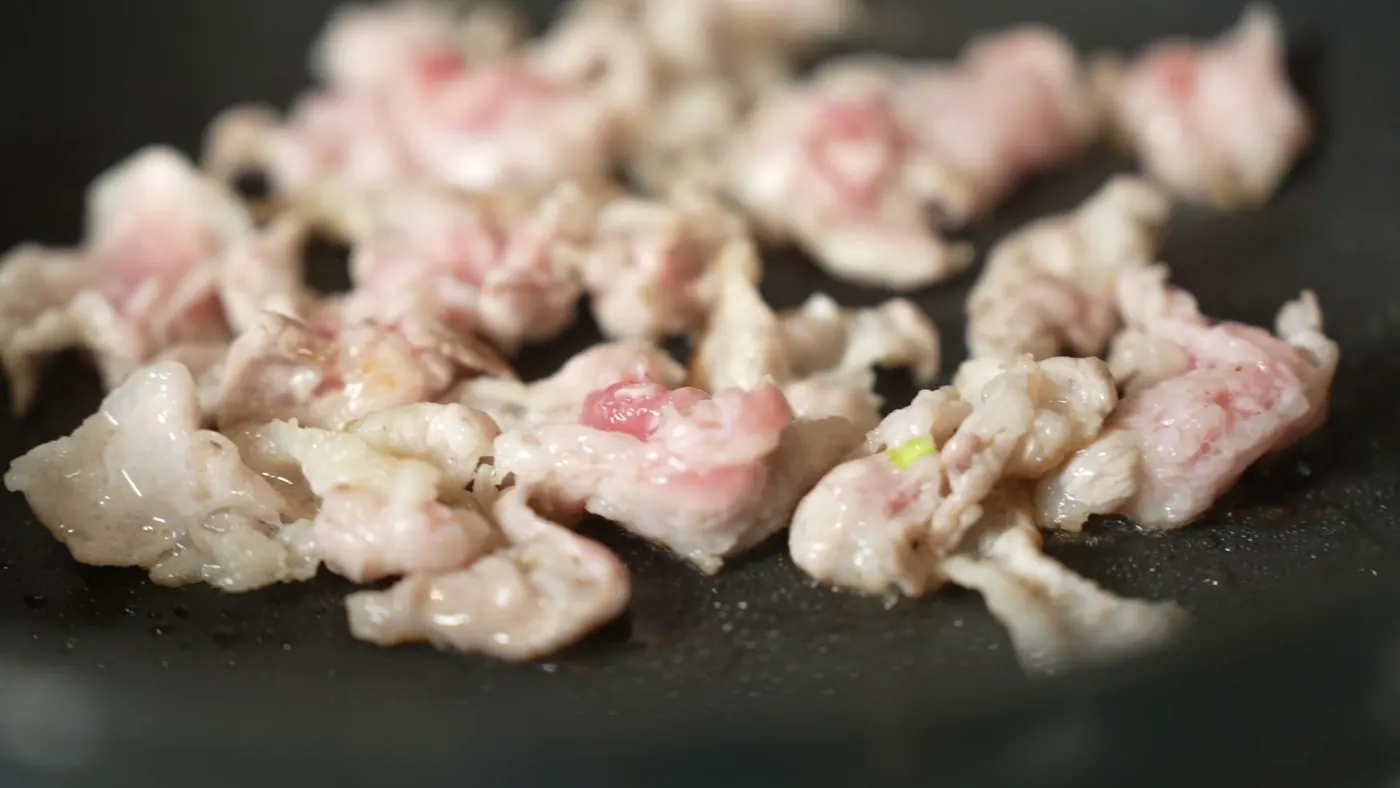
Add another 2 teaspoons of oil to the empty pan and fry the pork. Cook everything from here on over medium heat. Separate the slices as they cook and sear the pork well.
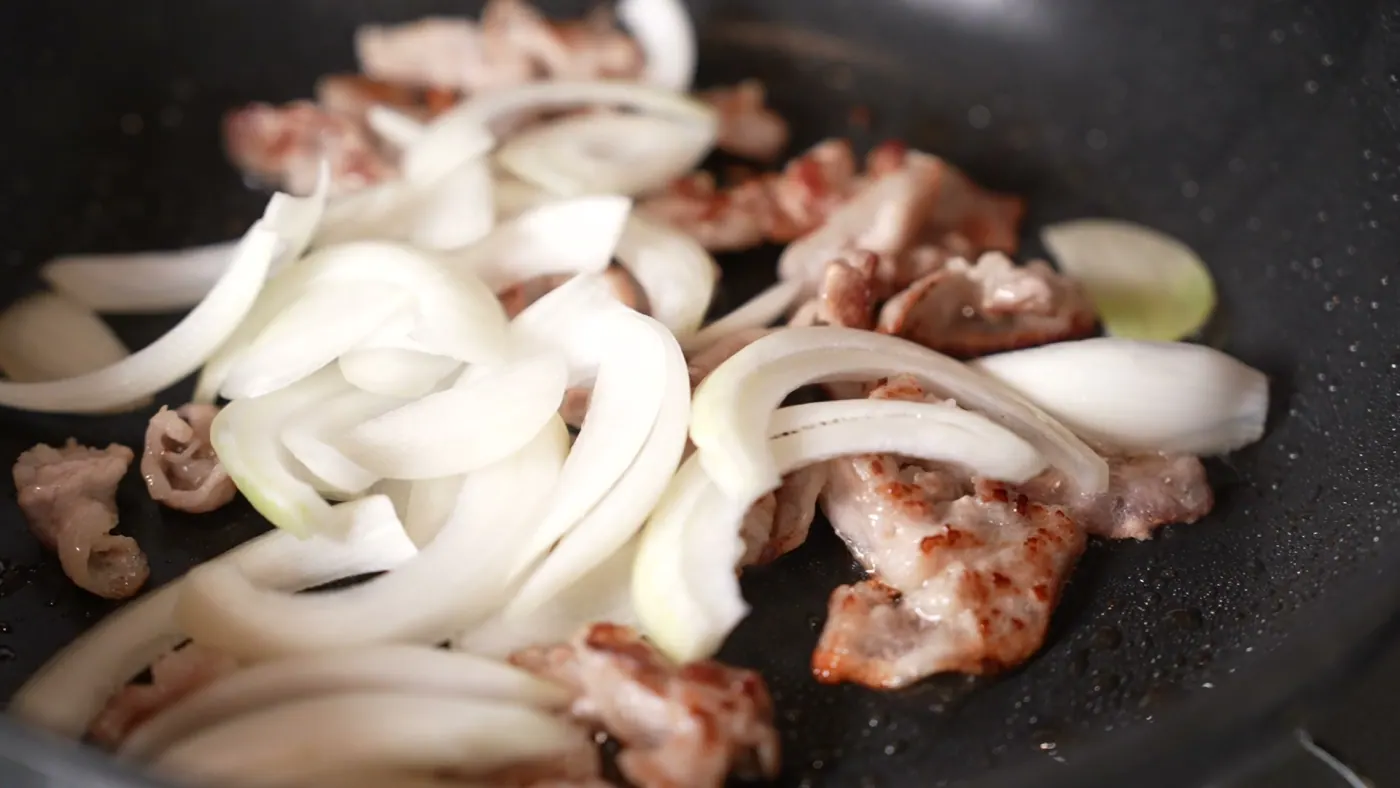
Add the onion
When the pork is browned all over, add the onion. Cook the vegetables in order, starting with the one that takes longest, so nothing is undercooked. After about 1 minute, the onion is cooked and partly translucent.
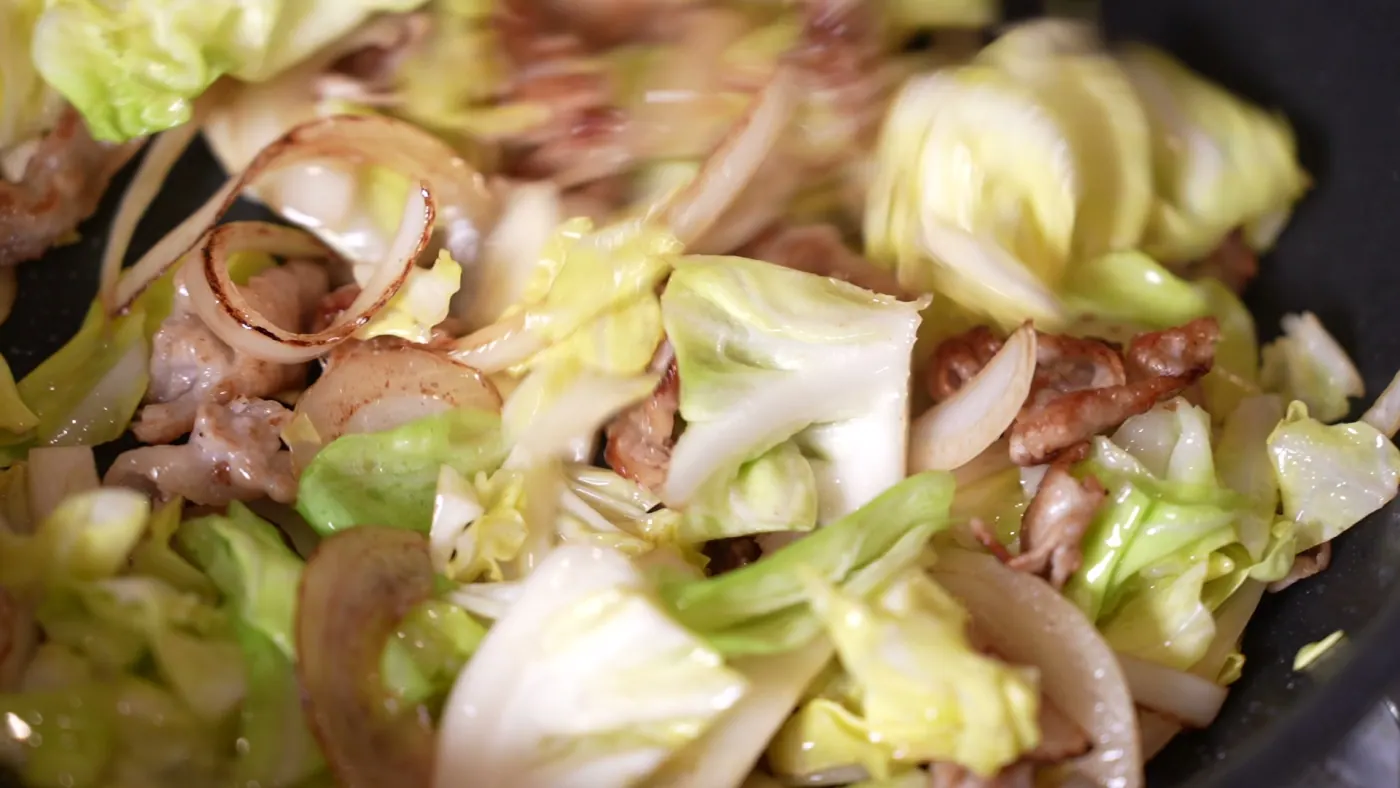
Add the cabbage
Add the cabbage now, while the onion is only partly translucent and before it goes soft and limp. Break up any clumps, and mix well so the pork fat coats the cabbage. After about 2 minutes, the cabbage is glossy with the oil and browned in places.
Finish the Yakisoba
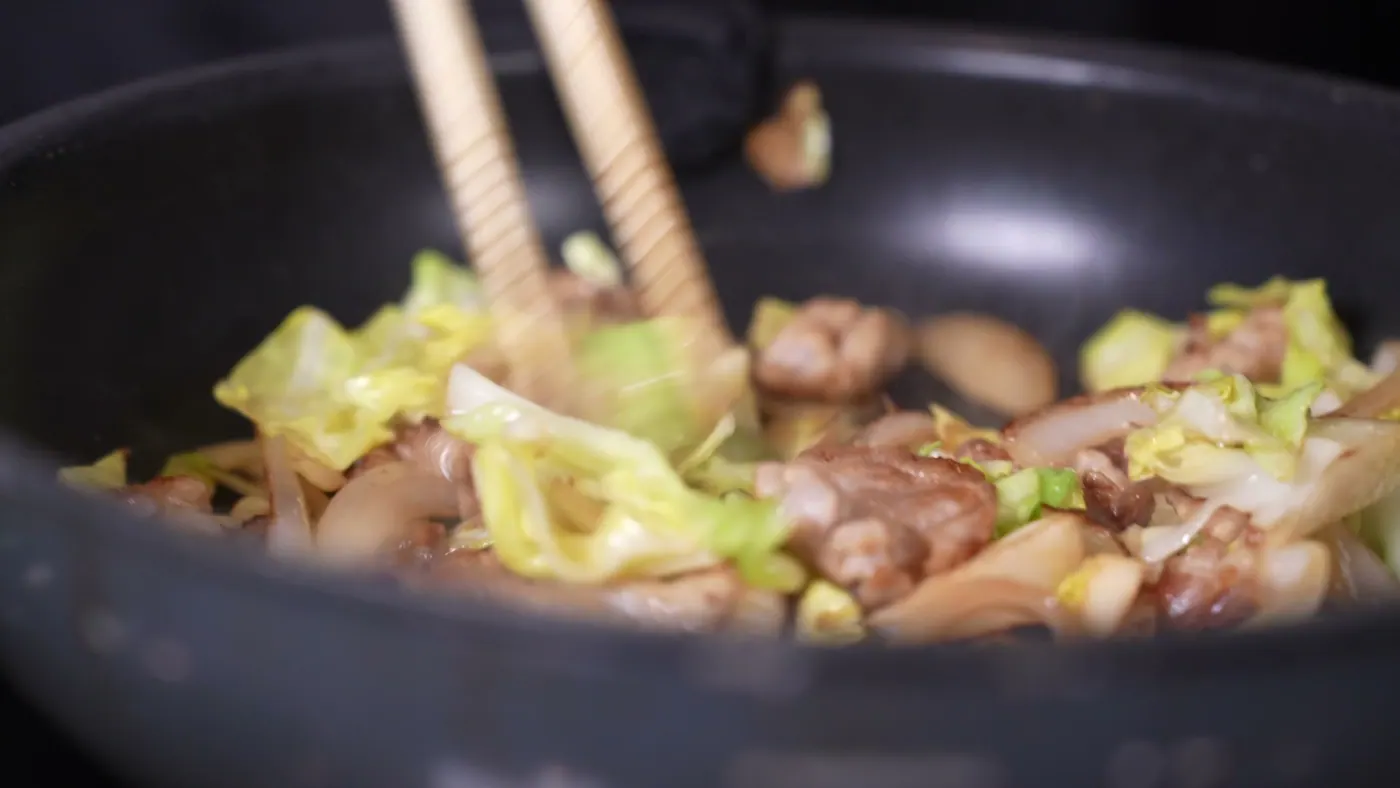
Add the noodles and loosen them
Put the noodles back in the pan. Loosen them well with chopsticks.
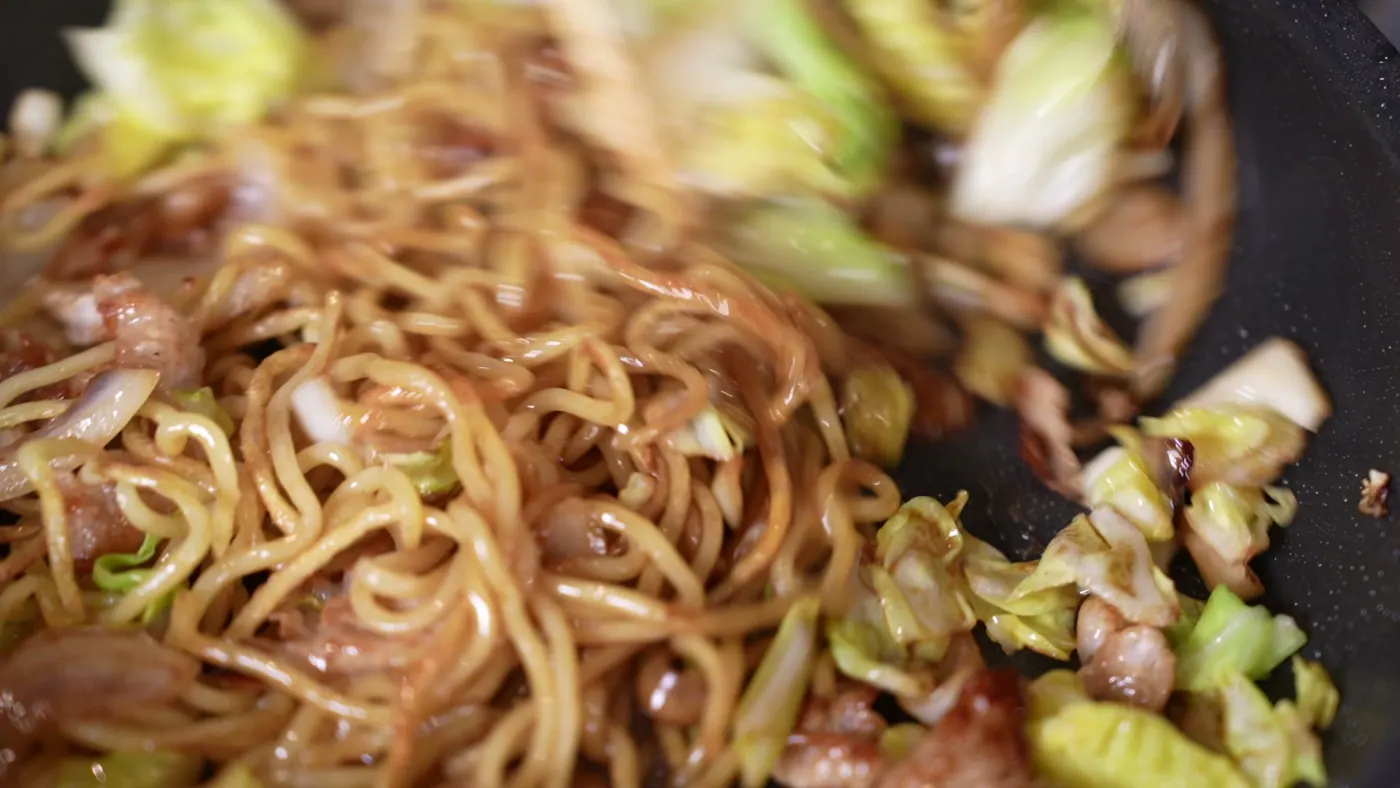
Add the sauces
Add 1 tablespoon each of Worcestershire sauce and oyster sauce. The two sauces together make a rich, delicious flavor. Mix well so the sauce coats everything.
Add the garlic chives
Add the garlic chives last and cook them briefly. They cook very fast, but if you don't cook them enough, they stay sharp and spicy. About 1 minute keeps some texture and takes the sharpness away. Adjust the time to your taste.
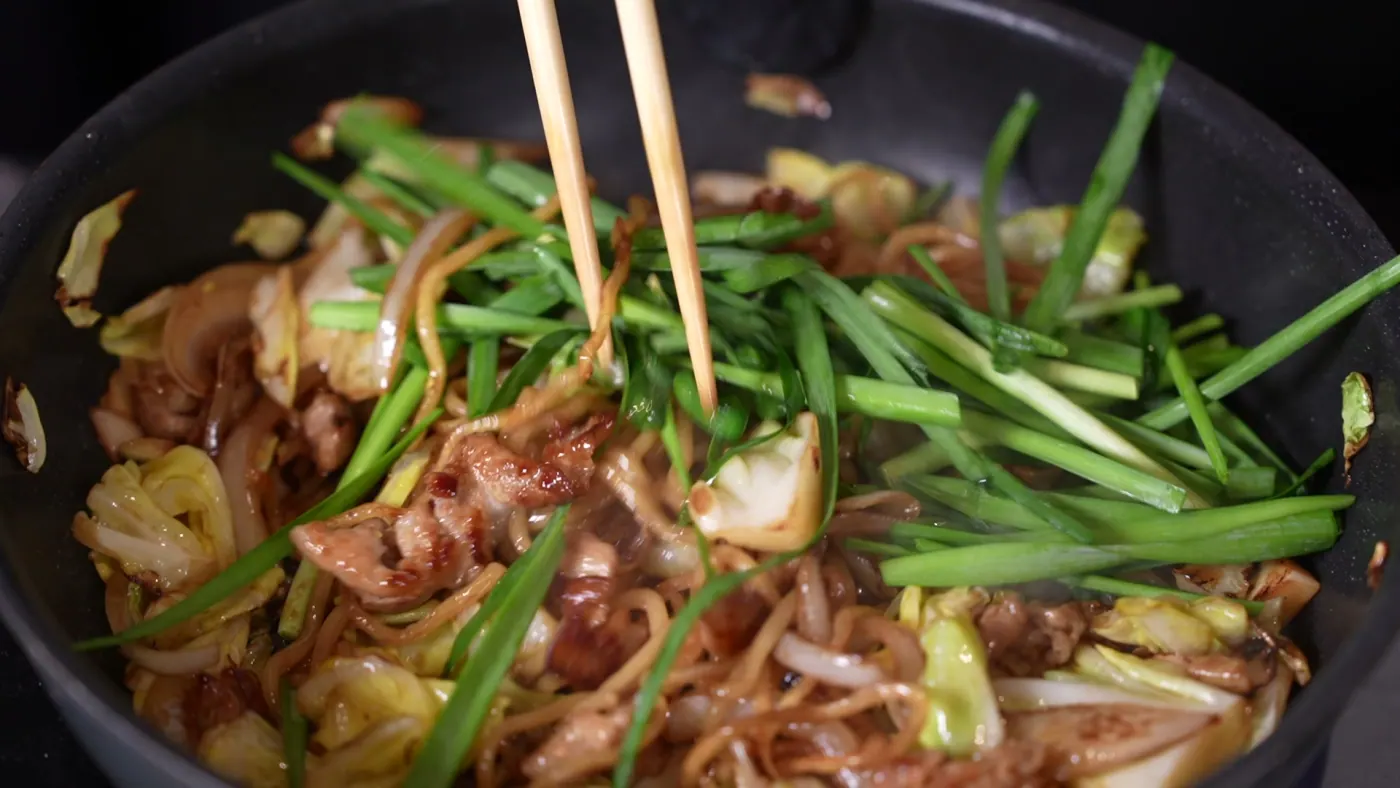
Plate and Serve
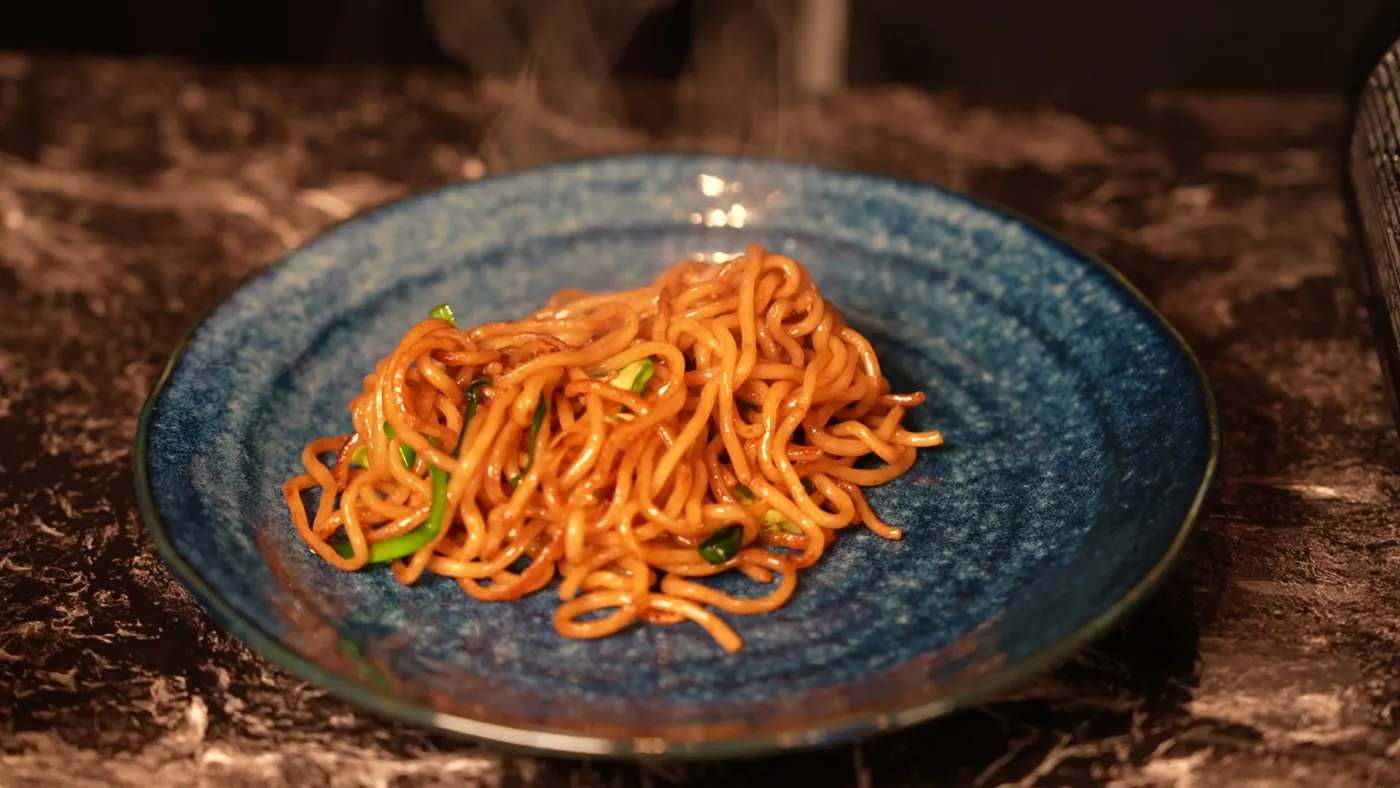
Plate the yakisoba
Put the noodles on the plate first, then pile the other ingredients on top. It looks more appetizing that way.
Add the toppings
Sprinkle aonori over the whole plate, and add bonito flakes and pickled ginger on the side.
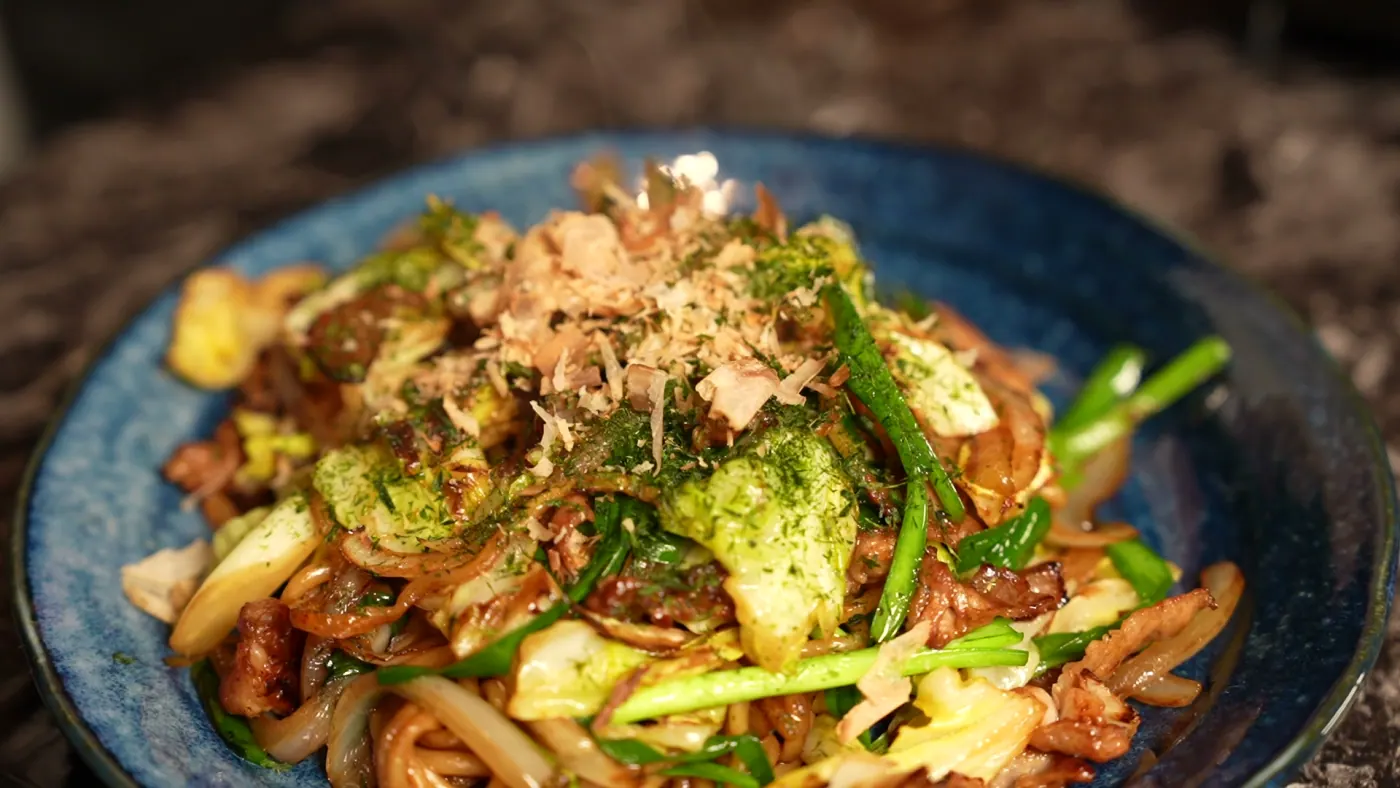
Try the first bite with the pickled ginger. The rich sauce, full of flavor from the pork, coats the noodles.
Variation: Street-Style Fried Egg
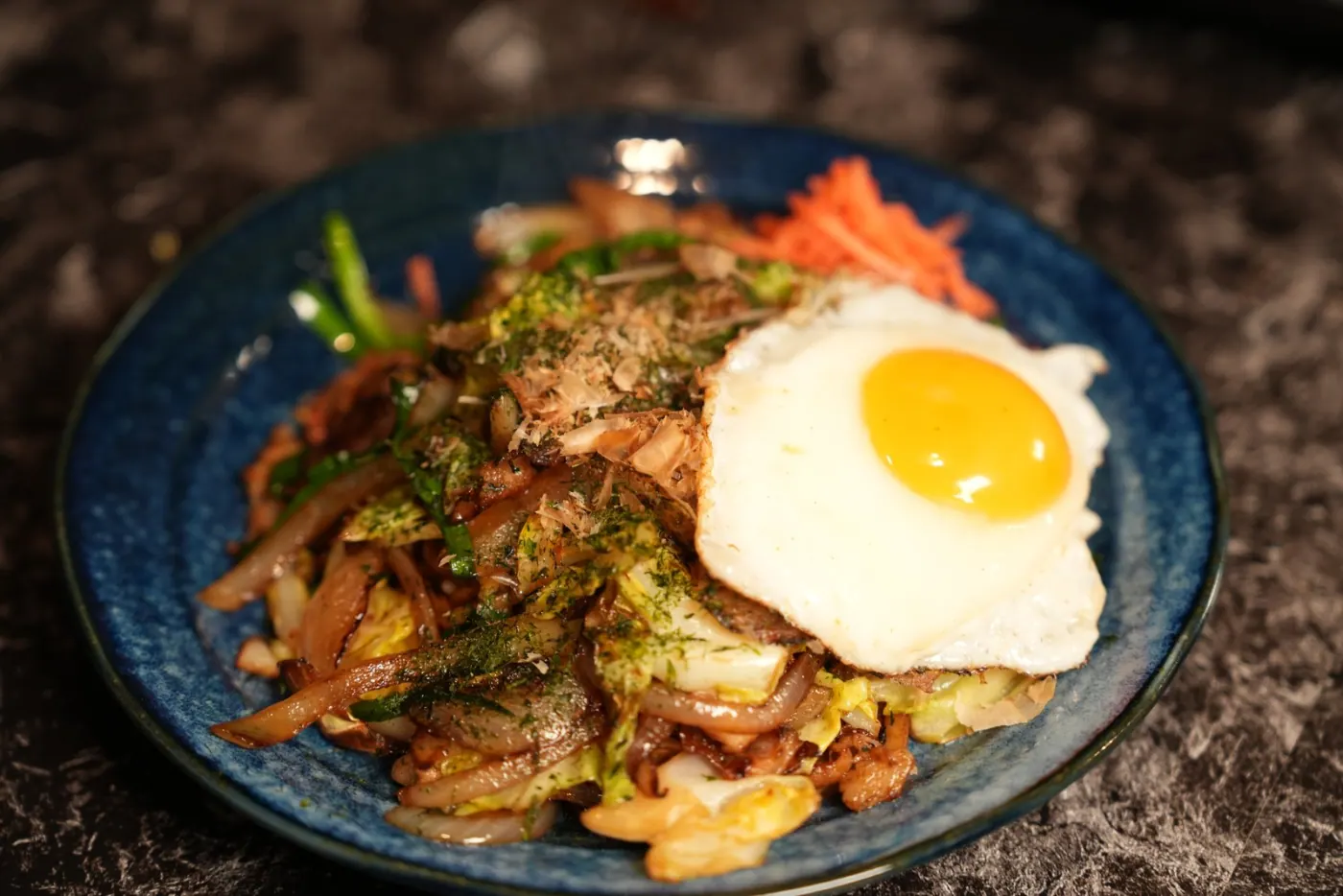
For an even more Japanese street-stall style, add a fried egg on the side. Break the yolk and mix it into the noodles as you eat for a mellow, creamy taste. This is an optional extra, not part of the recipe card above.
Tips and Key Points
Sear the noodles first
Searing the noodles on both sides before anything else gives them a toasty flavor. Take them out so the vegetables can cook properly.
Cook the vegetables in order
Start with the onion (or carrots, if you use them), then the cabbage, and the garlic chives last. Each goes in according to how long it takes to cook.
Coat the cabbage in pork fat
Mix the cabbage well with the fat from the pork. When it's glossy and browned in places, it's time for the noodles.
Troubleshooting
Frequently Asked Questions
Why fry the noodles first?
Searing the noodles gives them a toasty flavor. That's the secret behind the yakisoba at Japanese street stalls.
Why take the noodles out of the pan?
If they stay in the pan, the vegetables won't cook properly. Put them back after the cabbage is cooked.
Can I add carrots?
Yes. Cook them before the onion, because they take longer to cook.
How long should I cook the garlic chives?
About 1 minute. They cook fast, but undercooked garlic chives taste sharp and spicy. Adjust the time to your taste.
What sauce do I use?
1 tablespoon each of Worcestershire sauce and oyster sauce. Together they make a rich flavor.
Summary
Street-style yakisoba starts with searing the noodles on both sides for a toasty flavor. Then fry the pork, cook the onion and cabbage in the pork fat until glossy, return the noodles, and season with Worcestershire sauce and oyster sauce. Finish with garlic chives, aonori, bonito flakes and pickled ginger.
The same toppings finish okonomiyaki, the cabbage pancake sold at the same street stalls.
麺Noodles焼きそば
Yakisoba (Japanese Stir-Fried Noodles)
Yakisoba is a Japanese street food, as popular at festival stalls as takoyaki.
No ratings yet
Rate this recipe
- Prep
- 10 min
- Cook
- 15 min
- Total
- 25 min
- Servings
- 1
- Difficulty
- Beginner
Ingredients
Main Ingredients
Seasonings
For Cooking
Toppings
Ingredient amounts are multiplied; cooking times and pan size may need adjusting.
Instructions
Amounts mentioned in the steps are for the original recipe (1x) — use the scaled amounts above.
Prep: Cut the Ingredients
Cut the cabbage
Cut the cabbage into rough pieces so you can enjoy its texture. The core is hard, so slice it especially thin. Move the cabbage to a tray.
Cut the garlic chives
Cut the garlic chives into pieces about 3-4cm (about 1.5 inches) long.
Slice the onion
Cut the onion into thin strips about 0.5cm (1/5 inch) wide. Strips about 0.5cm wide keep a little texture, and onion takes a while to cook, so don't cut them too thick.
Cut and season the pork
Cut the pork into bite-sized pieces. Sprinkle a pinch of salt and a pinch of pepper over it, and rub them in well until they're spread over all the pork.
Sear the Noodles
Fry the noodles
Set the frying pan on the stove, add 2 teaspoons of oil and turn the heat to medium. Fry the yakisoba noodles first. Searing the noodles gives them a toasty flavor, and it's the secret behind the yakisoba at Japanese street stalls.
Press and sear both sides
You want a good sear on the noodles, so press them down with the spatula now and then. After about 2-3 minutes, flip them over. Sear the other side the same way, pressing with the spatula.
Take the noodles out
Flip them again and check that both sides are well seared. Then take the noodles out of the pan and set them aside on a tray. If you leave them in, the vegetables won't cook properly.
Stir-Fry the Pork and Vegetables
Fry the pork
Add another 2 teaspoons of oil to the empty pan and fry the pork. Cook everything from here on over medium heat. Separate the slices as they cook and sear the pork well.
Add the onion
When the pork is browned all over, add the onion. Cook the vegetables in order, starting with the one that takes longest, so nothing is undercooked. After about 1 minute, the onion is cooked and partly translucent.
Add the cabbage
Add the cabbage now, while the onion is only partly translucent and before it goes soft and limp. Break up any clumps, and mix well so the pork fat coats the cabbage. After about 2 minutes, the cabbage is glossy with the oil and browned in places.
Finish the Yakisoba
Add the noodles and loosen them
Put the noodles back in the pan. Loosen them well with chopsticks.
Add the sauces
Add 1 tablespoon each of Worcestershire sauce and oyster sauce. The two sauces together make a rich, delicious flavor. Mix well so the sauce coats everything.
Add the garlic chives
Add the garlic chives last and cook them briefly. They cook very fast, but if you don't cook them enough, they stay sharp and spicy. About 1 minute keeps some texture and takes the sharpness away. Adjust the time to your taste.
Plate and Serve
Plate the yakisoba
Put the noodles on the plate first, then pile the other ingredients on top. It looks more appetizing that way.
Add the toppings
Sprinkle aonori over the whole plate, and add bonito flakes and pickled ginger on the side.
Try the first bite with the pickled ginger. The rich sauce, full of flavor from the pork, coats the noodles.
Video
Watch the video · 6:01Open on YouTube
Jump to a part of the video (7 chapters)
Video: https://youtu.be/lsLOqzcxW3U
Notes
Substitutions
- Carrots: You can add them too. Cook them before the onion, because they take longer to cook
Nutrition estimated, per serving
- Calories
- 776 kcal
- Carbohydrates
- 76.2 g
- Protein
- 23.2 g
- Fat
- 47.3 g
- Saturated fat
- 14.1 g
- Fiber
- 8.7 g
- Sugar
- 14.4 g
- Sodium
- 2,052 mg
Estimated by us from the Standard Tables of Food Composition in Japan (MEXT, 2020). Optional ingredients and garnishes are not counted; soup and sauce are counted as fully eaten. Actual values depend on your brands and portion sizes. How we calculate this
Course: Noodles · Cuisine: Japanese · Keyword: Yakisoba
Recipe from Japanese Cooking Ichie — https://japanesecookingichie.com/recipes/yakisoba/
Make it a meal
Add a side dish to round out the table.
Ratings & comments
No ratings yet — be the first to rate this recipe.
Comments