- Prep
- 35 min
- Cook
- 15 min
- Total
- 50 min
- Yield
- About 3.5 cups (850ml)
- Difficulty
- Beginner
What is Awase Dashi?
Dashi is the soup stock behind miso soup, simmered dishes and noodle soups. This recipe makes awase dashi, the classic dashi made with kombu (dried kelp) and katsuobushi (bonito flakes). The two things that make it taste clean are simple: never let the kombu boil, and steep the bonito flakes off the heat without squeezing them.
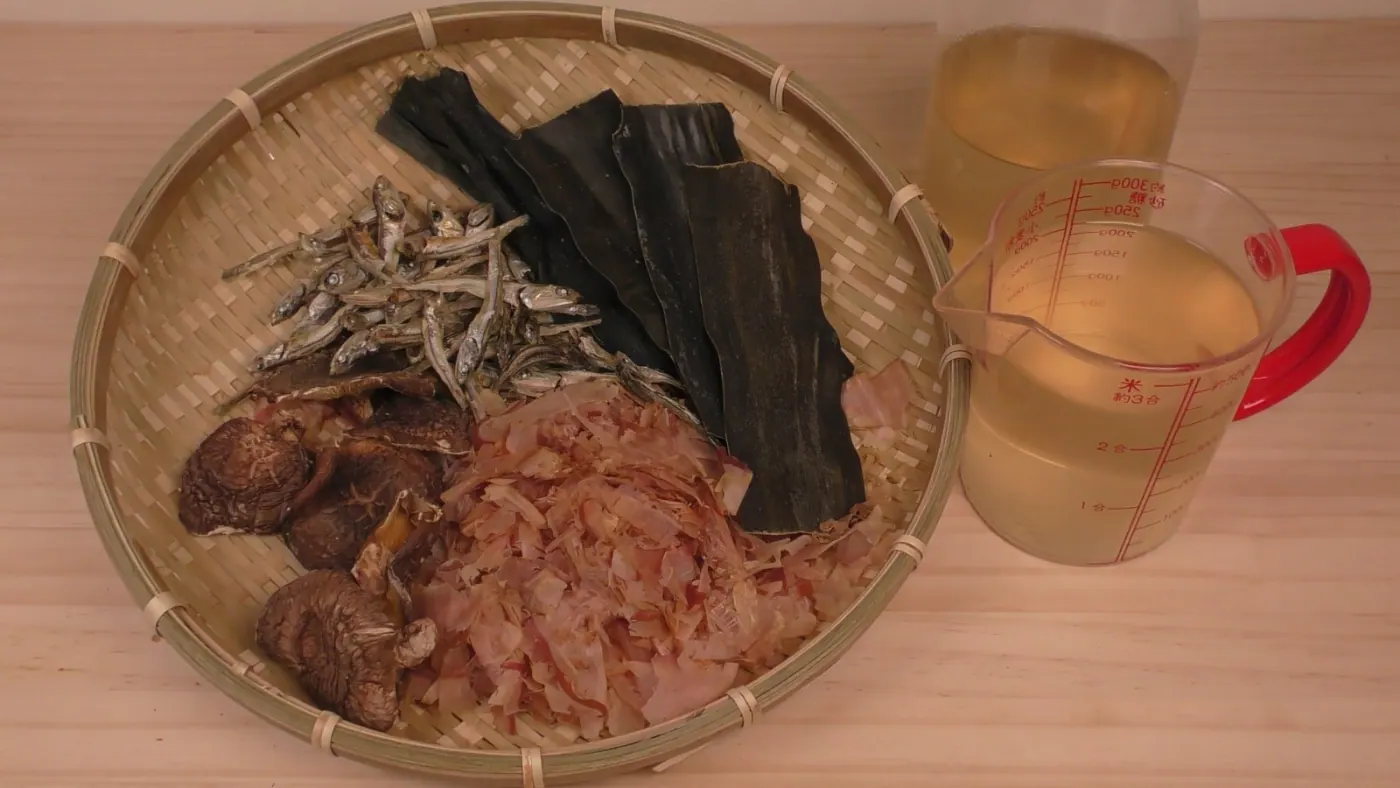
If you want to know more about what dashi is and how the different kinds compare, see our guide to dashi. Further down this page there are also four more kinds of dashi from the video: kombu dashi, katsuo dashi, iriko dashi and shiitake dashi. Each one is a separate recipe with its own amounts.
Why You'll Love This Recipe
- Just three ingredients - Kombu, bonito flakes and water
- The base of Japanese cooking - Use it for miso soup, simmered dishes and hot pots
- Keeps for about 3 days - Make it ahead and keep it in the refrigerator
- Four more dashi on the same page - Kombu, katsuo, iriko and shiitake dashi
Key Points of This Recipe
- Don't wash off the white powder on the kombu. It adds umami
- Heat the kombu over medium-low heat and take it out before the water boils
- Add the bonito flakes after the heat is off, before the broth boils
- Strain through kitchen paper and don't squeeze the bonito flakes
Required Equipment
- Medium pot
- Kitchen scissors
- Chopsticks
- Strainer and a bowl
- Cloth or kitchen paper (to line the strainer)
Awase Dashi Ingredients (Makes about 3.5 cups)
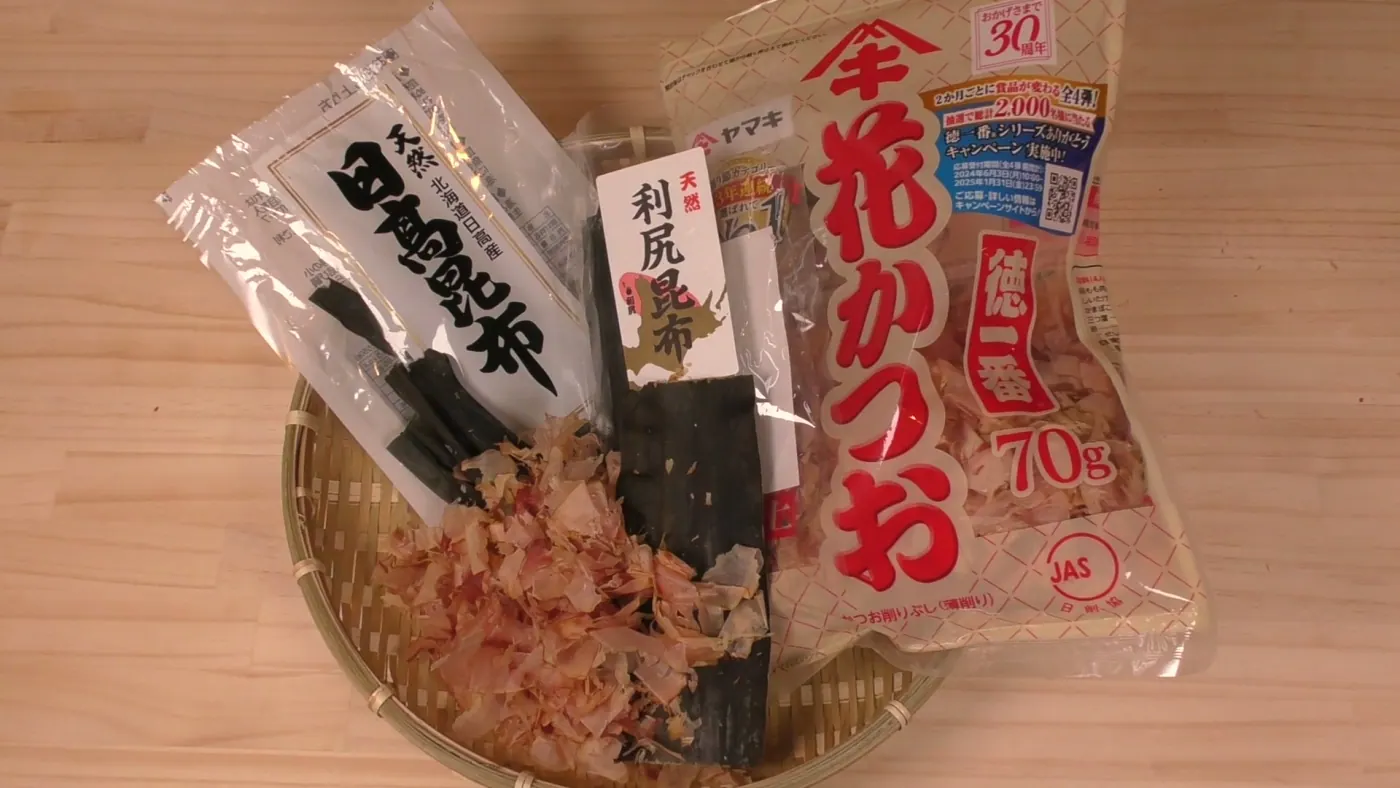
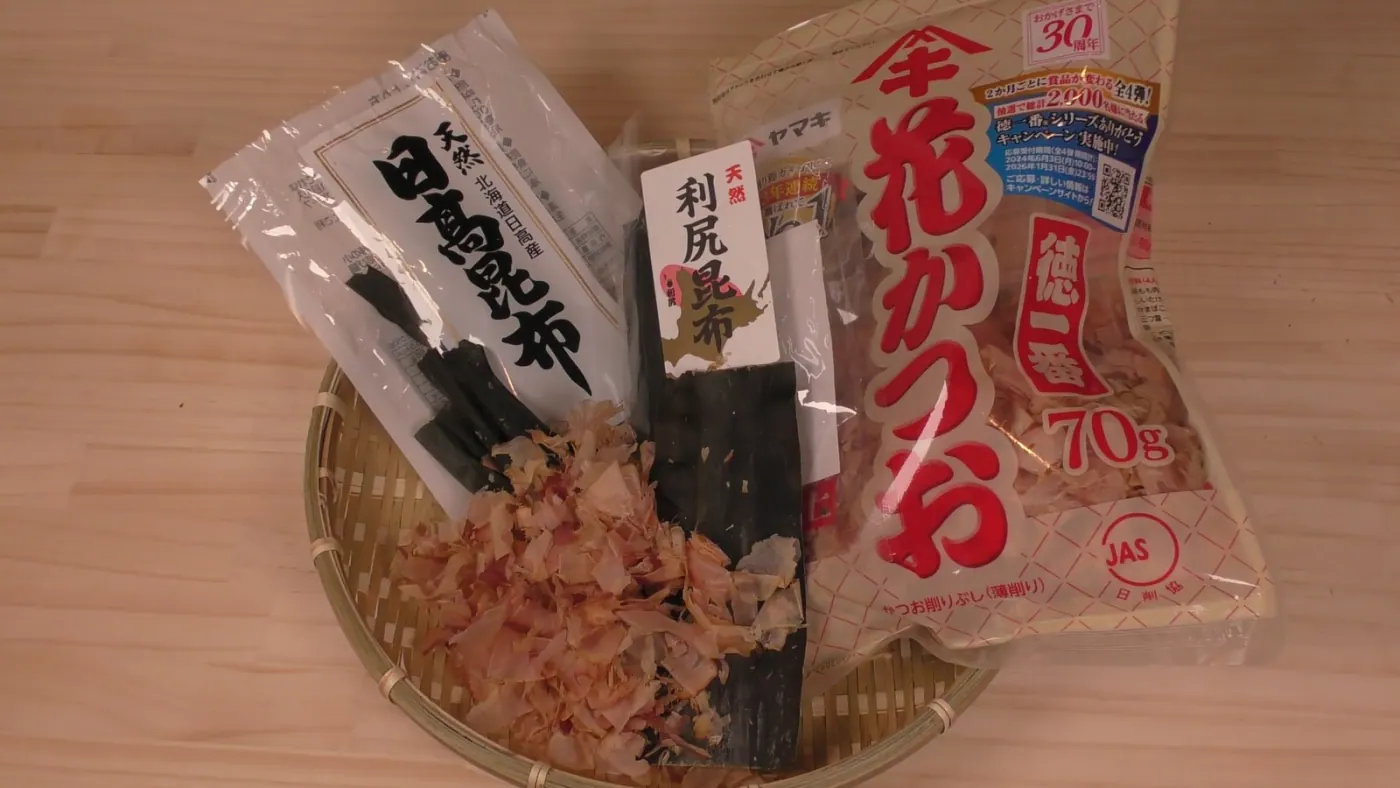
3 ingredients · About 3.5 cups (850ml)
Dried kombu, katsuobushi, water.
Full amounts in the recipe cardVideo Tutorial
The video shows five kinds of dashi. Awase dashi starts at 2:08, right after the kombu dashi.

How to Make Awase Dashi
Make the Kombu Dashi
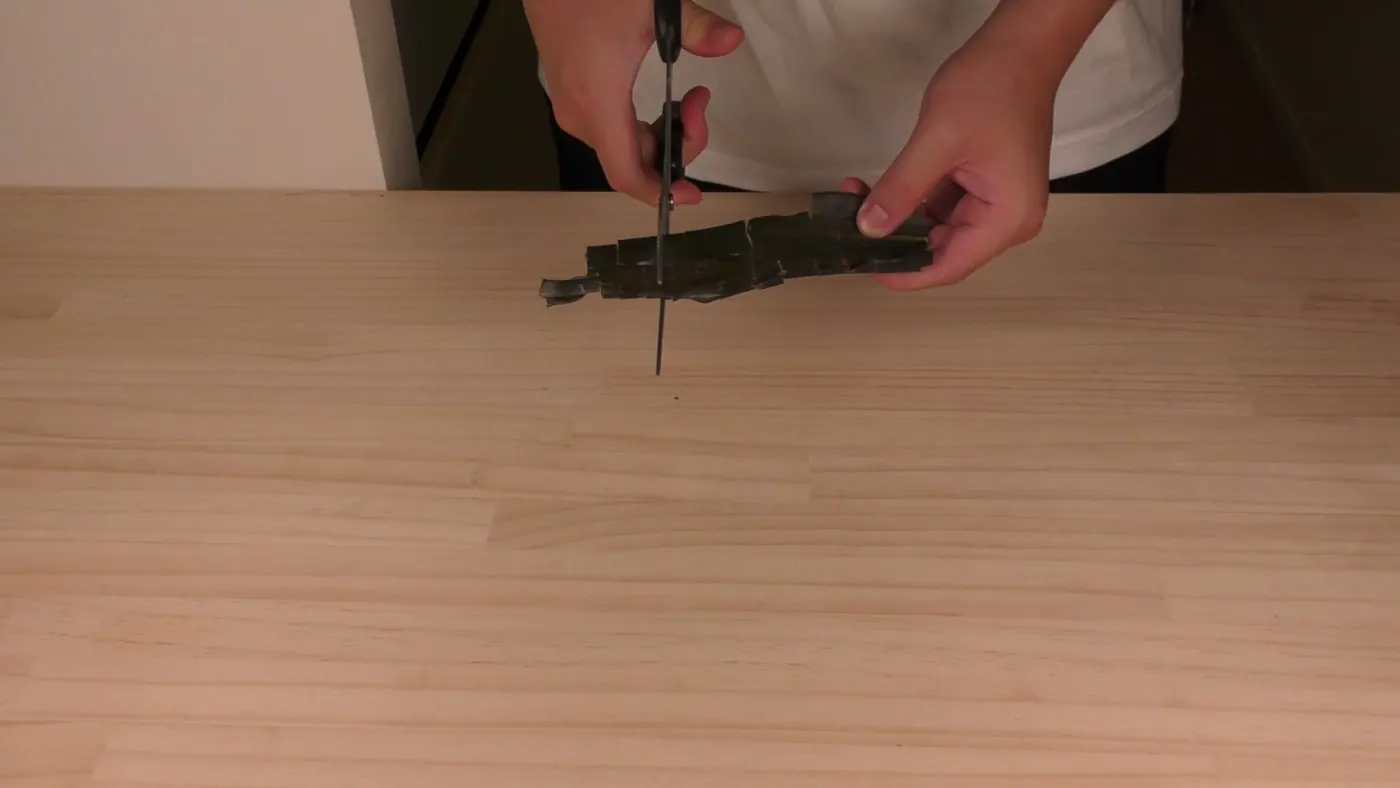
Cut the kombu
Make several cuts in 10g of kombu with scissors. The cuts make it easier for the umami to come out of the kombu.
Don't wash off the white powder on the surface. It's mannitol, and it adds to the umami of the dashi.
Soak the kombu in the pot
Put 960ml (4 cups) of water and the kombu in a pot and let it soak for 30 minutes.
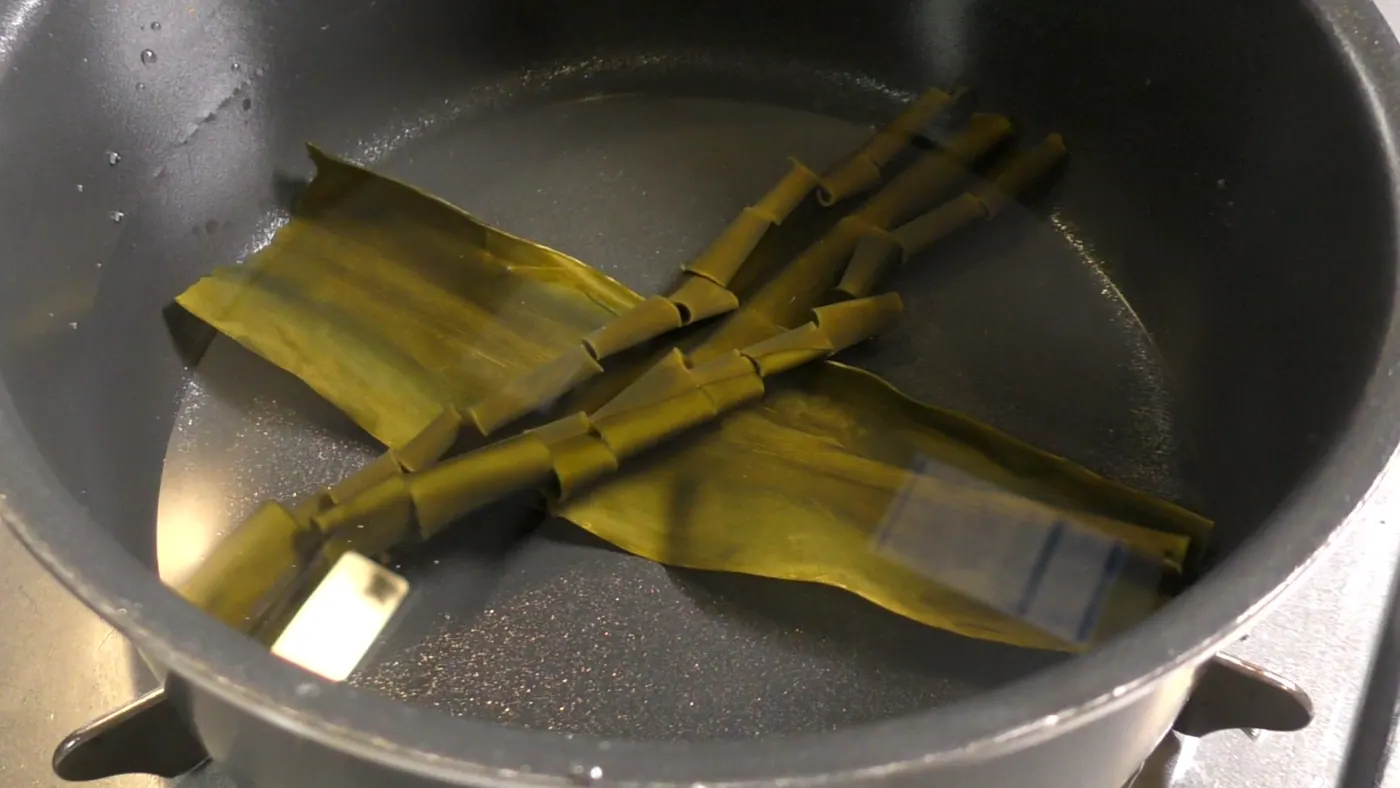
Heat it slowly over medium-low heat
After soaking, heat the pot over medium-low heat for about 10 minutes. Don't let it boil.
Why medium-low heat?
If you bring it to a boil quickly over high heat, the umami of the kombu doesn't come out properly. And if the kombu gets too hot, it can make the dashi bitter.
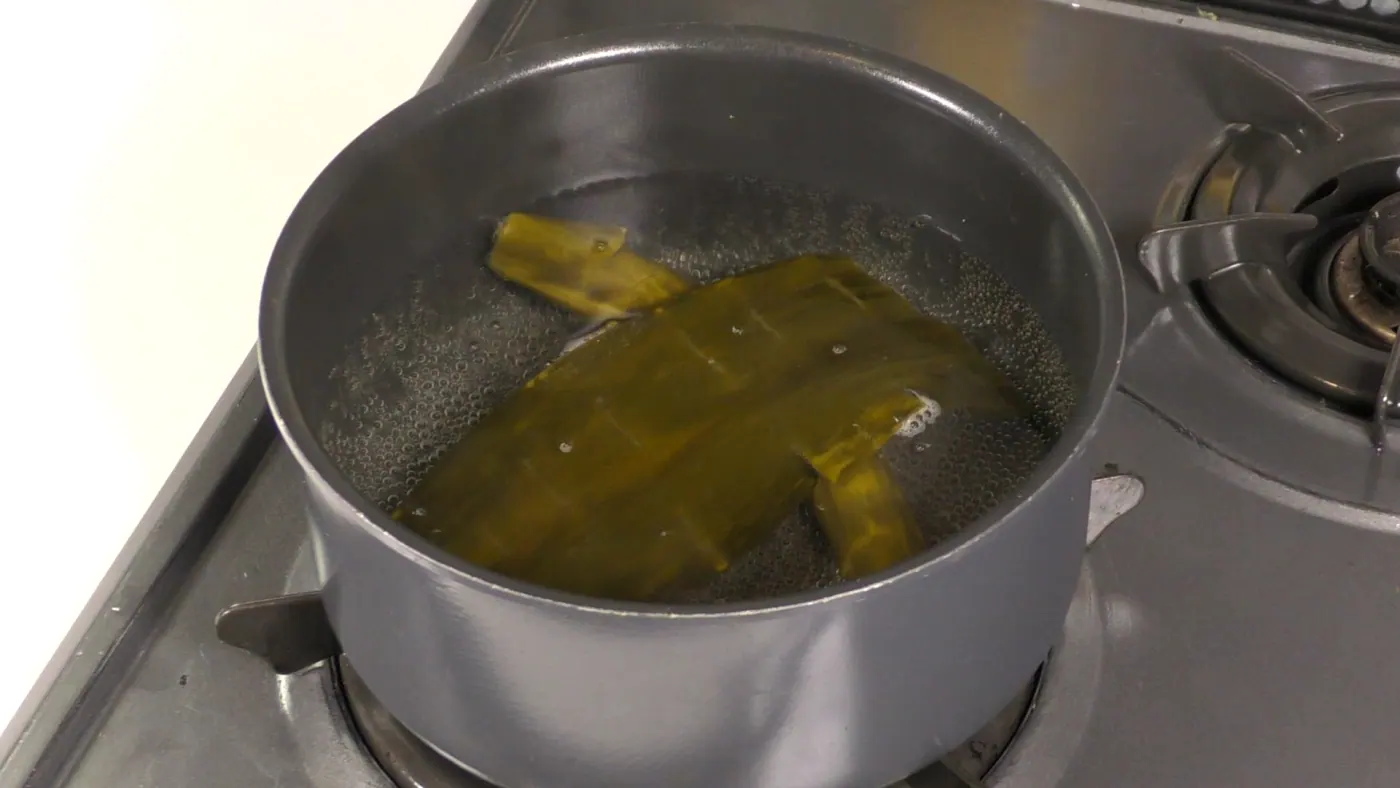
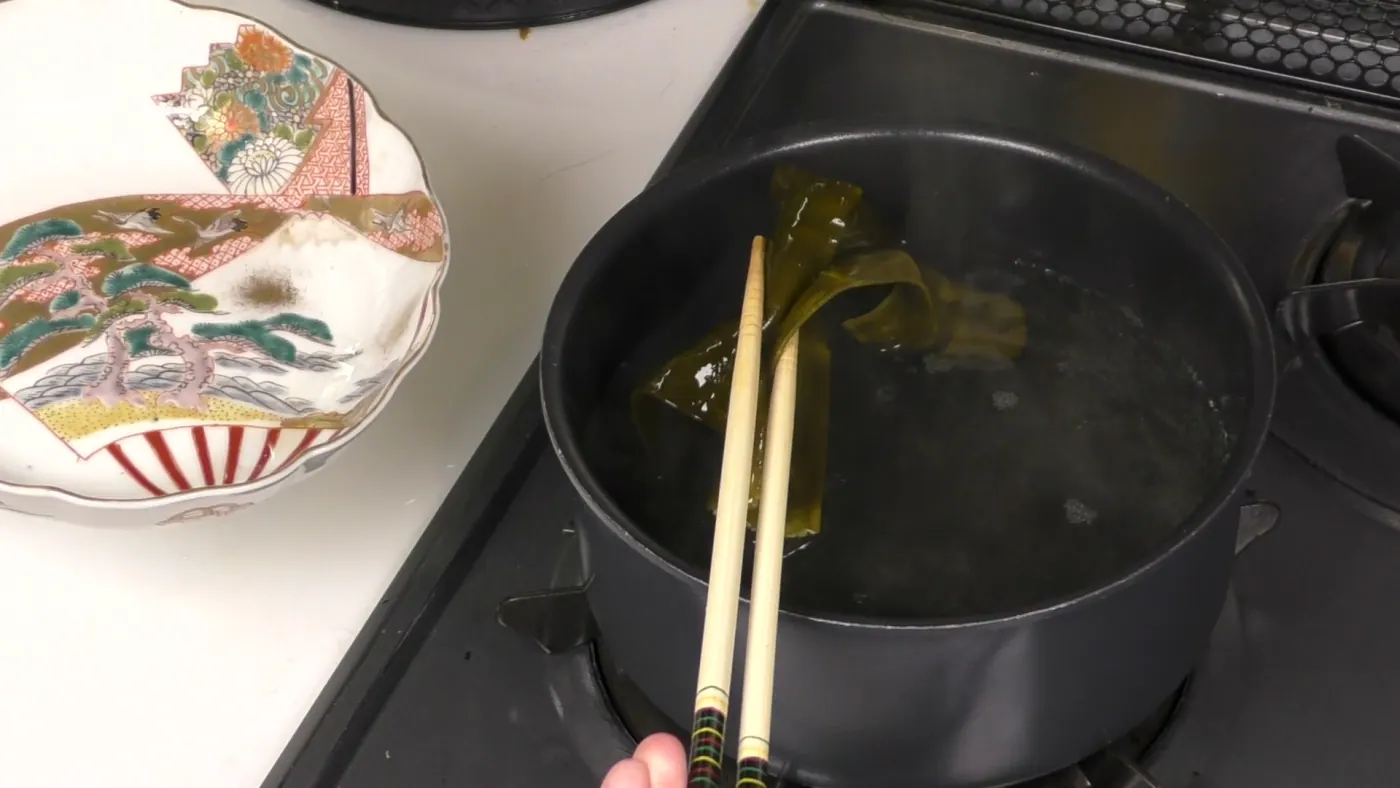
Take out the kombu before it boils
Just before the water boils, take the kombu out of the pot with chopsticks. Then turn off the heat.
Add the Bonito Flakes
Add the bonito flakes
Add 10g of bonito flakes to the hot kombu dashi before it comes to a boil.
Why add them off the heat?
The umami of katsuobushi comes out most easily at about 80°C (176°F). Boiling them isn't needed, so add them to the hot broth after the heat is off.
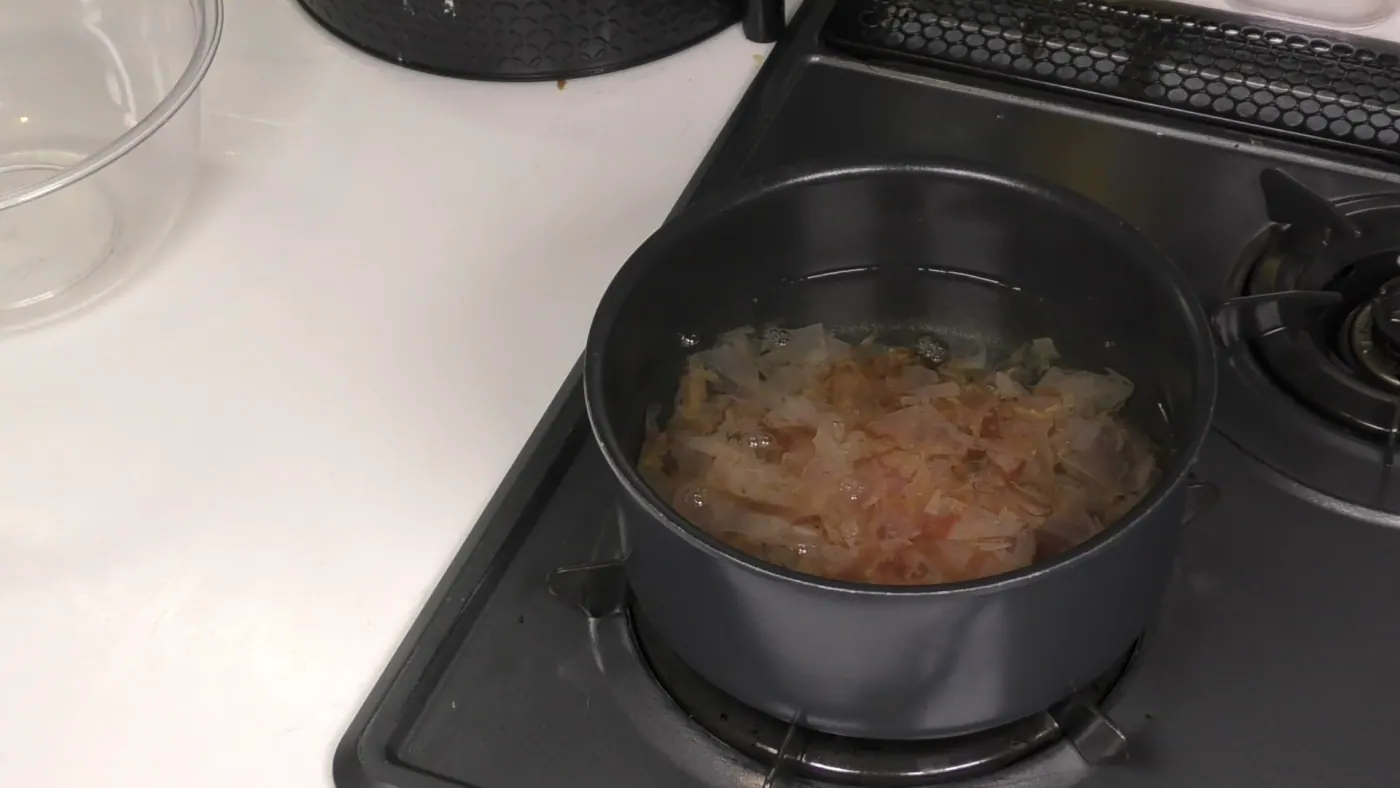
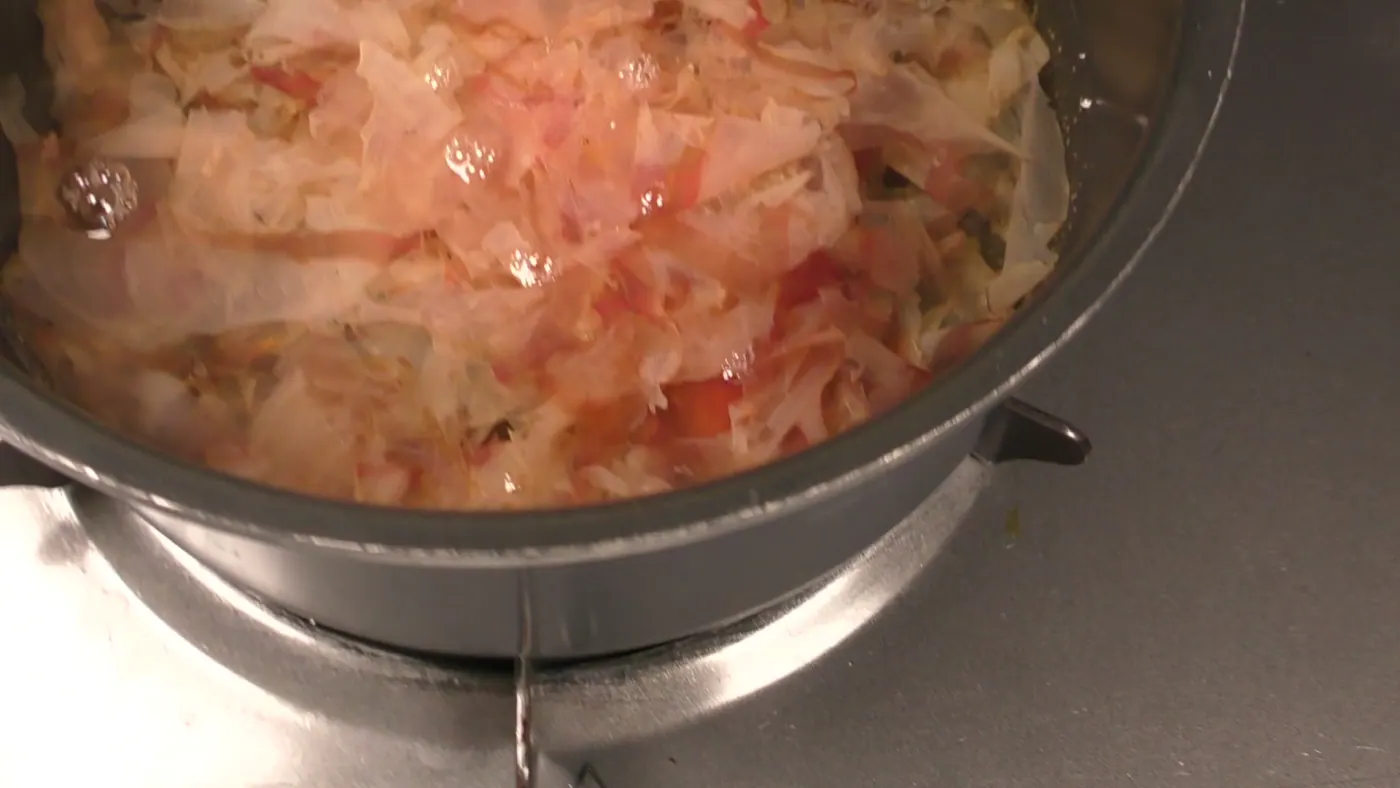
Let the bonito flakes steep
Push the bonito flakes down to the bottom of the pot and let them sit for 1-2 minutes.
Strain the Dashi
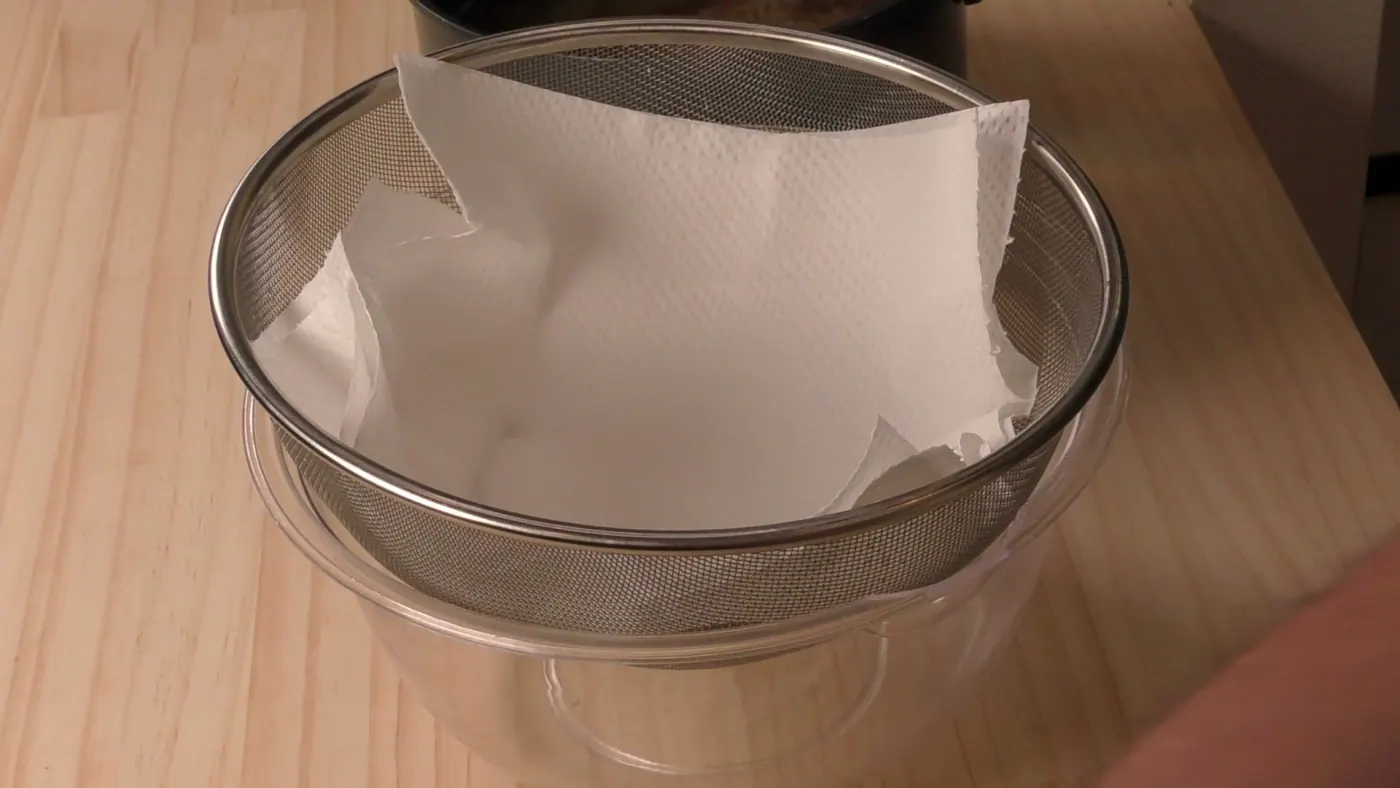
Strain through kitchen paper
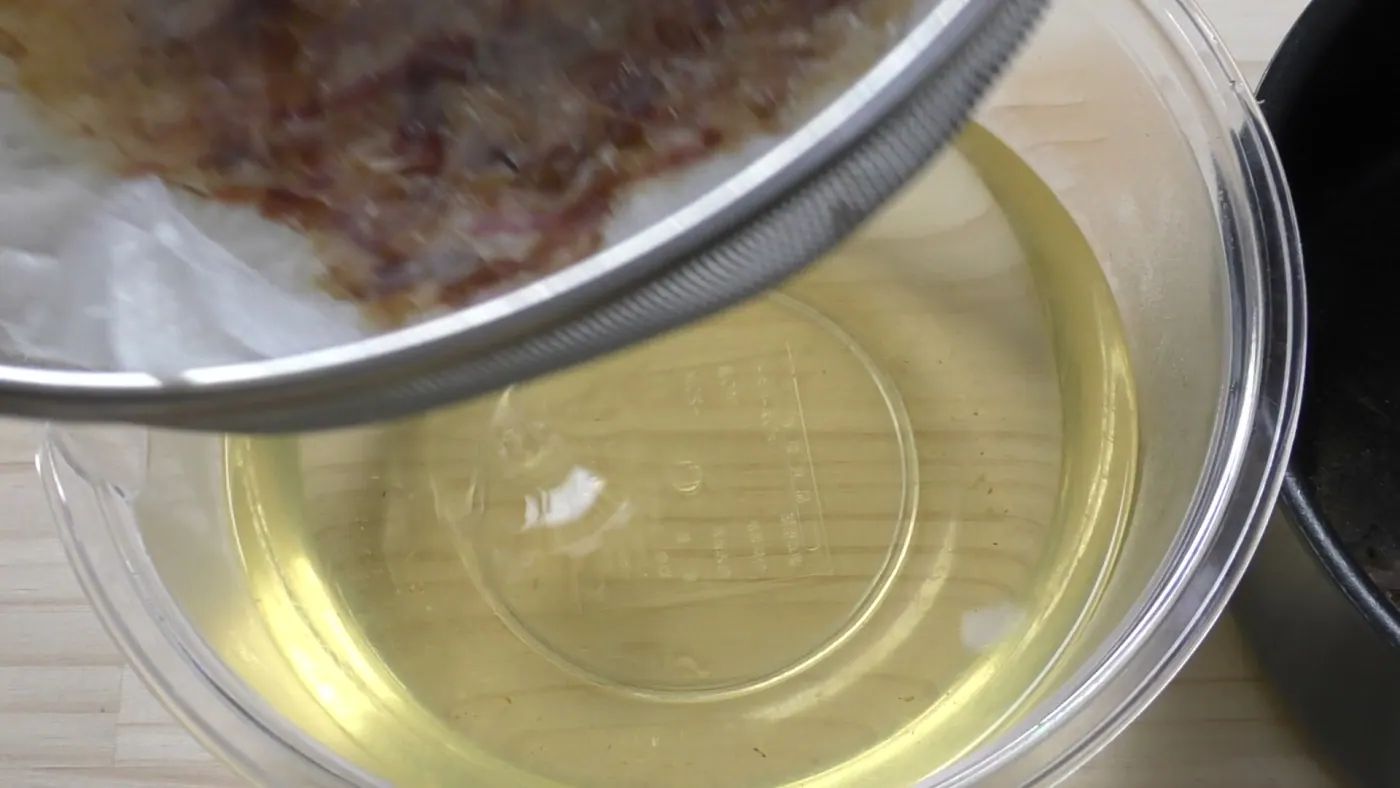
Line a strainer with a cloth or kitchen paper, set it over a bowl and pour the dashi through.
Don't squeeze the bonito flakes
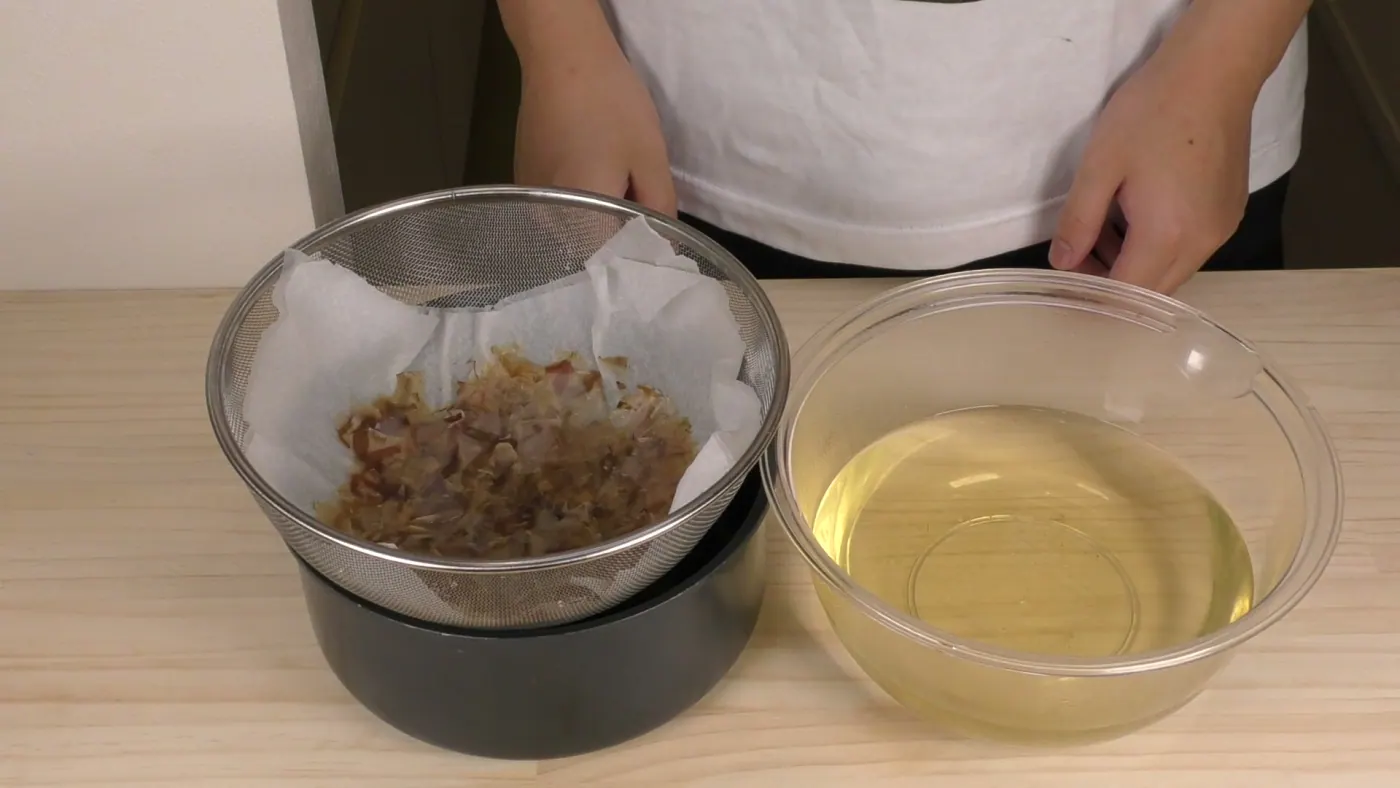
Let the dashi drip through on its own. Squeezing the bonito flakes can make the dashi bitter. Your awase dashi is ready.
Variation: Kombu Dashi
Kombu dashi is made with kombu only, so it's vegan. It goes well with almost any dish, from stews and miso soup to aemono (dressed vegetables). The video shows two ways to make it. This is a separate recipe. The amounts are not part of the recipe card above, which is for awase dashi.
Ingredients
- 10g dried kombu (about 1/3 oz)
- 960ml water (4 cups)
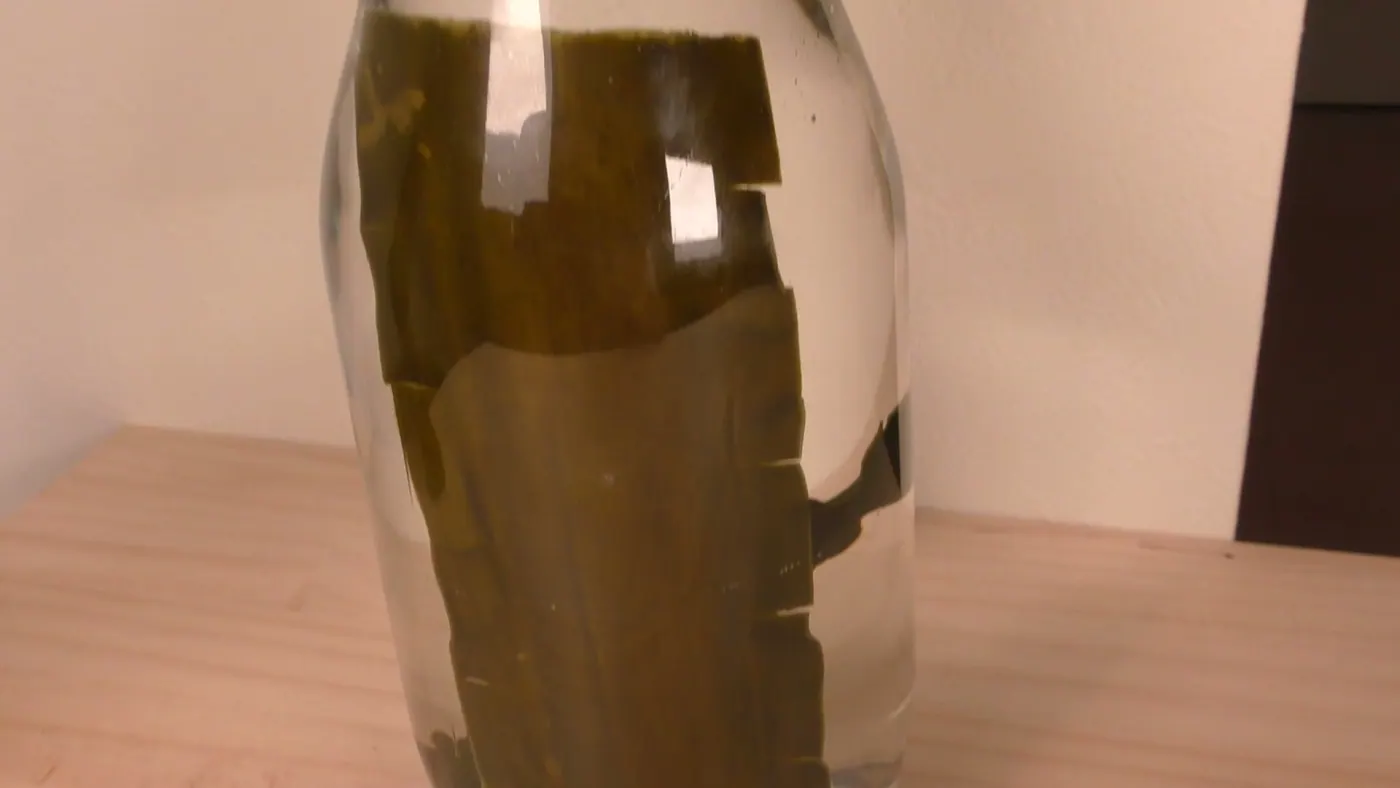
Cold brew (mizudashi)
- Make several cuts in the kombu with scissors. Don't wash off the white powder.
- Put the water and the kombu in a jar and let it soak for 3 to 5 hours. This is the time it takes for the umami to come out of the kombu.
- Take the kombu out after soaking, because it becomes slimy if you leave it in. Keep the dashi in the refrigerator for about 3 days.
Simmered
- Put the water and the kombu with cuts in a pot and soak for 30 minutes.
- Heat over medium-low heat for about 10 minutes without letting it boil.
- Turn off the heat before it boils and take out the kombu.
- Let the dashi cool before you put it in the refrigerator. It keeps for about 3 days.
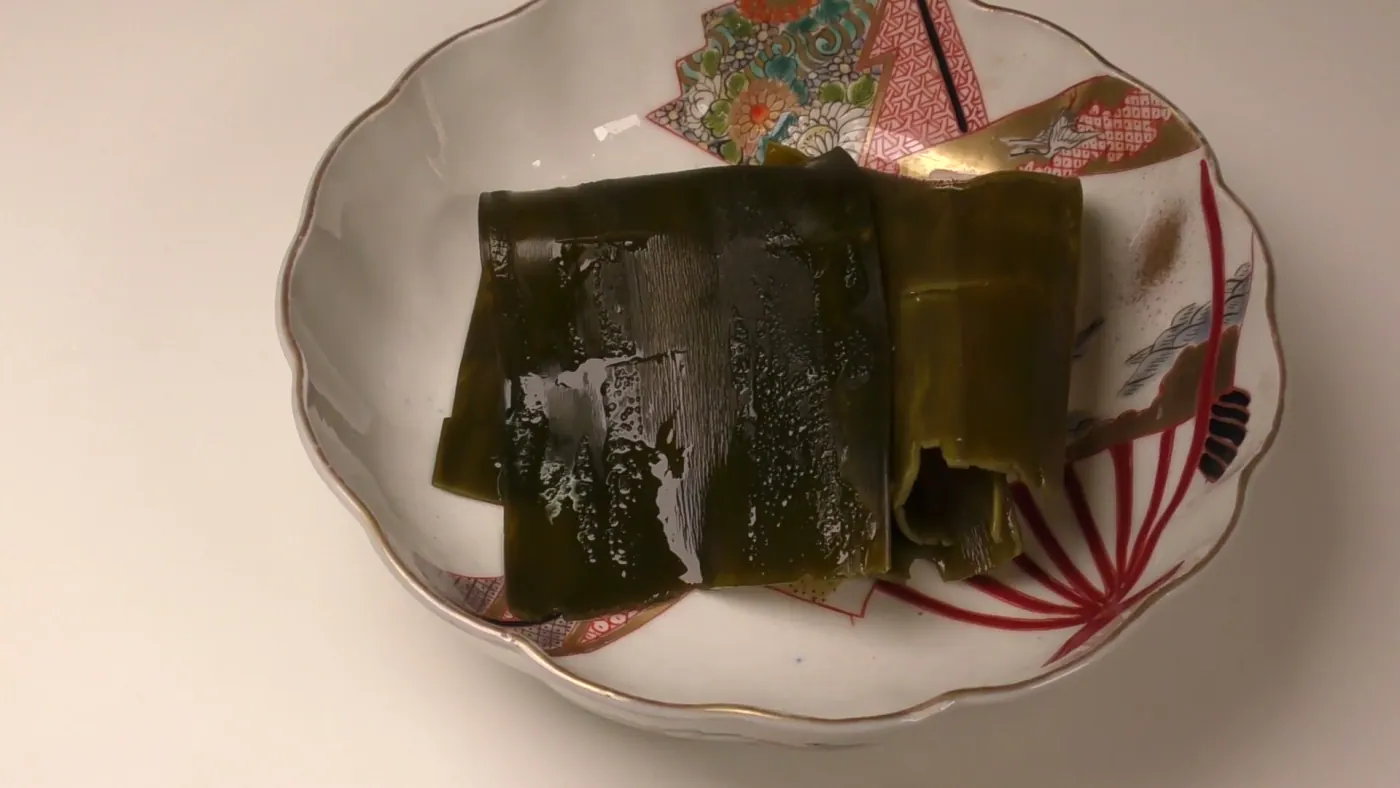
The kombu you took out can be used again for stews or furikake.
Variation: Katsuo Dashi
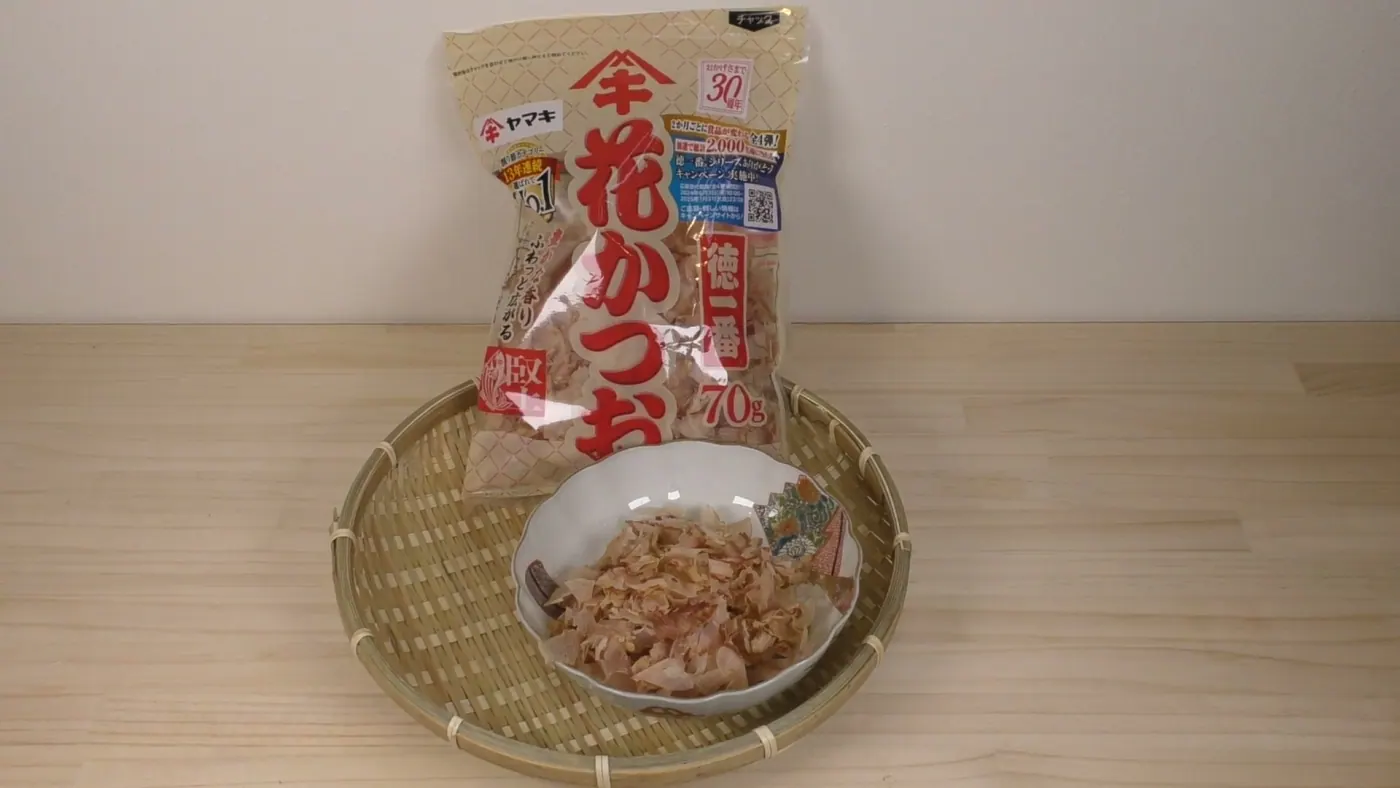
Katsuo dashi is made with bonito flakes only. It has a rich flavor, so it suits miso soup and well-seasoned simmered dishes. This is a separate recipe. The amounts are not part of the recipe card above.
Ingredients
- 10g katsuobushi (bonito flakes, about 1/3 oz)
- 480ml water (2 cups)
How to make it
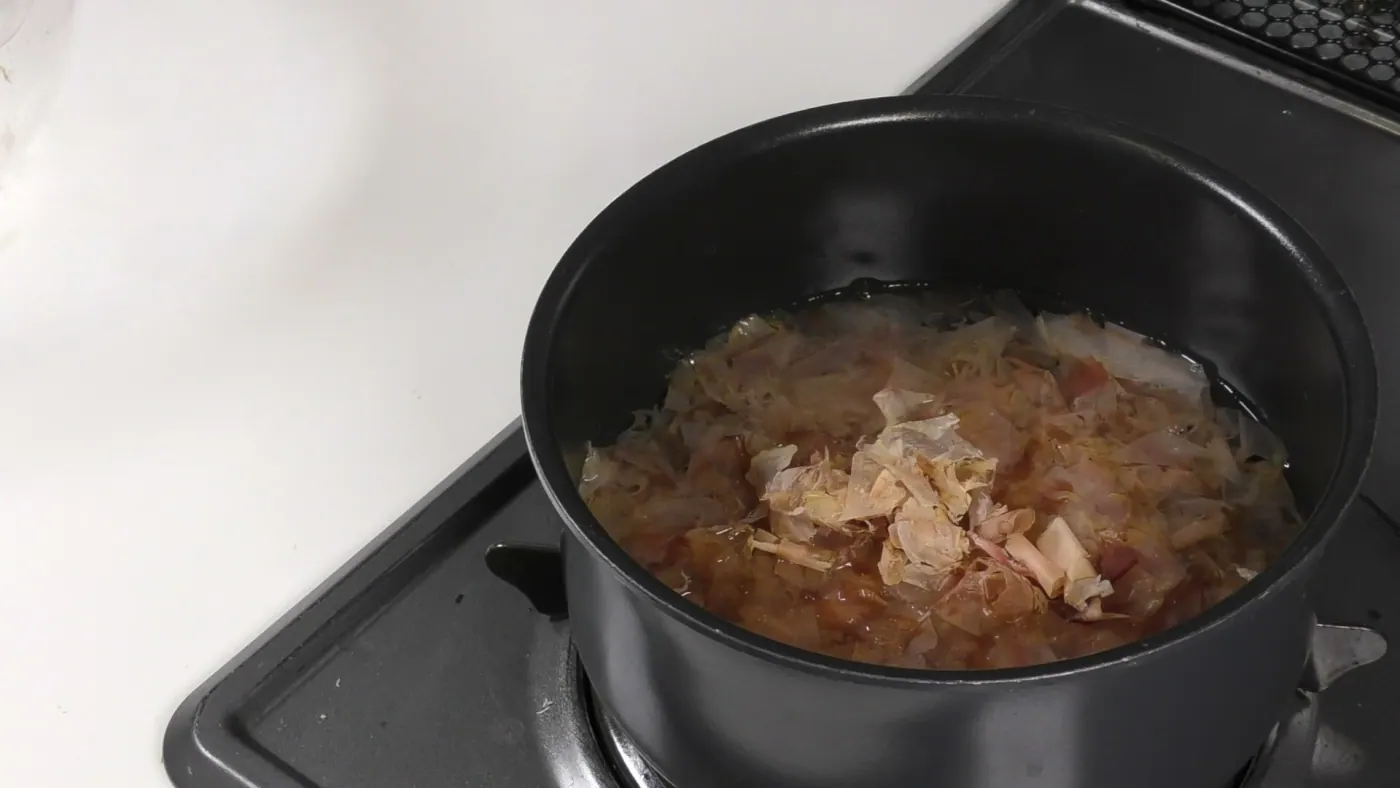
- Put the water in a pot and heat it until it's just below boiling. If it boils, let it cool down a little, because the umami of katsuobushi comes out most easily at about 80°C (176°F).
- Add the bonito flakes, push them down to the bottom of the pot and let them sit for 1-2 minutes.
- Strain through a strainer lined with a cloth or kitchen paper. Don't squeeze the bonito flakes, or the dashi can turn bitter.
Variation: Iriko Dashi
Iriko dashi is made with iriko (dried anchovies). It's the one we recommend for miso soup. This is a separate recipe. The amounts are not part of the recipe card above.
Ingredients
- 20g iriko (dried anchovies, about 2/3 oz)
- 960ml water (4 cups)
How to make it
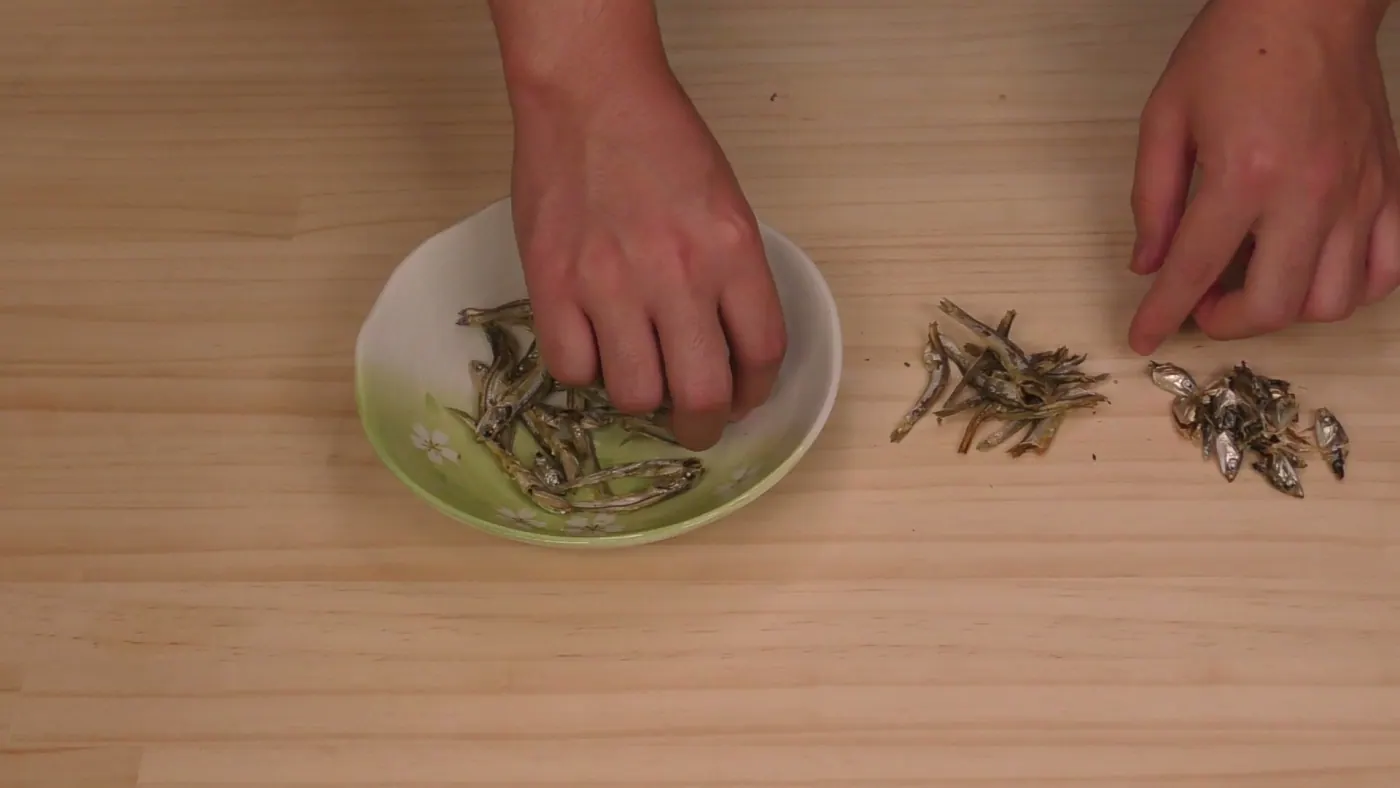
- Remove the heads and the insides of the iriko to reduce their bitterness.
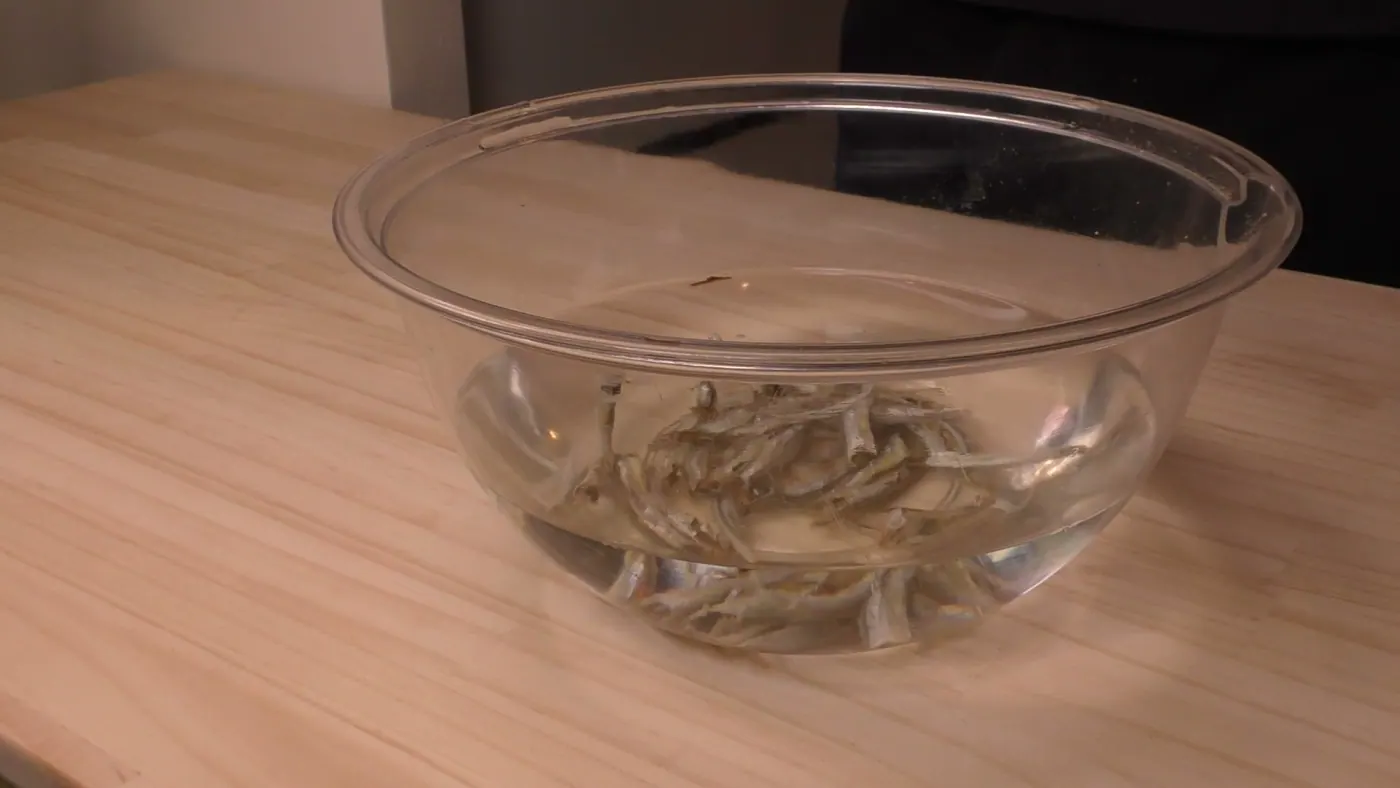
- Soak the iriko in the water for at least 30 minutes.
- Transfer the water and the iriko to a pot and slowly bring it to a boil.
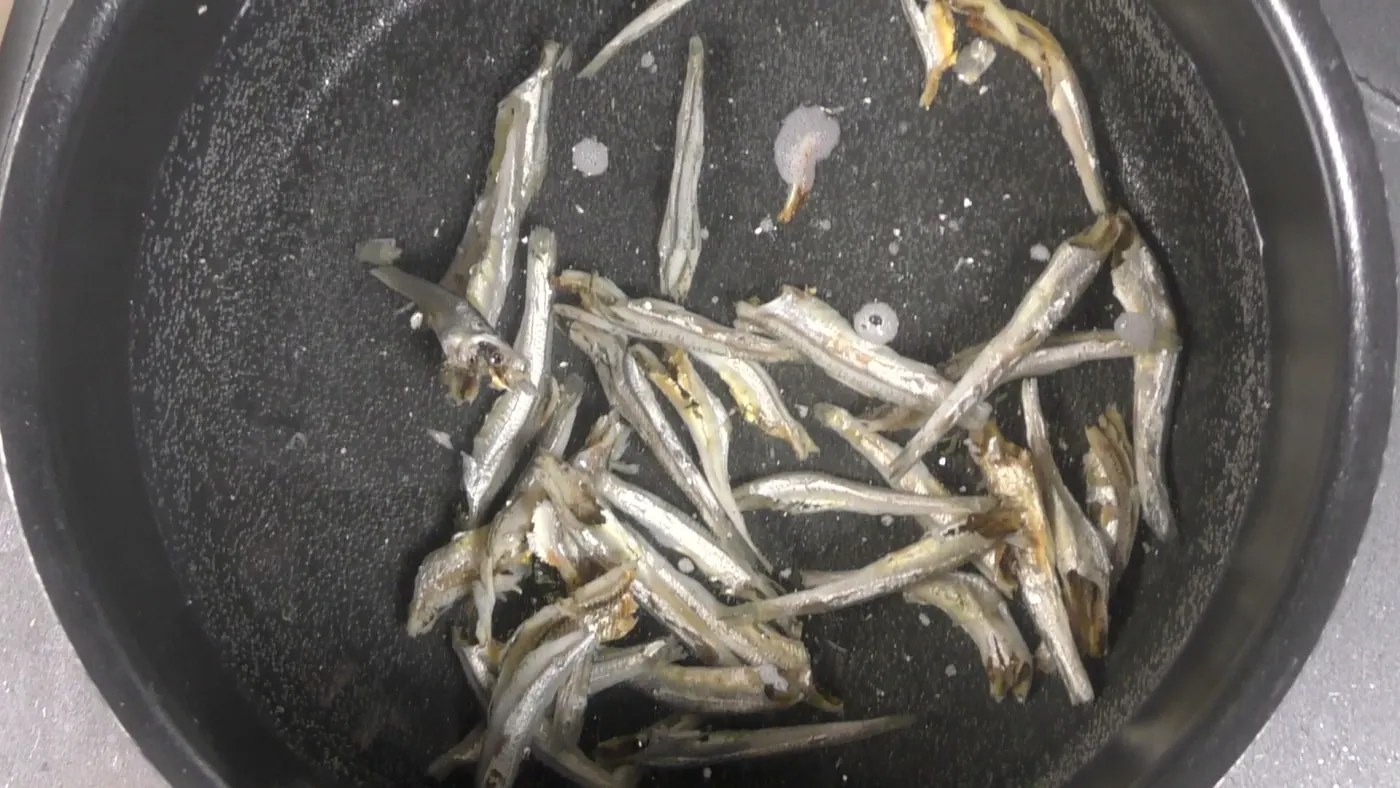
- Once it boils, skim off any foam. Then turn down the heat and simmer for about 10 minutes.
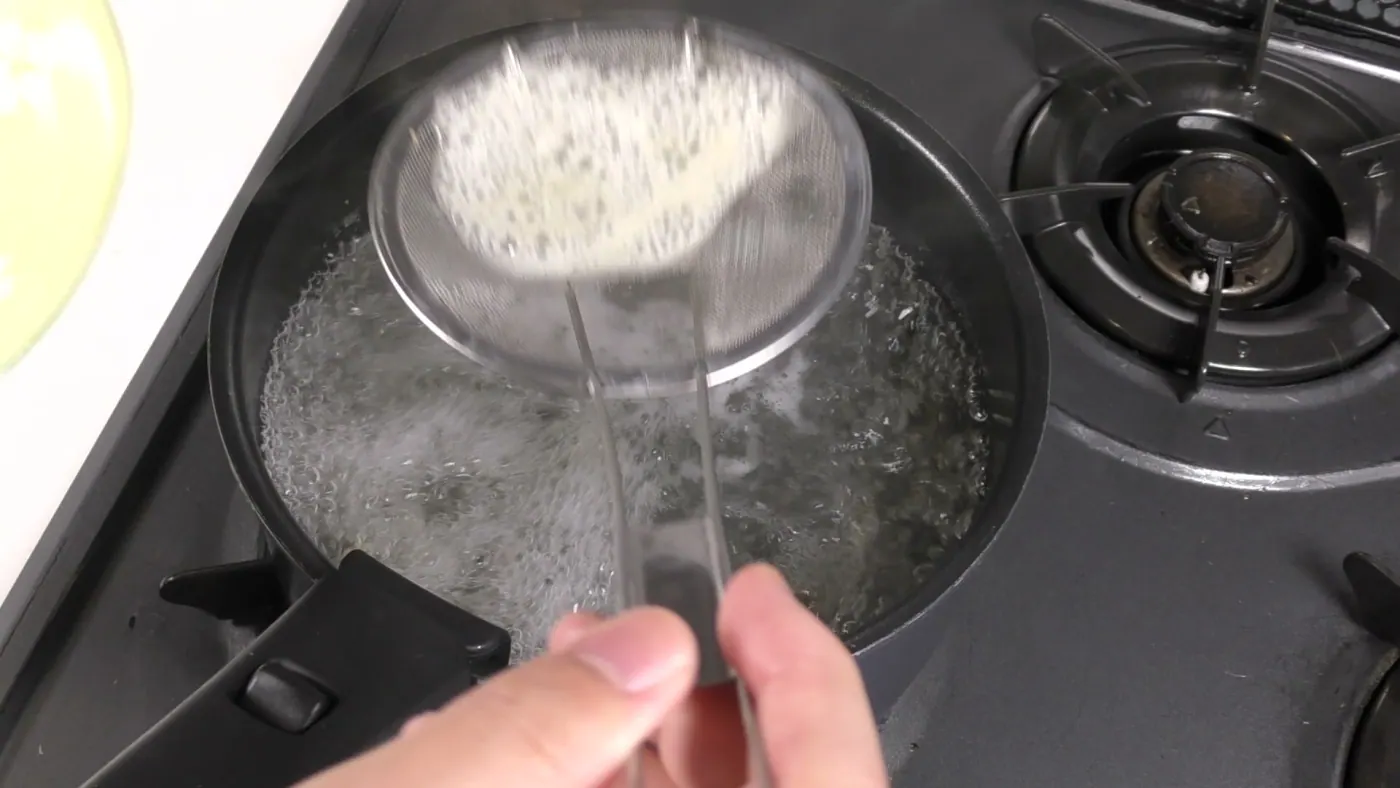
- Take the pot off the heat and strain the dashi through a fine-mesh strainer into a bowl. It keeps in the refrigerator for 3 to 5 days.
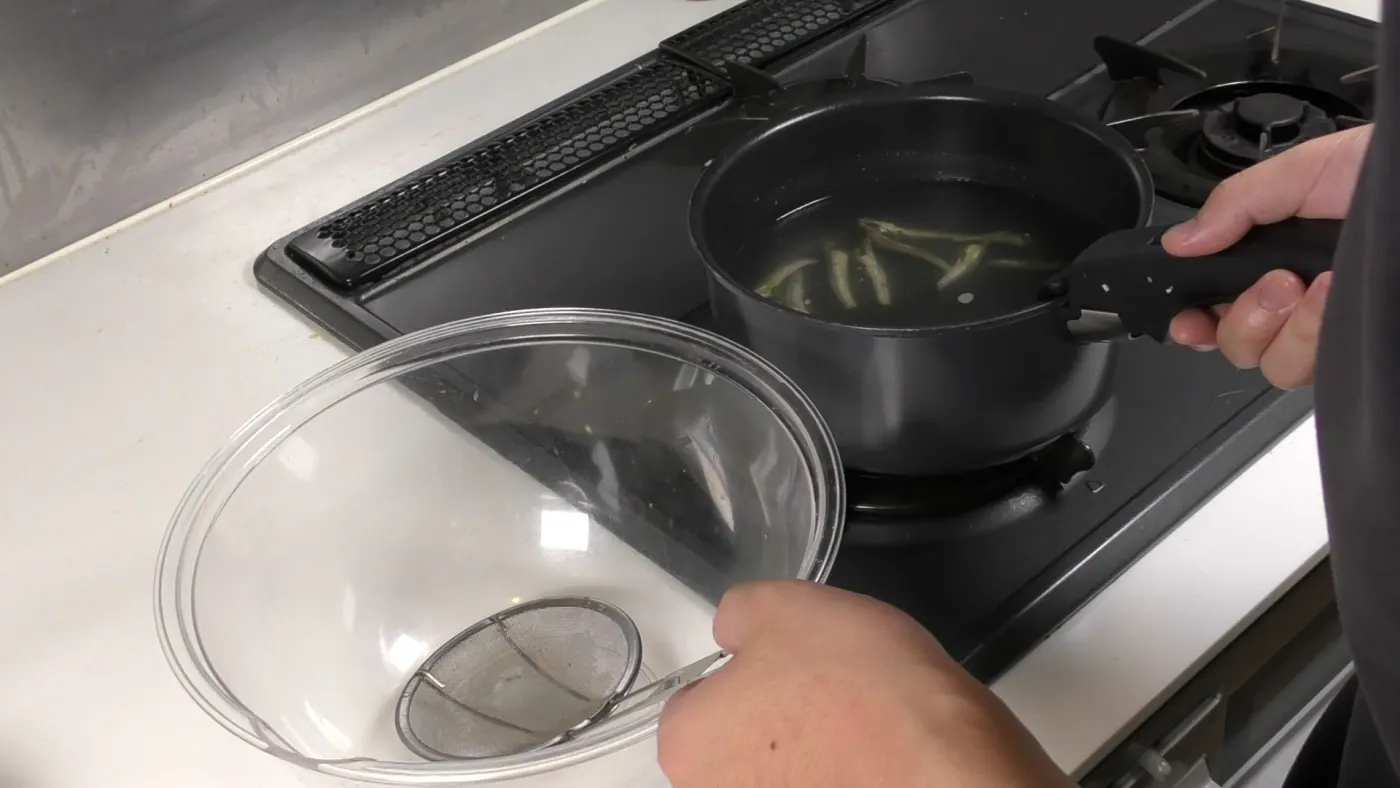
The leftover iriko can be used for dishes such as tazukuri or tsukudani.
Variation: Shiitake Dashi
Shiitake dashi is made with dried shiitake mushrooms and is vegan. It has a unique, strong taste and aroma, so it's good for takikomi gohan (mixed rice) and stews. This is a separate recipe. The amounts are not part of the recipe card above.
Ingredients
- 20g dried shiitake mushrooms (2-3 mushrooms)
- 120-160ml water (1/2-2/3 cup)
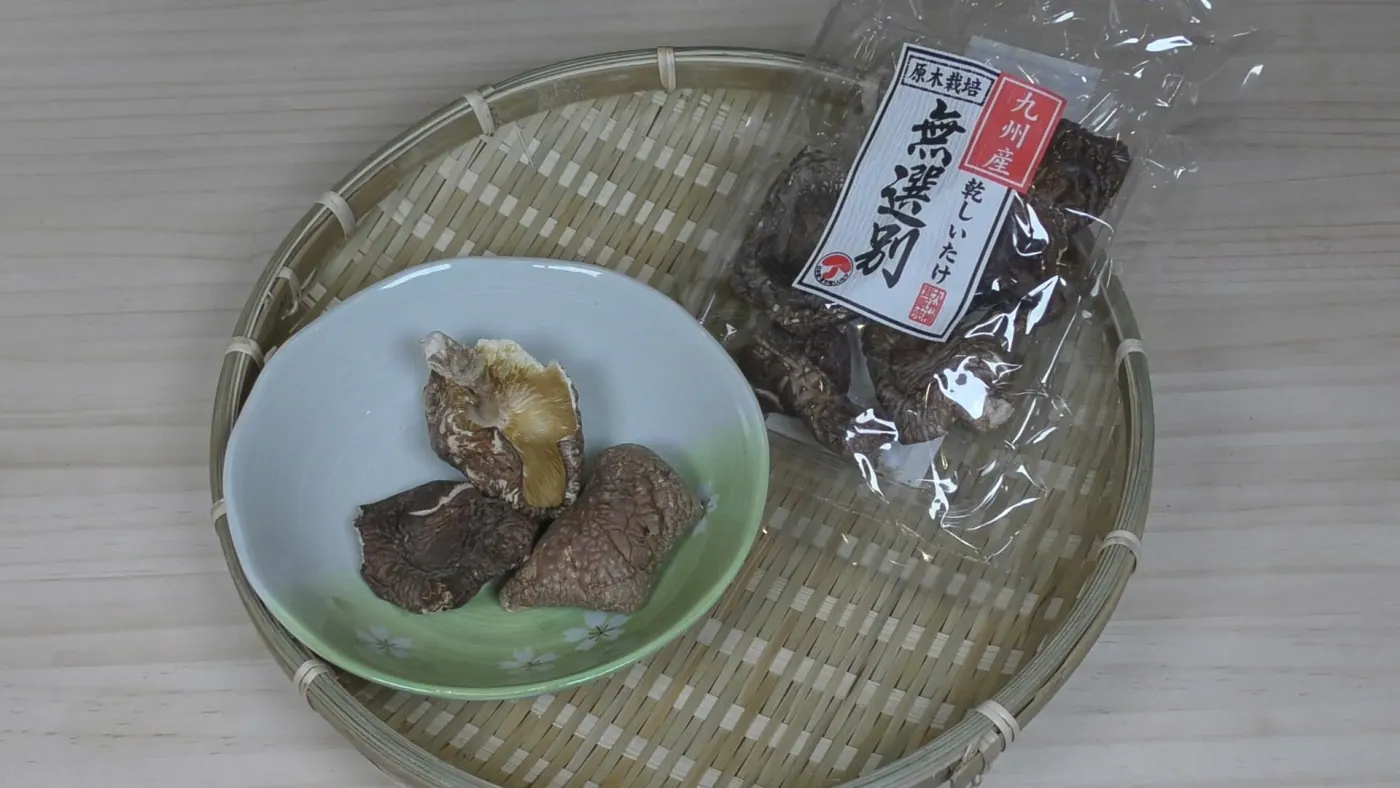
How to make it
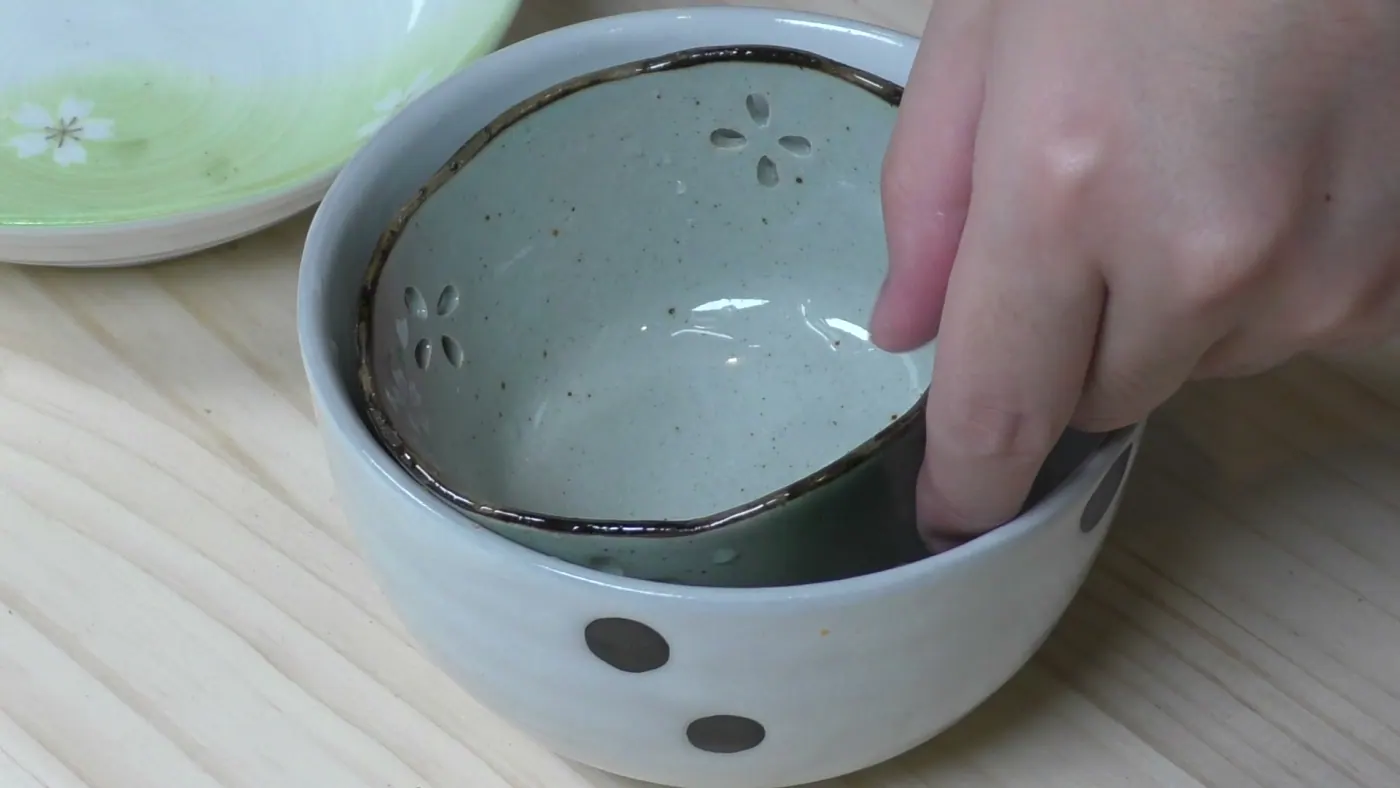
- Put the dried shiitake in the water and soak for 15 minutes. Make sure the mushrooms are completely under the water. A small bowl on top keeps them down.
- After 15 minutes, when the shiitake are soft, squeeze them to drain the liquid back into the bowl.
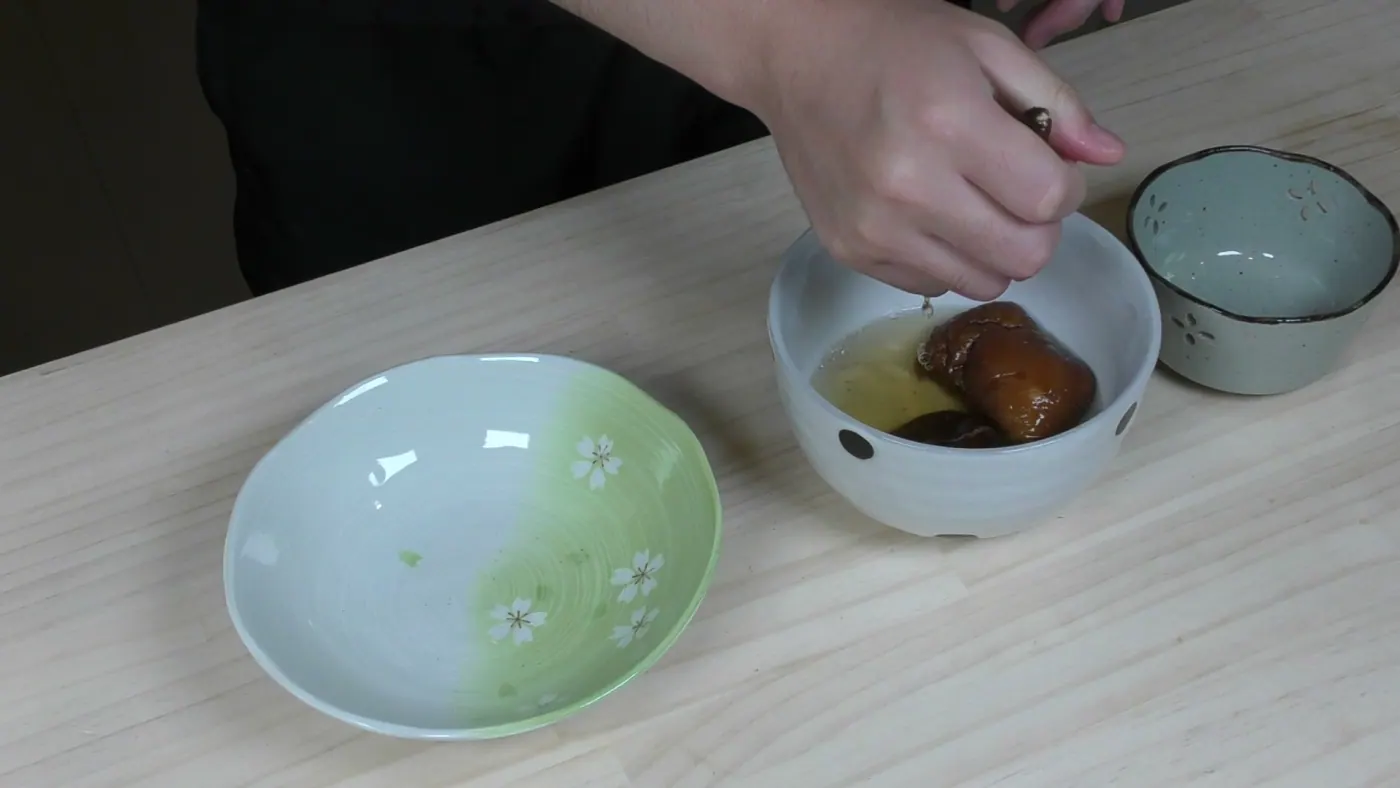
- Small bits of shiitake end up in the liquid, so pass it through a fine strainer, and it's done.
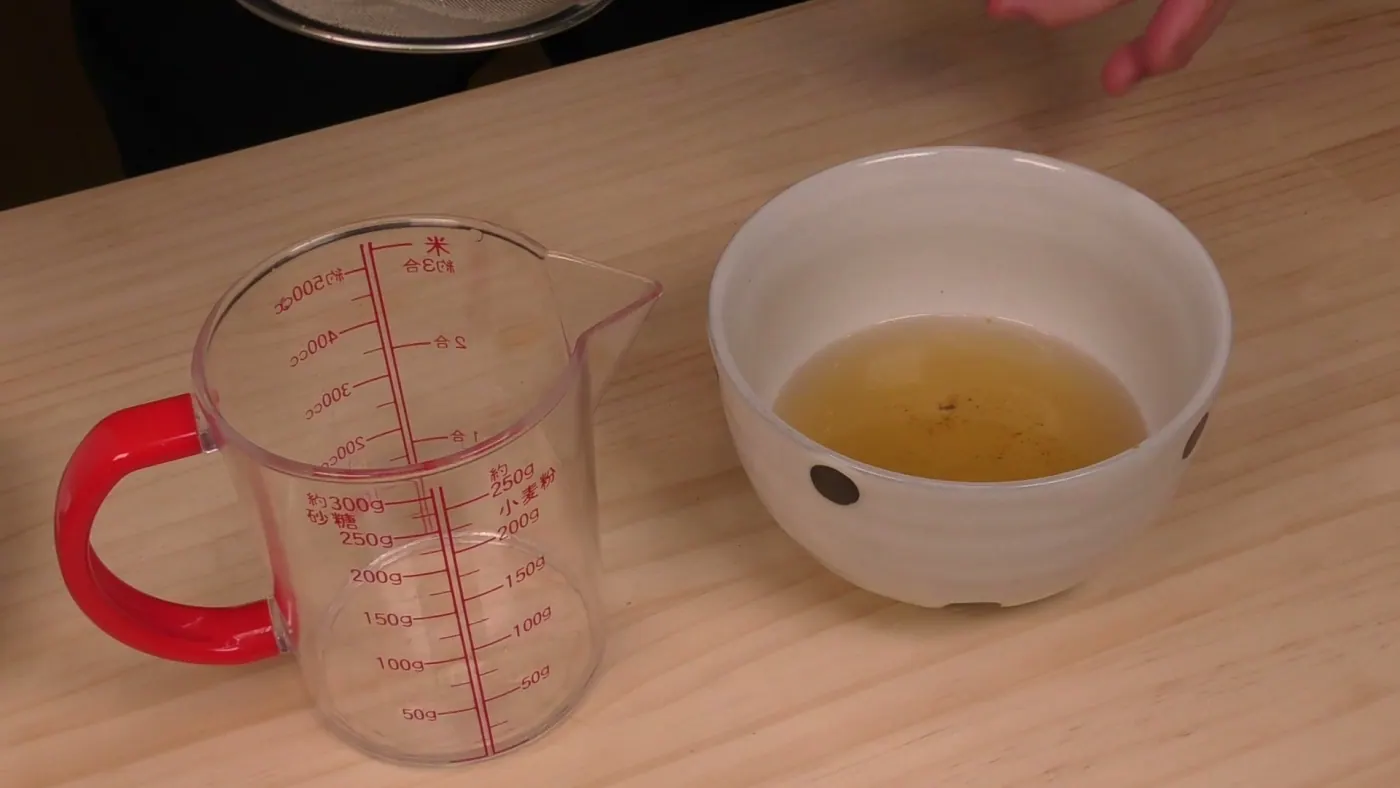
Shortcut: Dashi Powder and Dashi Packs
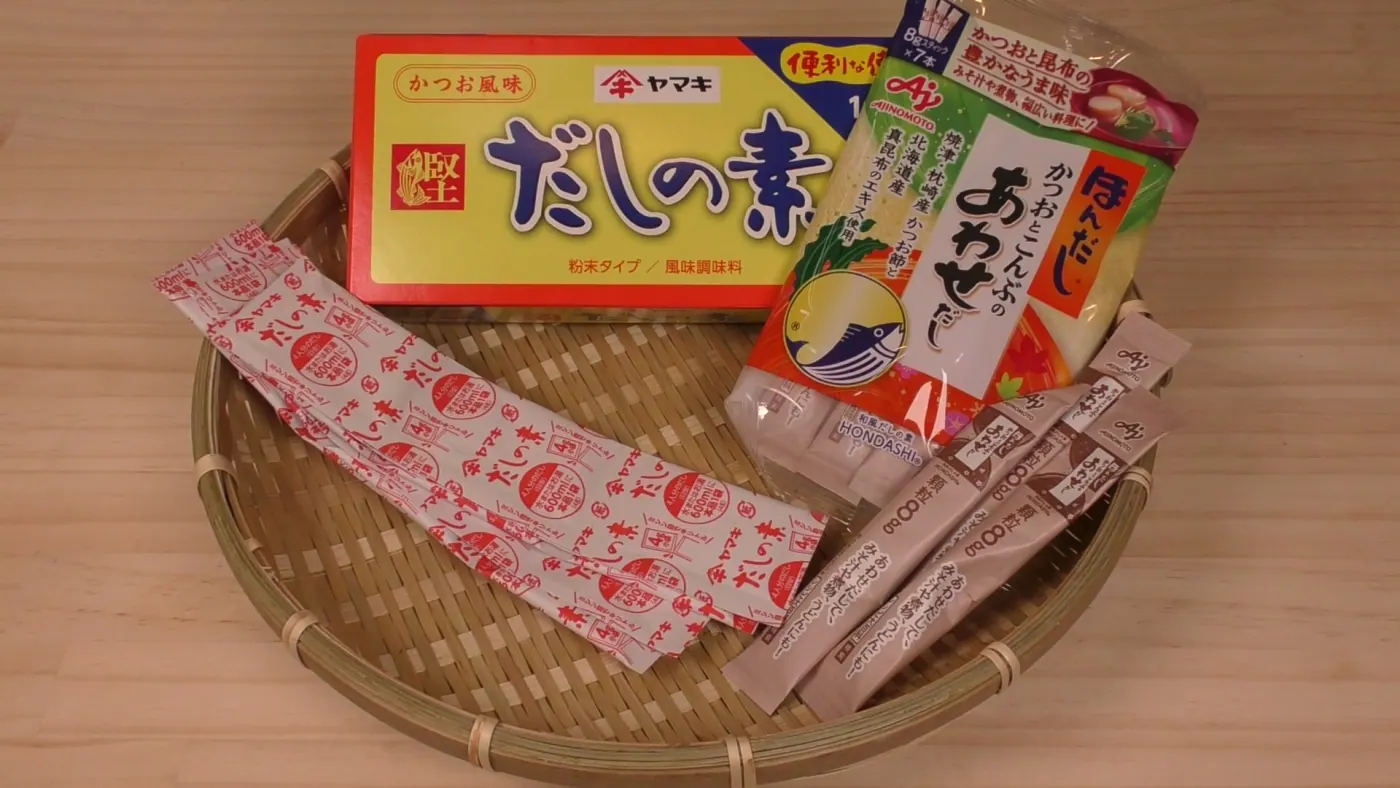
If making dashi from scratch feels like too much work, there are ready-made products. With dashi powder, you just add the powder and the dashi is ready in about 5 minutes. It also adds umami to Japanese dishes, which makes it a handy thing to keep in the kitchen. Follow the amounts on the package.
Tips and Key Points
Keep the kombu below boiling
Kombu gives its best umami when it's heated slowly. High heat keeps the umami in, and overheating makes the dashi bitter, so take it out before the water boils.
Steep, don't boil, the bonito flakes
The umami of katsuobushi comes out most easily at about 80°C (176°F). Add the flakes after the heat is off and give them 1-2 minutes.
Don't squeeze
Whether you strain awase dashi or katsuo dashi, let it drip through on its own. Squeezing the bonito flakes makes the dashi bitter.
Choose the dashi for the dish
Awase dashi suits dishes with strong flavors, such as miso soup, simmered dishes and hot pots. Kombu dashi goes with almost anything, iriko dashi is great for miso soup, and shiitake dashi is good for takikomi gohan and stews.
Troubleshooting
Frequently Asked Questions
Should I wash the white powder off the kombu?
No. The white powder is mannitol, and it adds to the umami of the dashi.
Why can't I boil the kombu?
If you heat it quickly over high heat, the umami doesn't come out properly, and if the kombu gets too hot, the dashi can turn bitter. Heat it over medium-low heat and take it out before the water boils.
Why shouldn't I squeeze the bonito flakes?
Squeezing them can make the dashi bitter. Let it drip through the strainer on its own.
How long does homemade dashi keep?
Awase dashi and kombu dashi keep in the refrigerator for about 3 days. Iriko dashi keeps for 3 to 5 days. Let simmered dashi cool before you put it in the refrigerator.
Which dashi is vegan?
Kombu dashi and shiitake dashi. Awase dashi, katsuo dashi and iriko dashi are made with fish.
Summary
Awase dashi takes three ingredients and about 50 minutes, most of it soaking time. Warm the kombu slowly and take it out before the water boils, steep the bonito flakes off the heat, and strain without squeezing. Once you have the basic method, kombu, katsuo, iriko and shiitake dashi are easy variations.
How to Store Awase Dashi
Keep awase dashi in the refrigerator and use it within about 3 days. Let it cool before you put it in the refrigerator.
たれSauces & Condiments合わせだし
How to Make Dashi (Awase Dashi with Kombu and Bonito Flakes)
Classic awase dashi, the Japanese soup stock made with kombu and bonito flakes.
No ratings yet
Rate this recipe
- Prep
- 35 min
- Cook
- 15 min
- Total
- 50 min
- Yield
- About 3.5 cups (850ml)
- Difficulty
- Beginner
Ingredients
Awase Dashi
Ingredient amounts are multiplied; cooking times and pan size may need adjusting.
Instructions
Amounts mentioned in the steps are for the original recipe (1x) — use the scaled amounts above.
Make the Kombu Dashi
Cut the kombu
Make several cuts in 10g of kombu with scissors. The cuts make it easier for the umami to come out of the kombu.
Don't wash off the white powder on the surface. It's mannitol, and it adds to the umami of the dashi.
Soak the kombu in the pot
Put 960ml (4 cups) of water and the kombu in a pot and let it soak for 30 minutes.
Heat it slowly over medium-low heat
After soaking, heat the pot over medium-low heat for about 10 minutes. Don't let it boil.
Take out the kombu before it boils
Just before the water boils, take the kombu out of the pot with chopsticks. Then turn off the heat.
Add the Bonito Flakes
Add the bonito flakes
Add 10g of bonito flakes to the hot kombu dashi before it comes to a boil.
Let the bonito flakes steep
Push the bonito flakes down to the bottom of the pot and let them sit for 1-2 minutes.
Strain the Dashi
Strain through kitchen paper
Line a strainer with a cloth or kitchen paper, set it over a bowl and pour the dashi through.
Don't squeeze the bonito flakes
Let the dashi drip through on its own. Squeezing the bonito flakes can make the dashi bitter. Your awase dashi is ready.
Video
Watch the video · 7:51Open on YouTube
Jump to a part of the video (10 chapters)
Video: https://youtu.be/fQeHJSpLVOk
Notes
To store
Keep awase dashi in the refrigerator and use it within about 3 days. Let it cool before you put it in the refrigerator.
Nutrition estimated, per cup (240 ml)
- Calories
- 5 kcal
- Carbohydrates
- 1 g
- Protein
- 0.7 g
- Fat
- 0 g
- Saturated fat
- 0 g
- Fiber
- 0 g
- Sugar
- 0 g
- Sodium
- 72 mg
Estimated by us from the Standard Tables of Food Composition in Japan (MEXT, 2020). Optional ingredients and garnishes are not counted; soup and sauce are counted as fully eaten. Actual values depend on your brands and portion sizes. How we calculate this
Course: Sauces & Condiments · Cuisine: Japanese · Keyword: How to Make Dashi
Recipe from Japanese Cooking Ichie — https://japanesecookingichie.com/recipes/how-to-make-dashi/
Use it in
Recipes that use how to make dashi.
Ratings & comments
No ratings yet — be the first to rate this recipe.
Comments