- Prep
- 20 min
- Cook
- 2 hr
- Chilling
- 12 hr (half a day) in the refrigerator
- Total
- 14 hr 20 min (including chilling)
- Servings
- 4
- Difficulty
- Intermediate
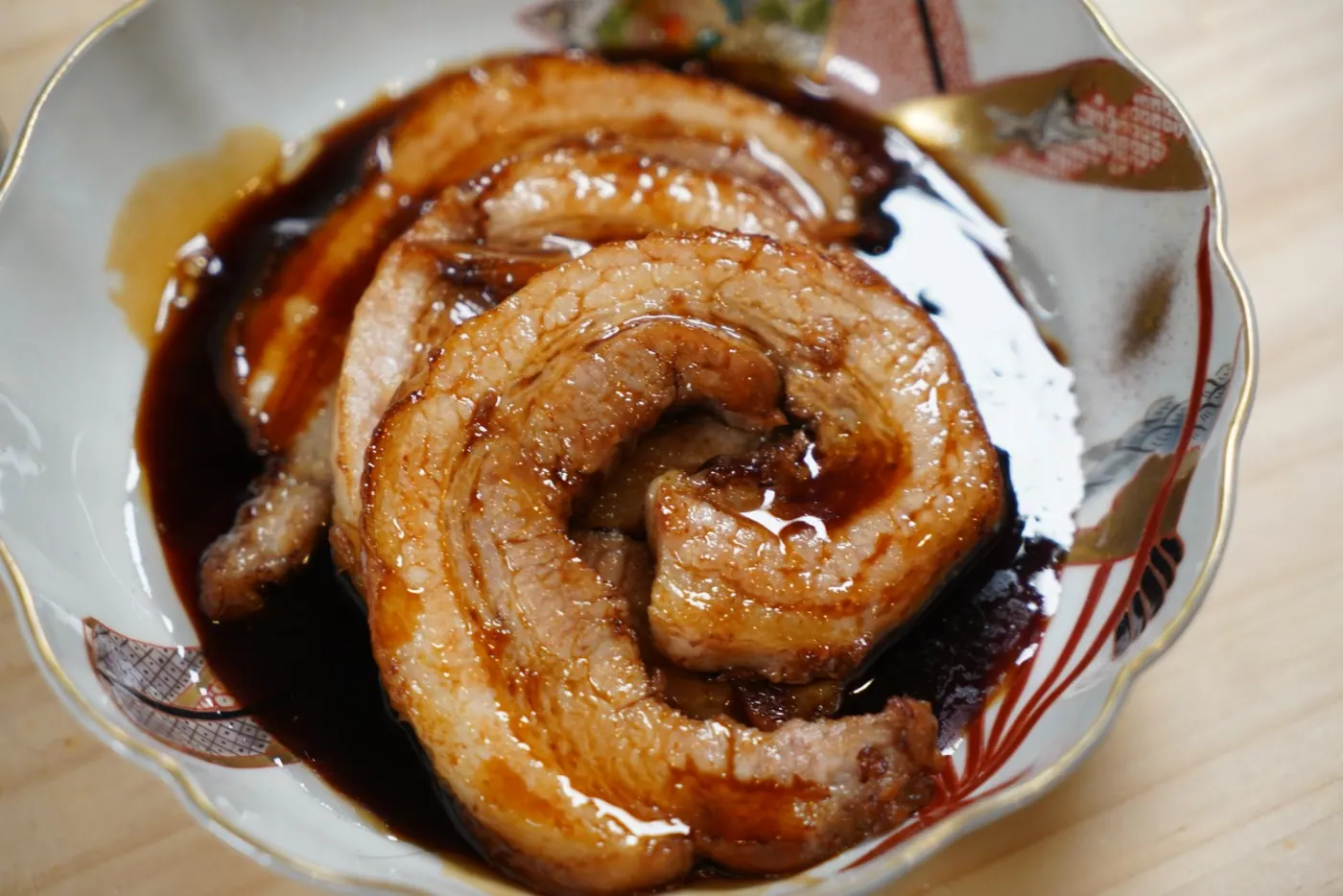
What is Chashu?
Chashu is the rolled, braised pork you often see on top of ramen at ramen shops. It looks hard to make, but it's mostly waiting. This recipe rolls and ties a block of pork belly, simmers it slowly for 90 minutes to remove odors, then braises it in a simple soy sauce and sugar liquid and leaves it in the refrigerator for half a day so the flavor soaks in.
Each step is explained so anyone can make it, including how to flatten, roll and tie the pork so it keeps its round shape.
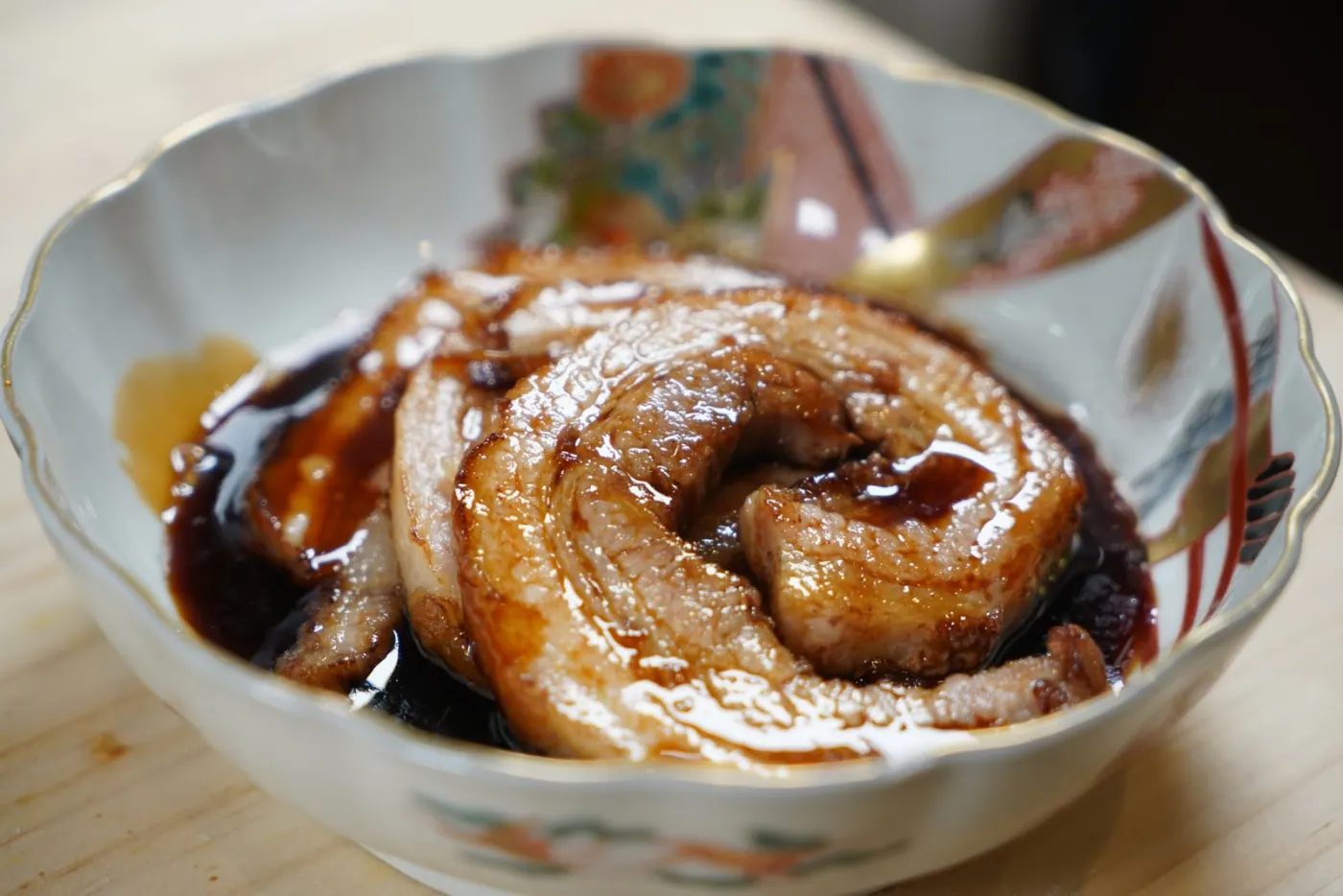
Why You'll Love This Recipe
- Ramen-shop chashu at home - Rolled, tied and braised just like the topping at ramen shops
- No pork odor - Garlic, ginger and green onion in the simmering water take the odor out
- Only 4 seasonings - The braising liquid is cooking liquid, soy sauce, sugar and garlic
- Make it ahead - It rests in the refrigerator for half a day, so it's ready when you are
Key Points of This Recipe
- Trim the pork belly flat so it rolls up without gaps
- Roll from the thinner side, tightly
- Don't cover the pot with a lid; use kitchen paper instead
- Sear the pork after simmering, not before, for a more fragrant result
Required Equipment
- Knife and cutting board
- Fork
- Kitchen paper towels
- Kitchen twine
- Scissors
- Pot (large enough to cover the pork with water)
- Deep pot (for braising)
- Frying pan
- Zip-top bag and a bowl
Chashu Ingredients (Serves 4)
10 ingredients · 4 servings
Pork belly block, water, garlic cloves, ginger, Japanese long green onion, torn by hand, cooking liquid, soy sauce, sugar, vegetable oil.
Full amounts in the recipe cardIngredient Substitutions
- Leftover cooking liquid: You only use 200ml for the braising liquid. The rest is full of pork flavor, so use it for soups and other dishes
Video Tutorial
The video shows how to flatten, roll and tie the pork, with a slow version of the tying.

How to Make Chashu
Prep: Flatten and Roll the Pork
Choose the pork belly
Use a block of pork belly weighing 500-700g. A good length is about 2-3 fists, or a little shorter than a chef's knife.
Flatten the pork
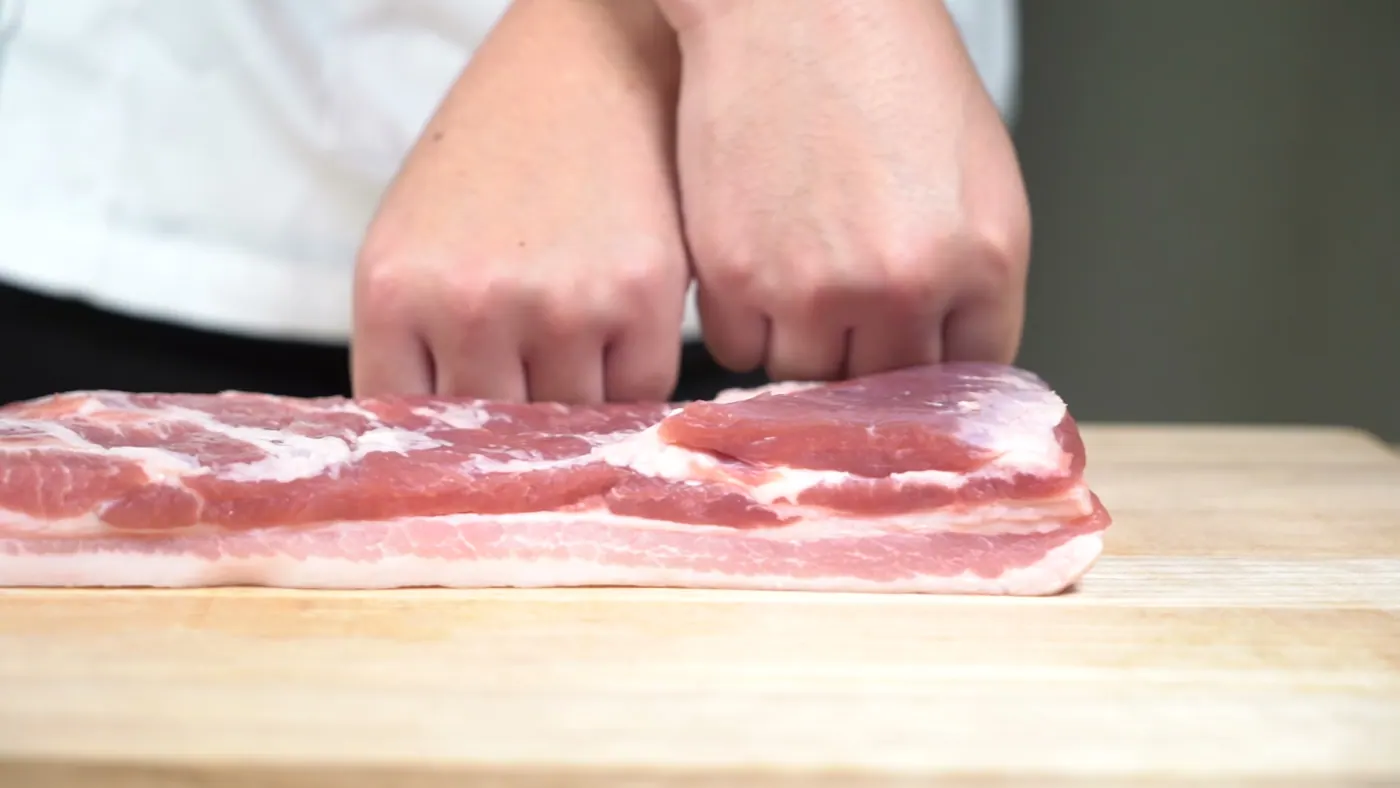
Look at the pork from the side. One side is a little thicker. If the pork is too thick, gaps form when you roll it, so it won't roll well.
Hold the knife horizontally and cut off the thicker part until the pork is flat. Also remove any excess sinew. If the pork is roughly flat, you're good to go.
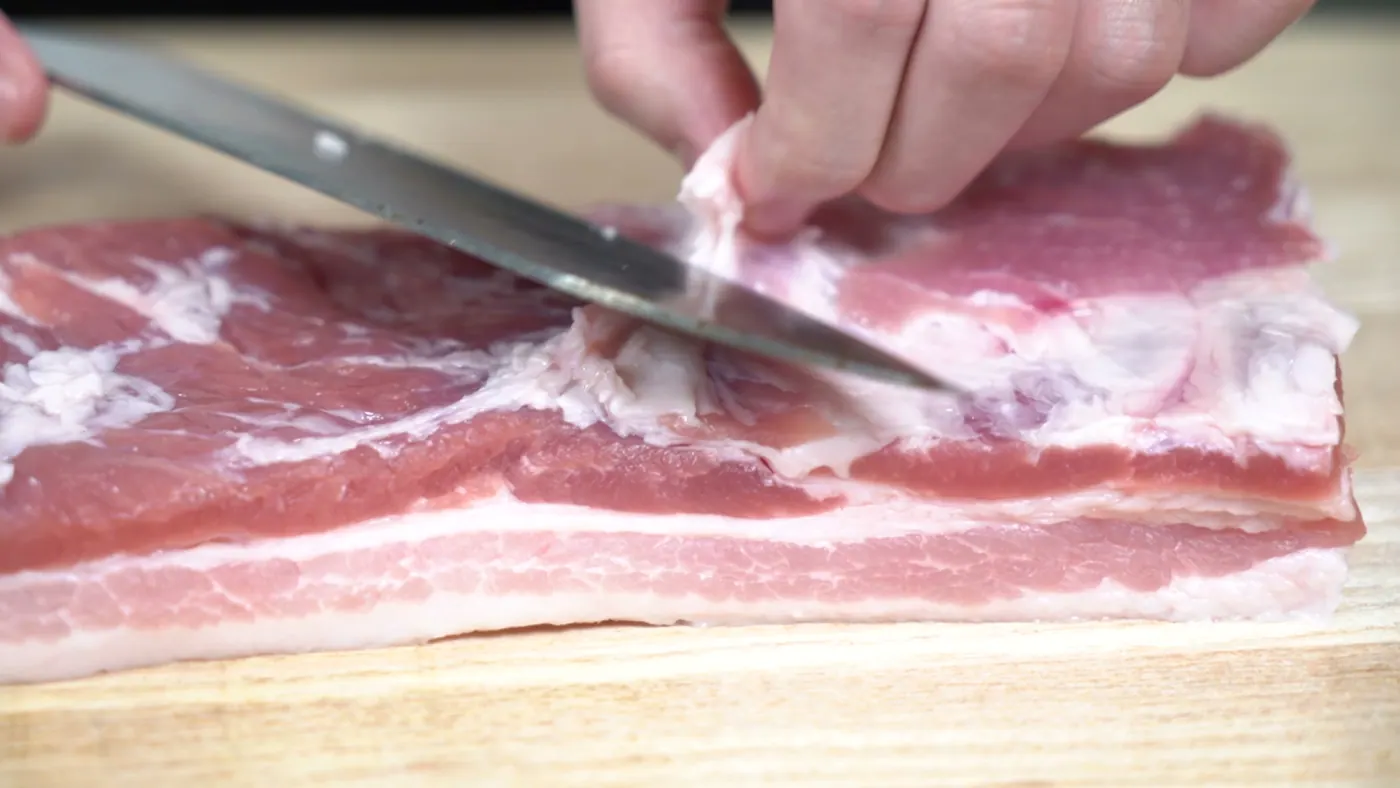
Make cuts in the pork
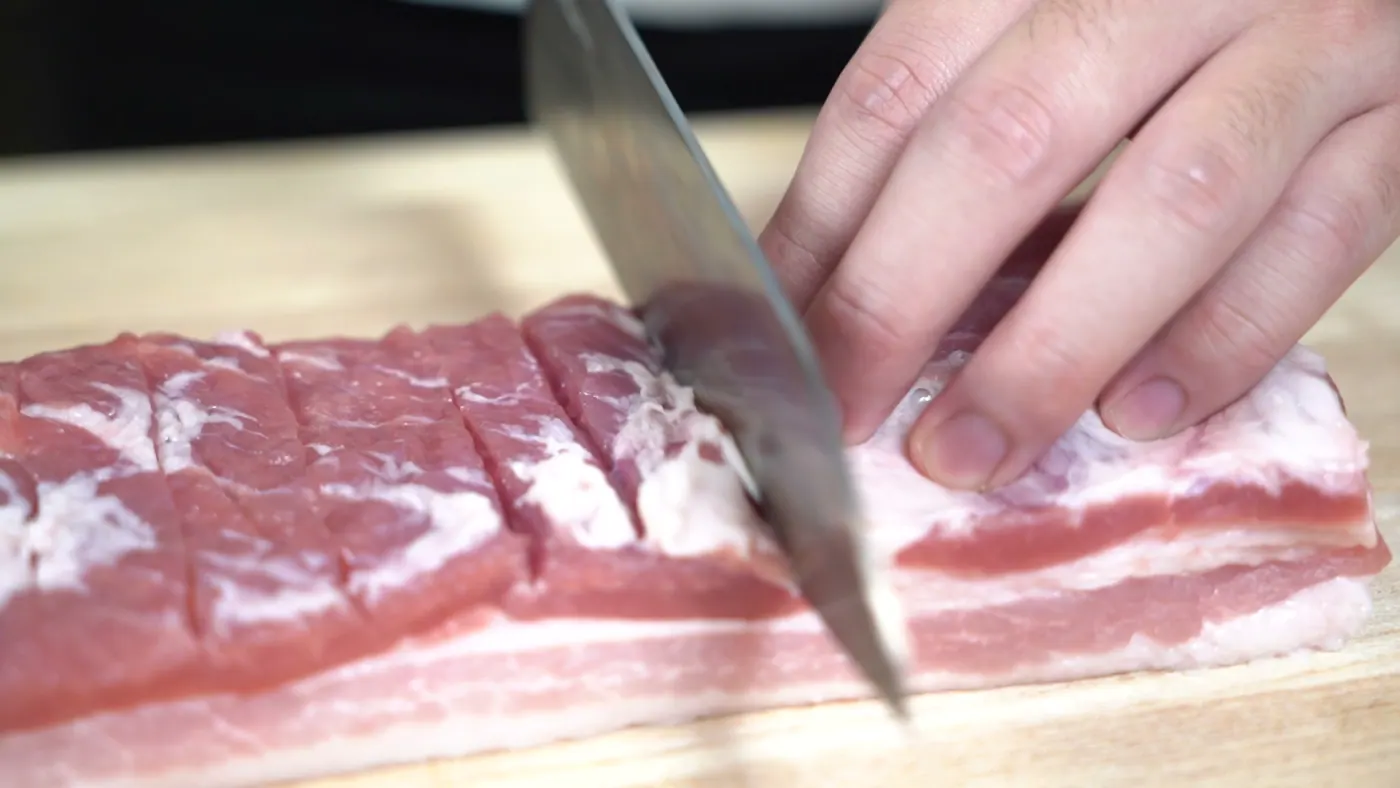
Make shallow cuts across the meat at even intervals. This makes the pork easier to roll, and helps the flavor soak in and the pork cook evenly.
Poke holes with a fork
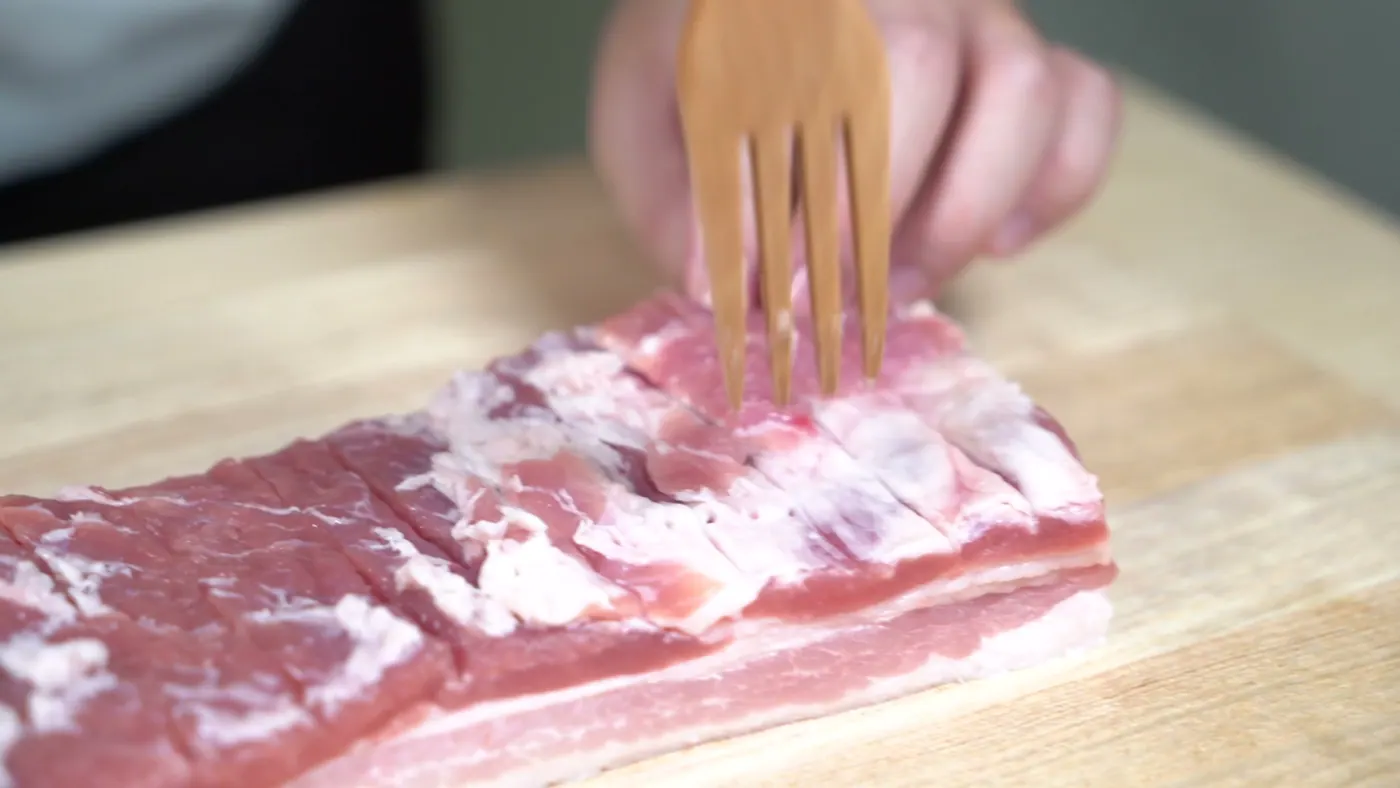
Poke holes all over the pork with a fork. This also helps the flavor soak in and the pork cook evenly, so don't skip it. When the front is done, do the same on the back.
Wipe off the drippings
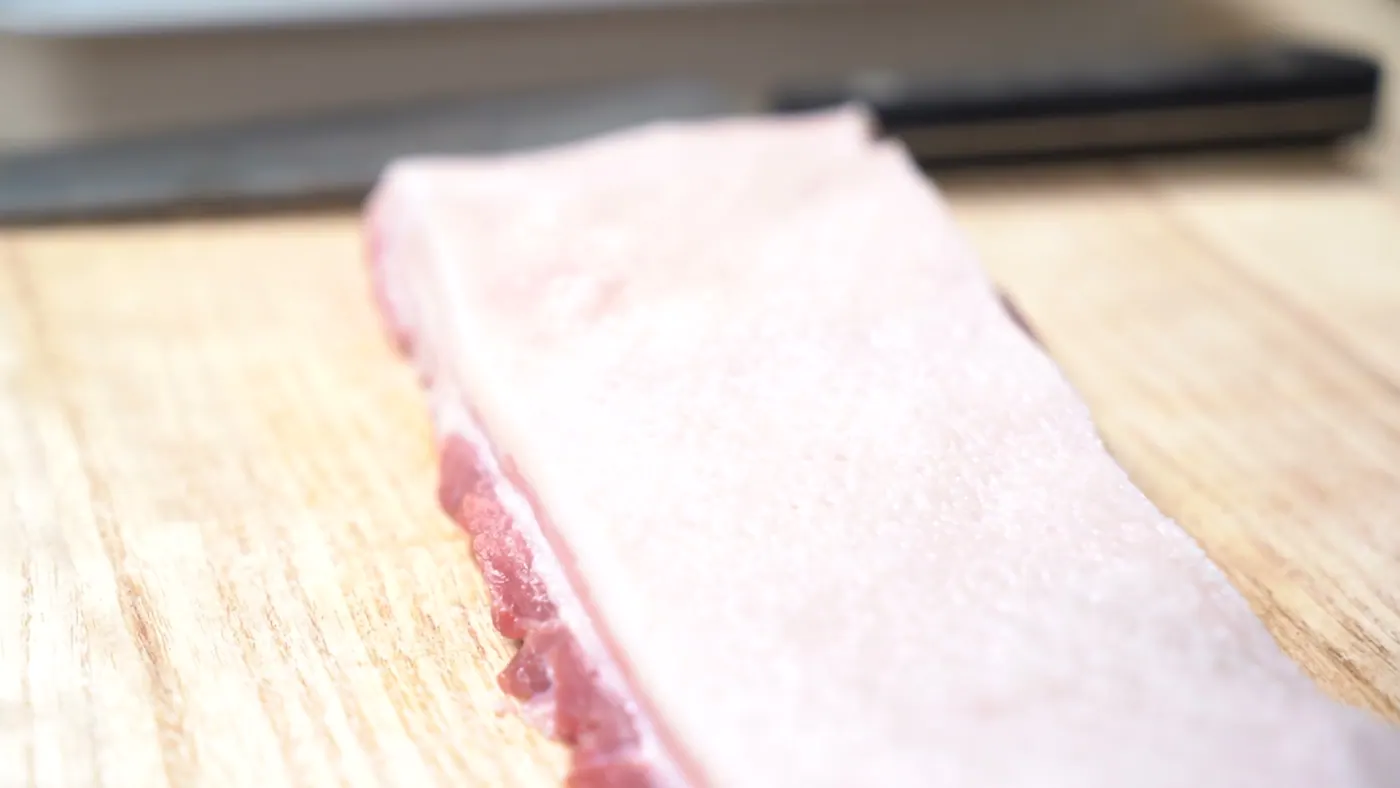
Carefully wipe off the drippings with kitchen paper. The drippings cause odors. This finishes the prep.
Roll the pork
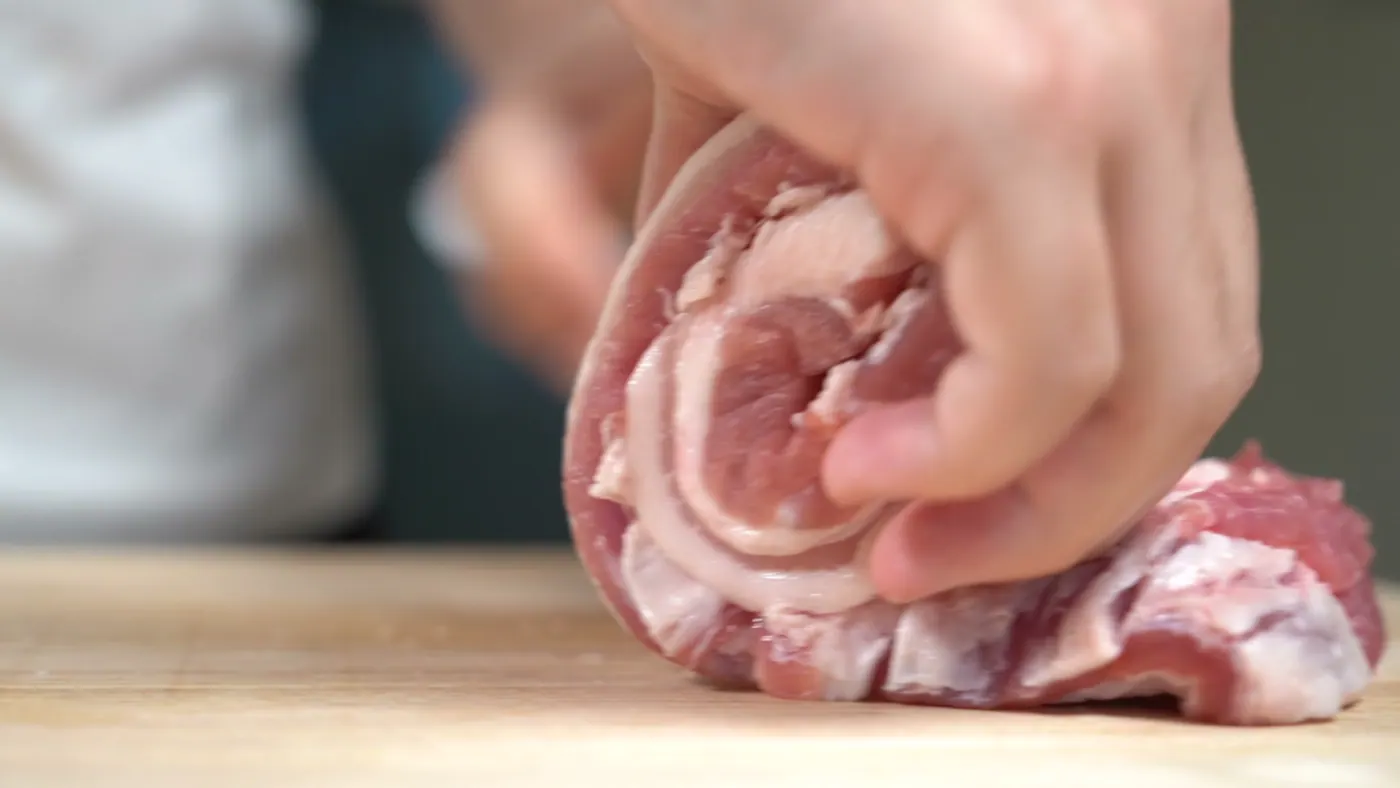
Roll the pork to give the chashu its round shape. One end is thinner than the other. If you start from the thicker end, gaps form, so start rolling from the thinner end.
Roll it tightly with firm pressure so there are no gaps. If there are almost no gaps, you're doing it right.
Tie the Pork
Tie the pork with twine
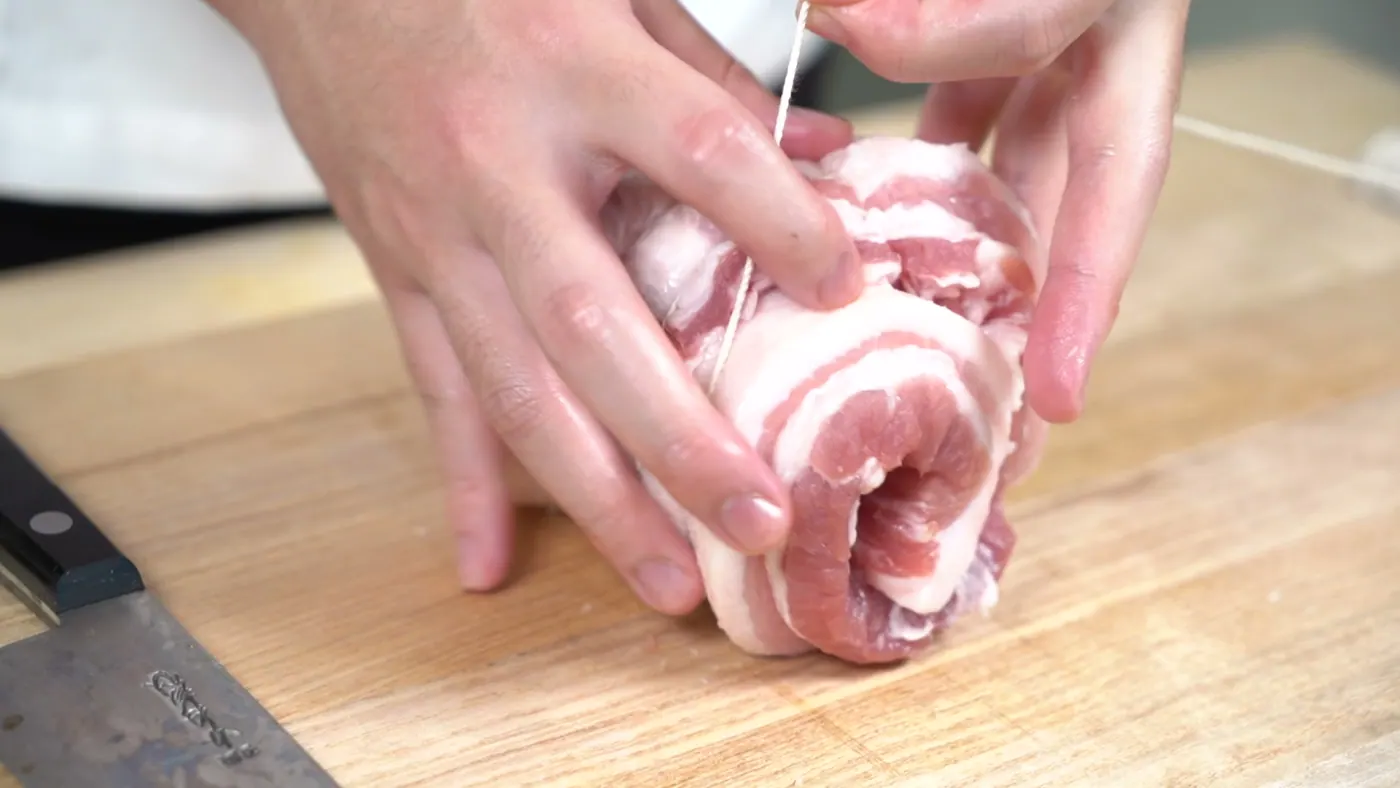
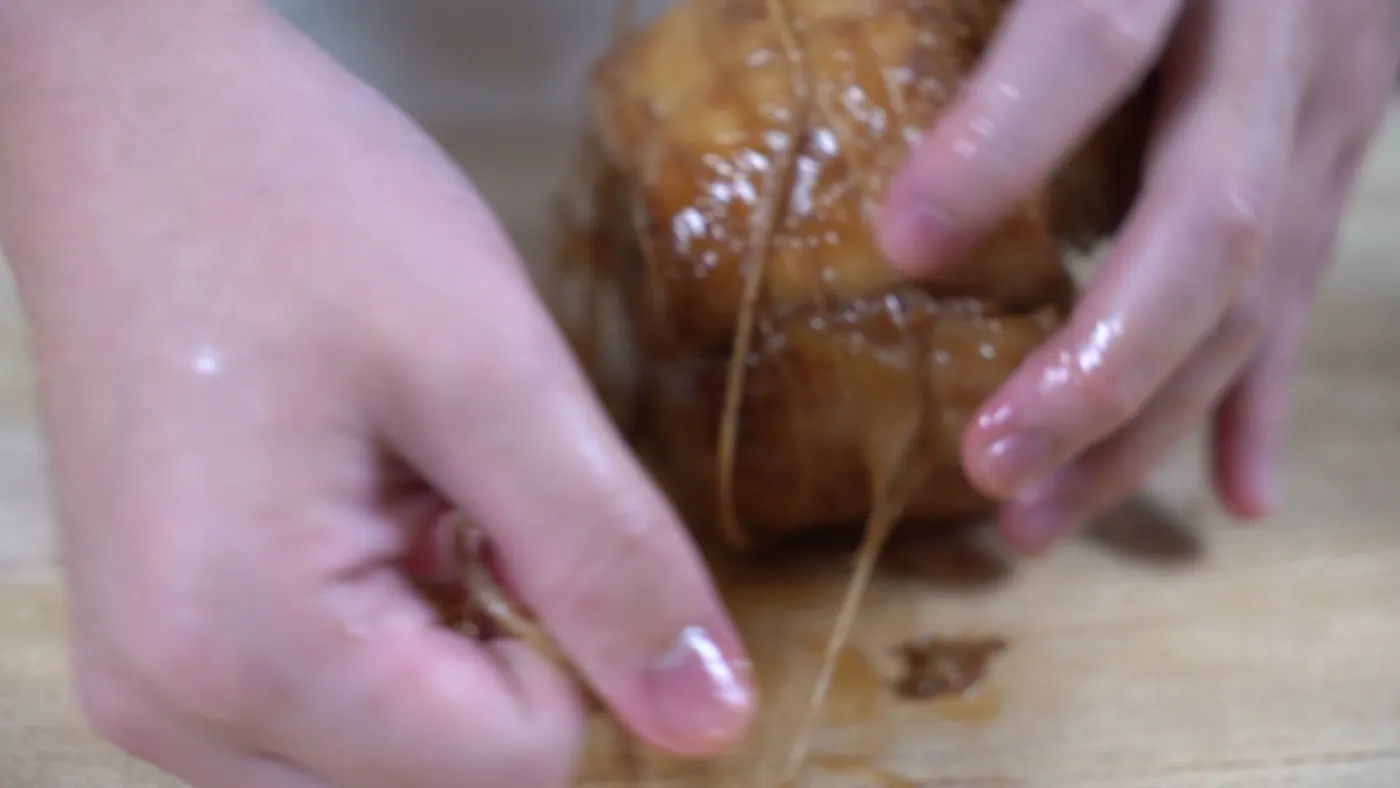
Tie the pork with kitchen twine so it keeps its round shape.
- Wrap the twine around the pork lengthwise once and tie it tightly. Leave a little extra twine when you tie it, because you'll use it at the end
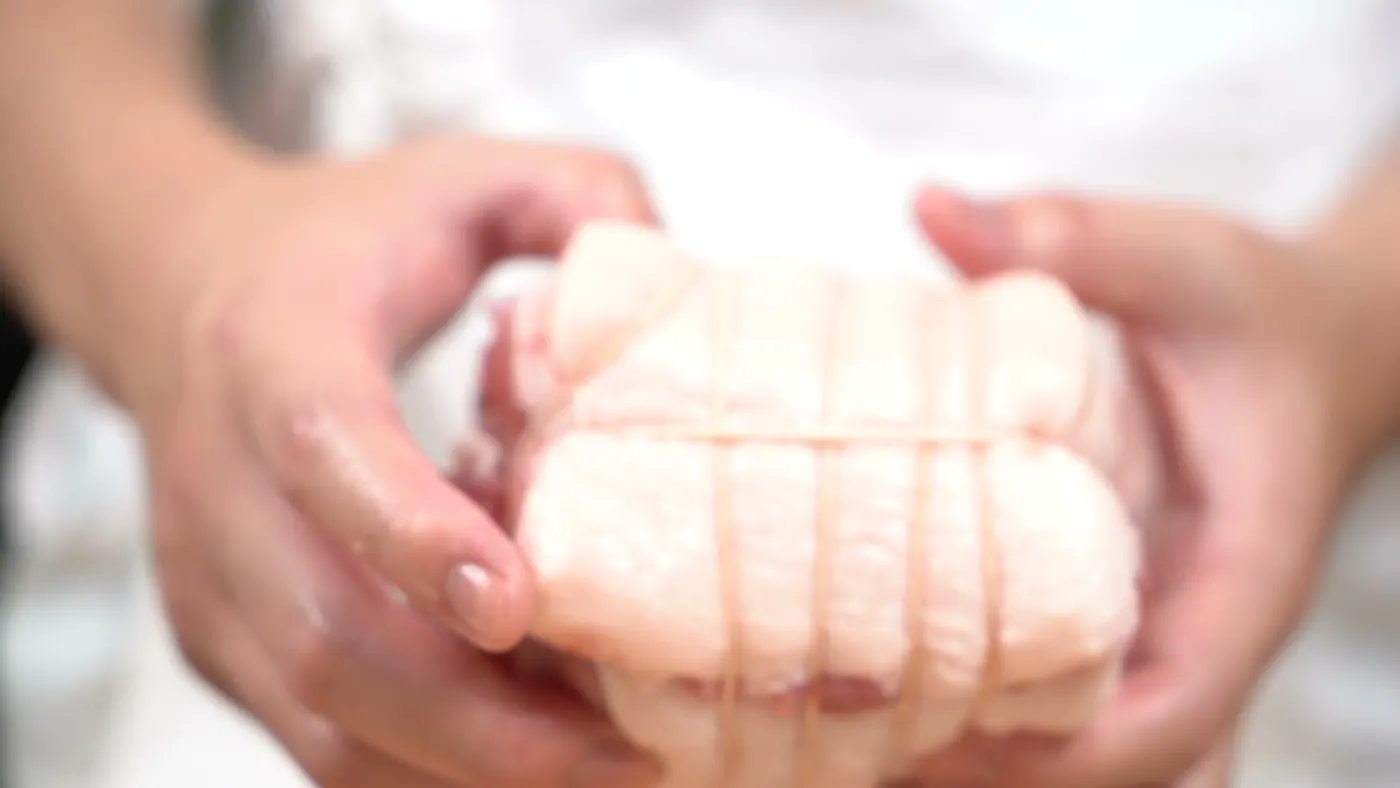
- Wrap the twine around the pork crosswise, over and over. Wrap it in the same direction you rolled the pork so the shape doesn't fall apart. Shape the pork with your hands as you go, and keep the twine at even intervals
- When you reach the end of the pork, wrap the twine lengthwise again so it crosses the crosswise twine on the sides
- After wrapping it lengthwise one and a half times, tie it tightly to the extra twine you left at the start. Cut off any excess twine
The video has a slow version of this tying if you want to follow along.
Simmer the Pork for 90 Minutes
Add the pork and aromatics to a pot
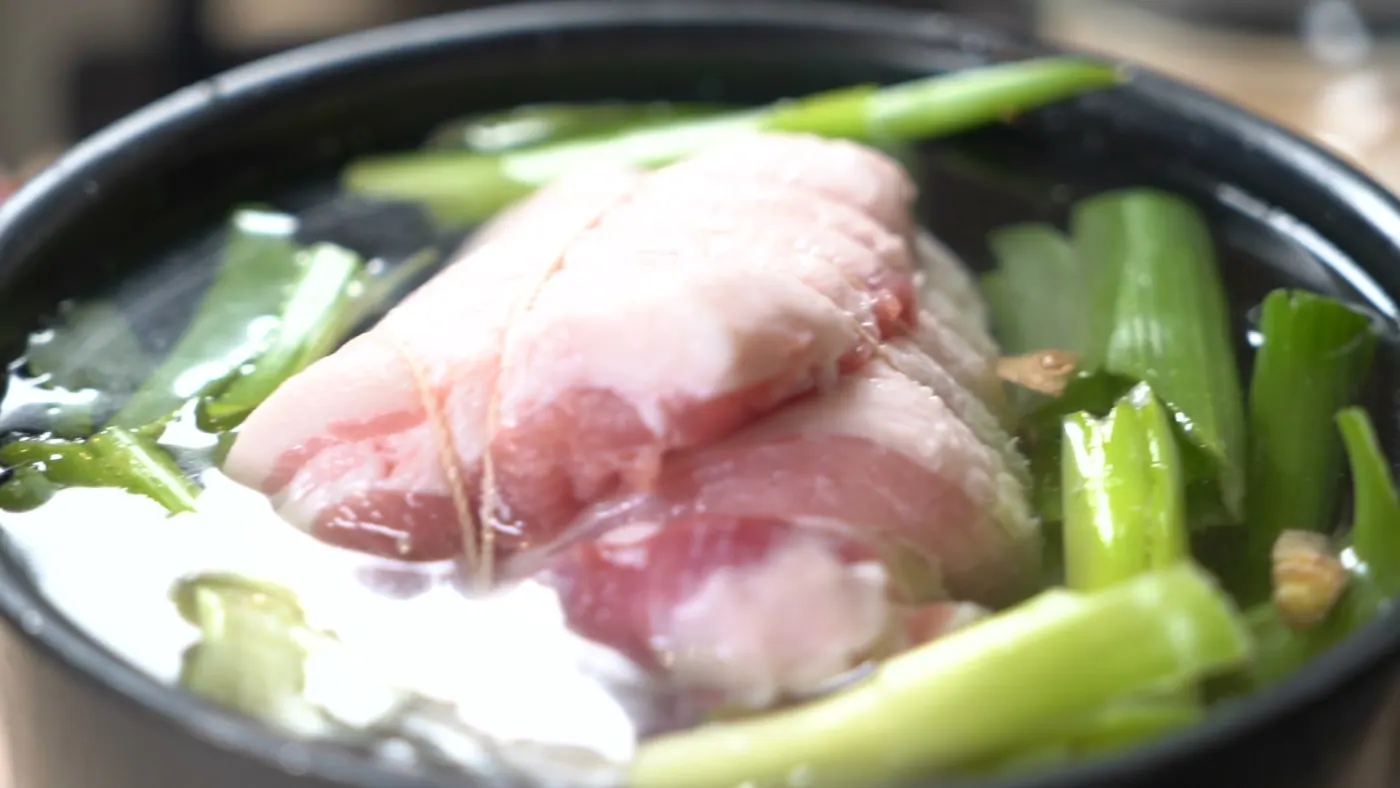
Put the pork in a pot with enough water to cover it. Add these to take out the pork odor:
- 4 crushed garlic cloves
- 20g sliced ginger
- The green part of 1 Japanese long green onion, torn by hand
Tearing the green onion by hand helps it release more of the odor-removing compounds.
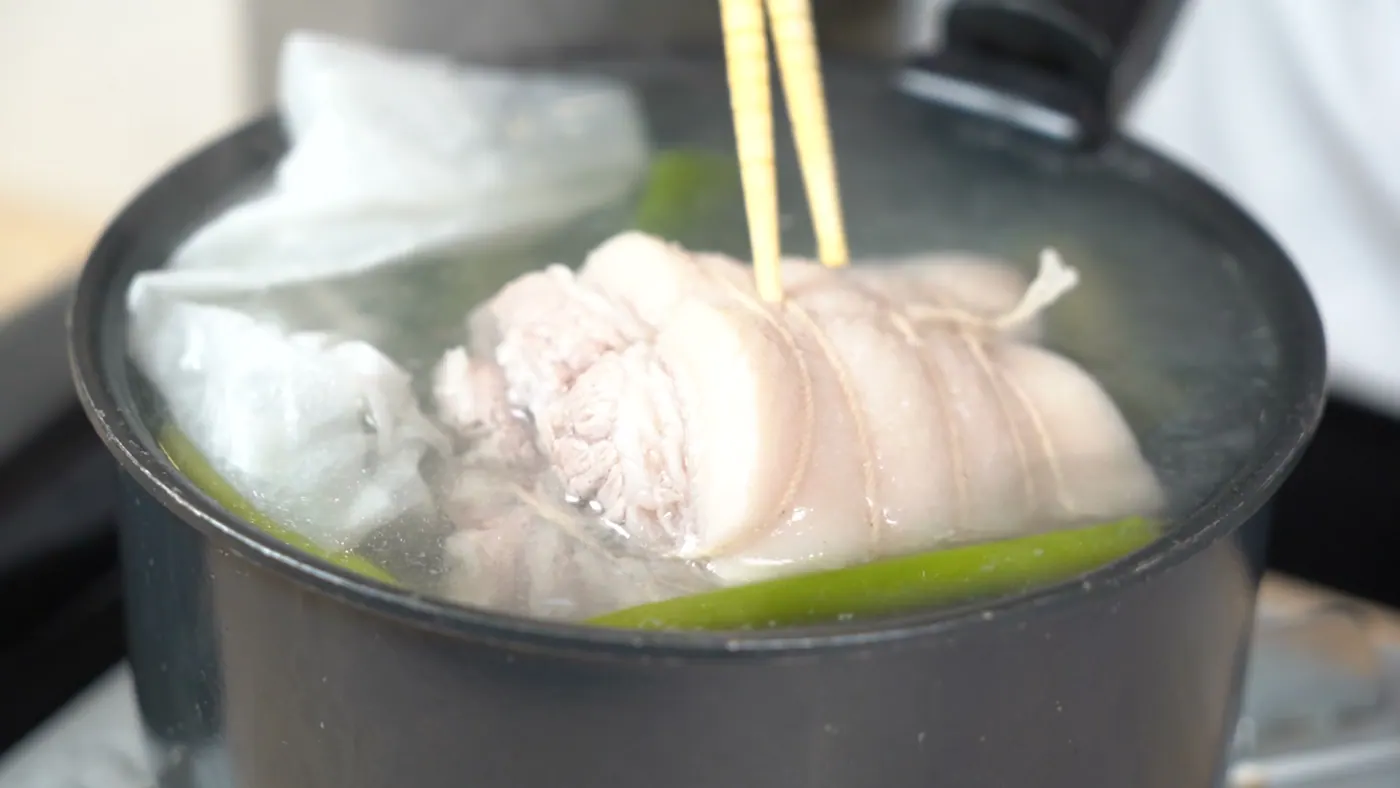
Cover with kitchen paper, not a lid
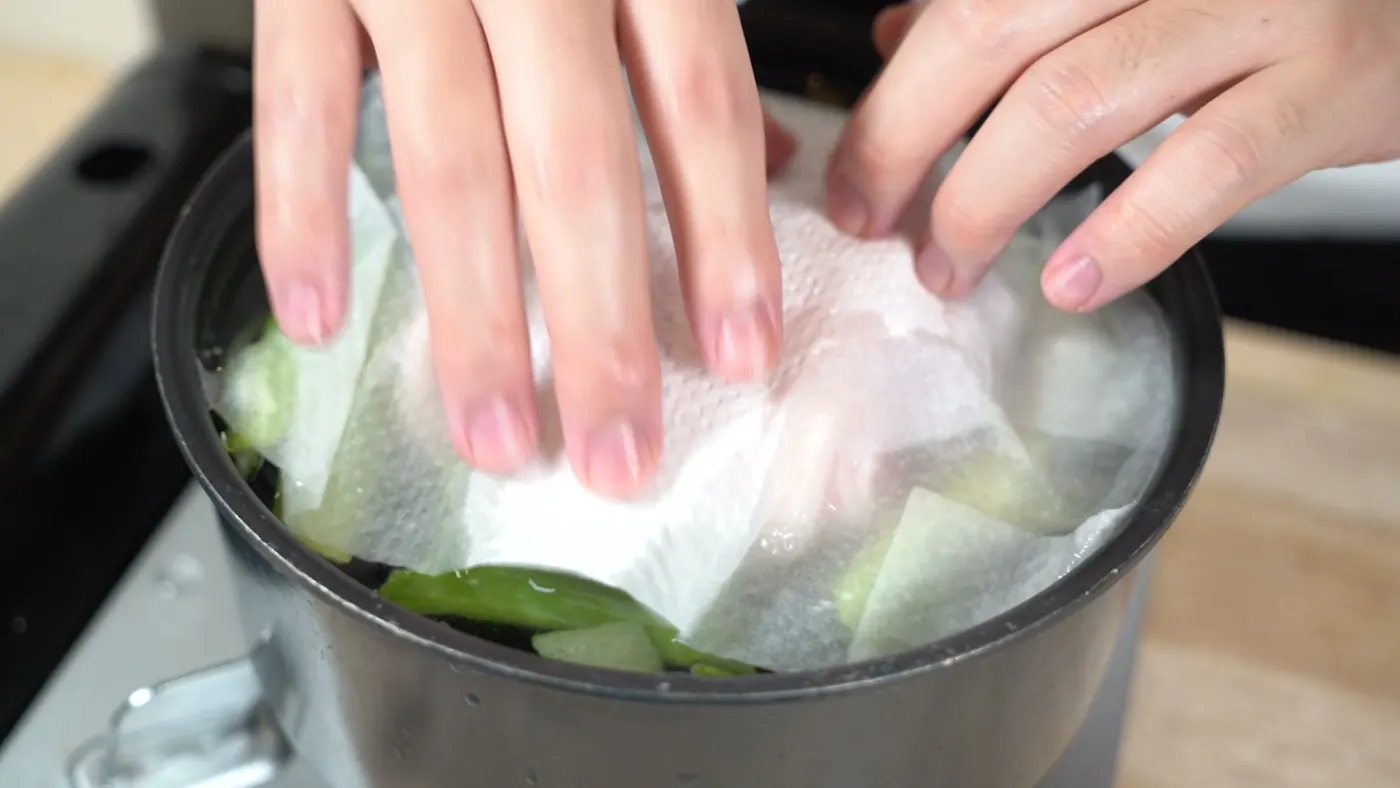
Don't put a lid on the pot. A lid makes it harder for the odors to escape. Instead, lay a sheet of kitchen paper over the top and heat over medium-high heat.
When it comes to a boil, skim the foam from the pork. The kitchen paper absorbs the foam that causes odors, so you only need to take off the kitchen paper.
Simmer on low heat for 90 minutes
Lay a new sheet of kitchen paper on top to keep removing odors, and simmer on low heat for 90 minutes.
So the pork cooks evenly, spoon the cooking liquid over it from time to time, and turn it over every 20-30 minutes.
Take out the pork and 200ml of the liquid
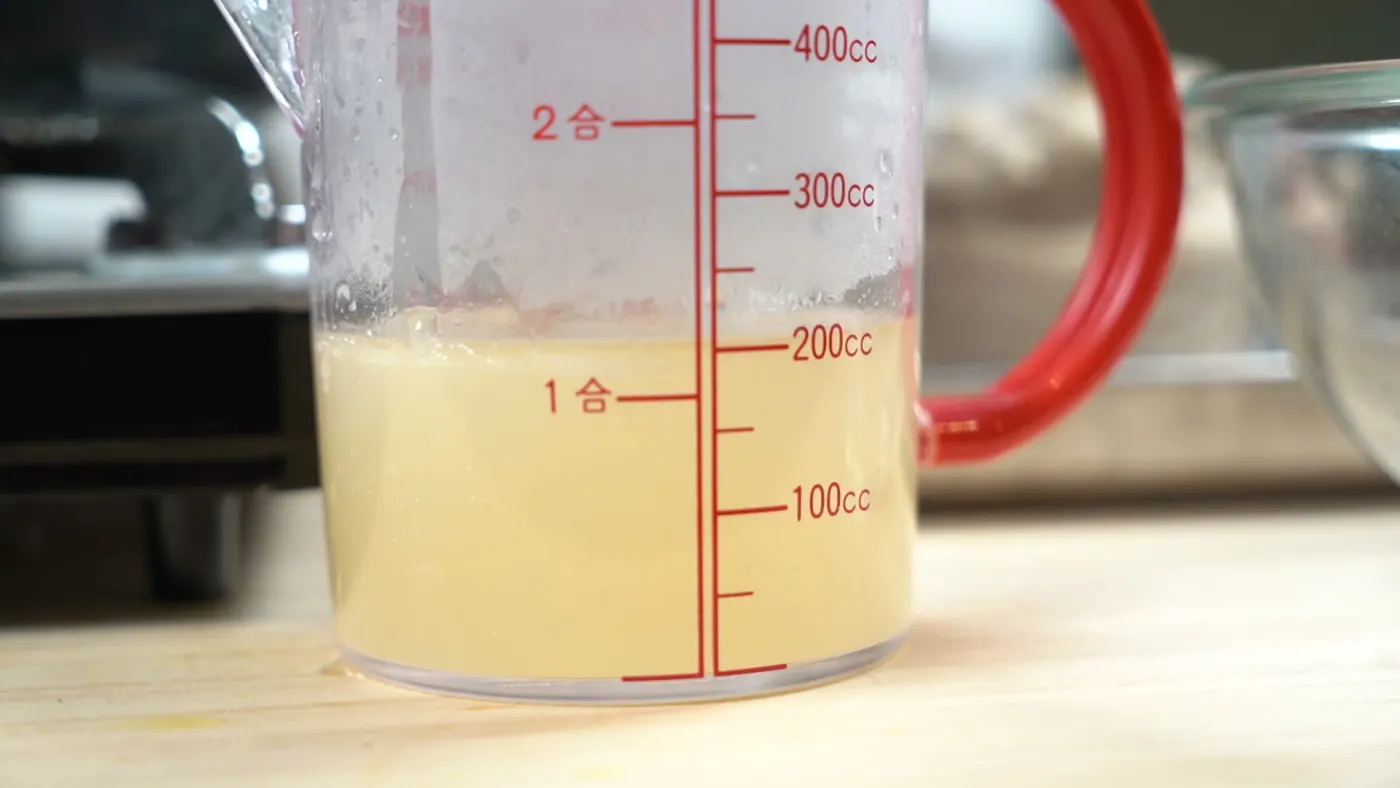
After 90 minutes, turn off the heat and take the pork out. Also take out 200ml of the cooking liquid for the braising liquid.
The rest of the cooking liquid is full of pork flavor, so use it for soups and other dishes.
Sear and Braise
Sear the pork
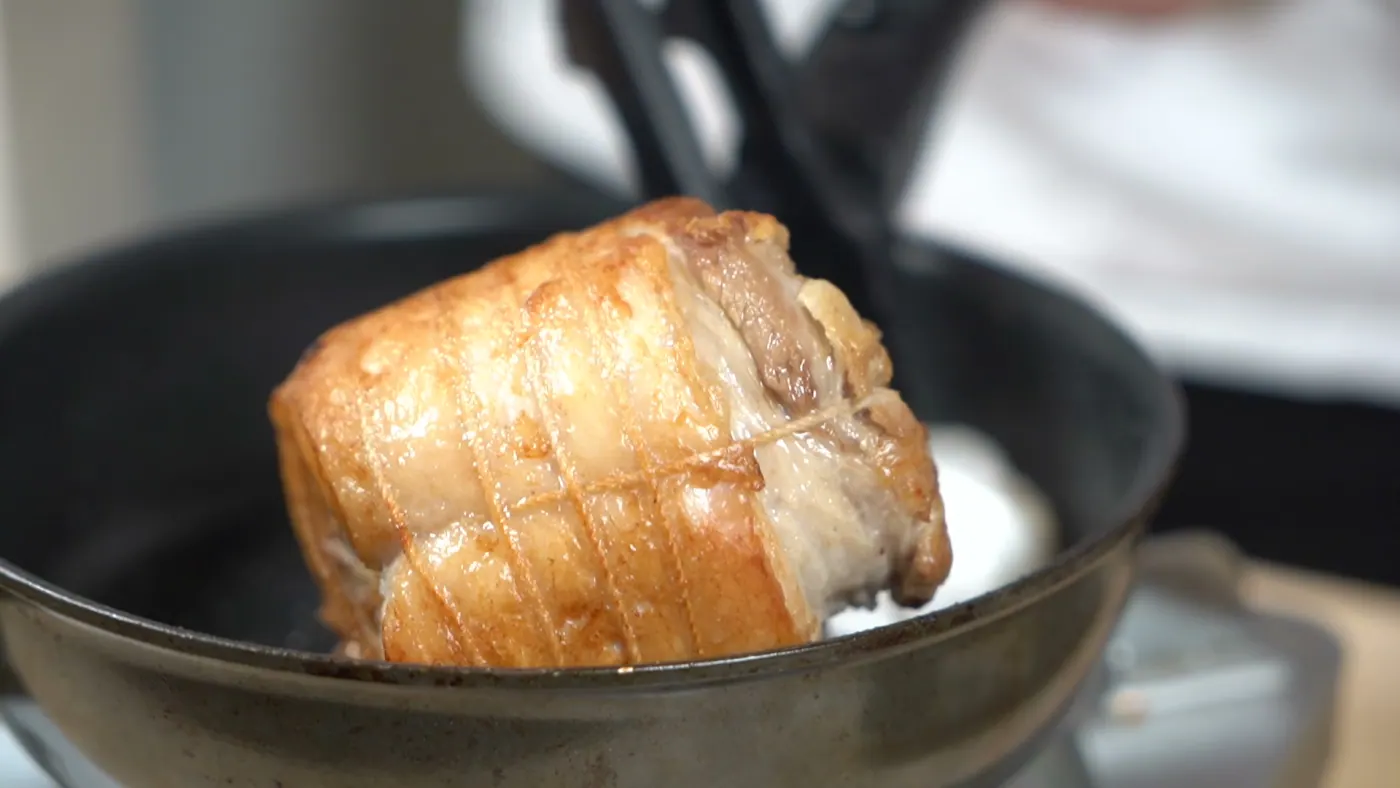
Heat a frying pan with oil over medium heat. After 30 seconds, add the chashu and sear it until it's browned all over.
- Some recipes sear the pork before simmering, but searing it after simmering gives a more fragrant result
- Excess fat splatters, so wipe it off with kitchen paper as needed
- Pressing the chashu against the edge of the pan helps it brown
Make the braising liquid
Move the chashu to a deep pot and add:
- 200ml cooking liquid
- 100ml soy sauce
- 4 tablespoons sugar
- 2 crushed garlic cloves
Heat over medium heat and bring it to a boil. Don't forget to dissolve the sugar.
Braise on low heat
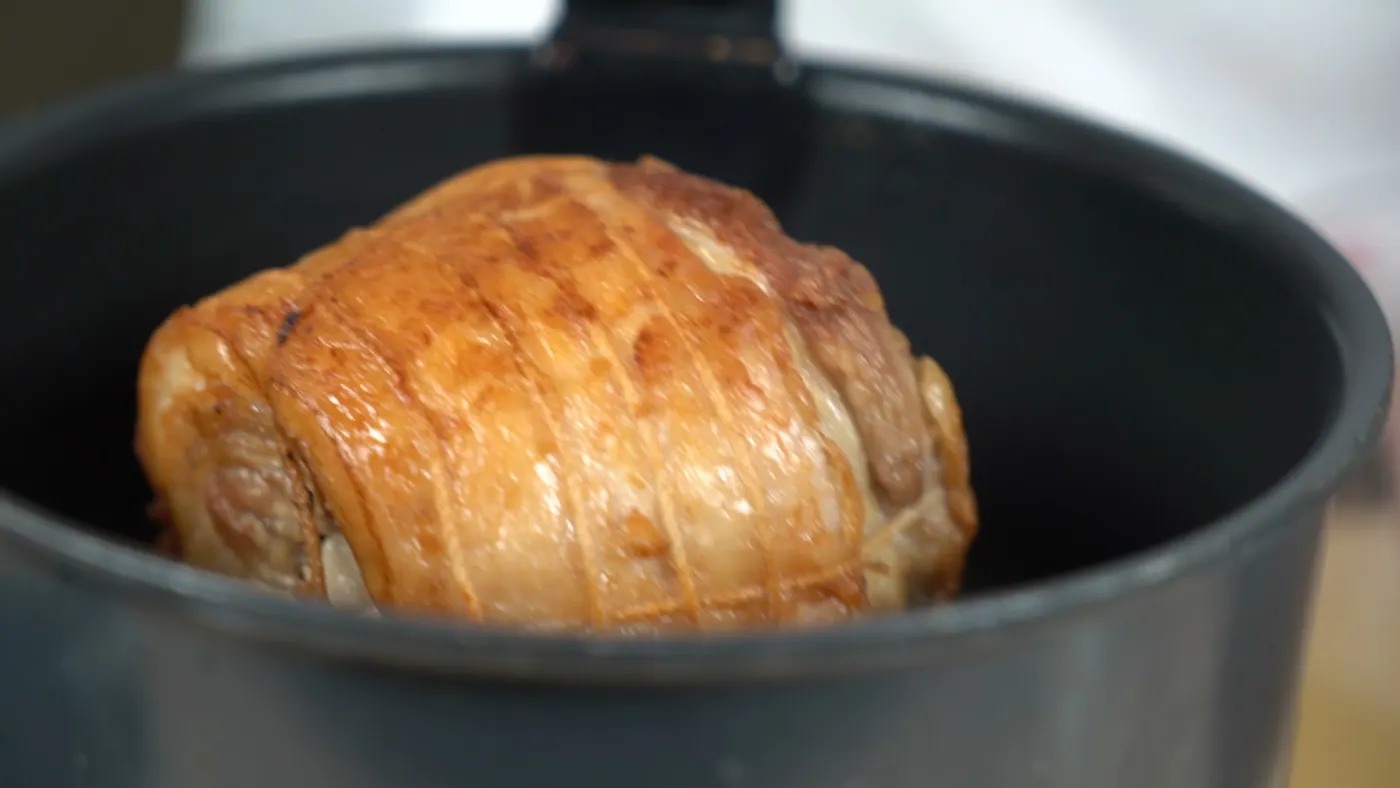
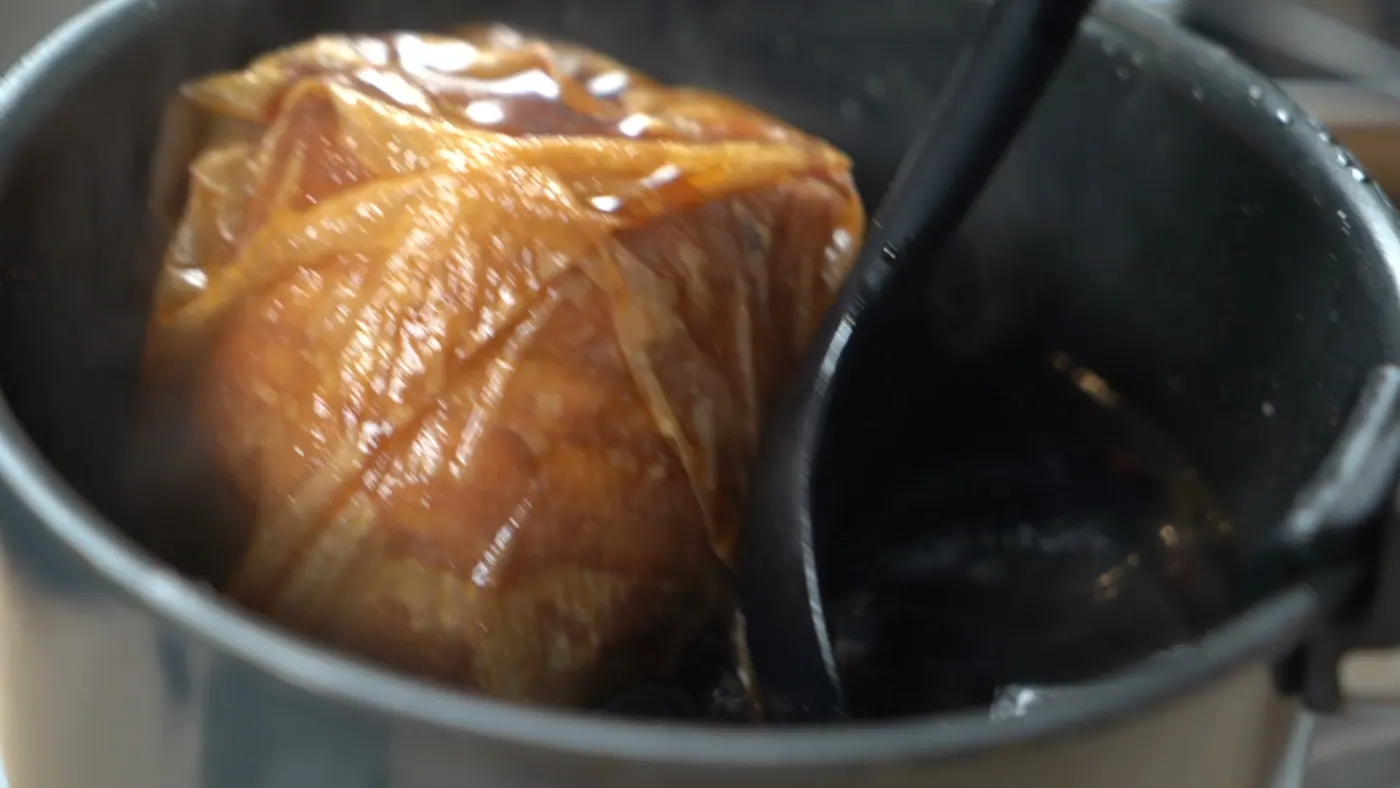
When it boils, turn the heat to low and lay kitchen paper on top again. This time it isn't for removing odors. It helps the braising liquid soak into the meat. Spoon the braising liquid over the pork so it absorbs the flavor.
After 3 minutes on low heat, turn the chashu over. Put the kitchen paper back and spoon the braising liquid over it again. After another 3 minutes on low heat, turn off the heat and let it sit for a while to cool down a little.
Chill for Half a Day
Put the chashu in a bag with the liquid
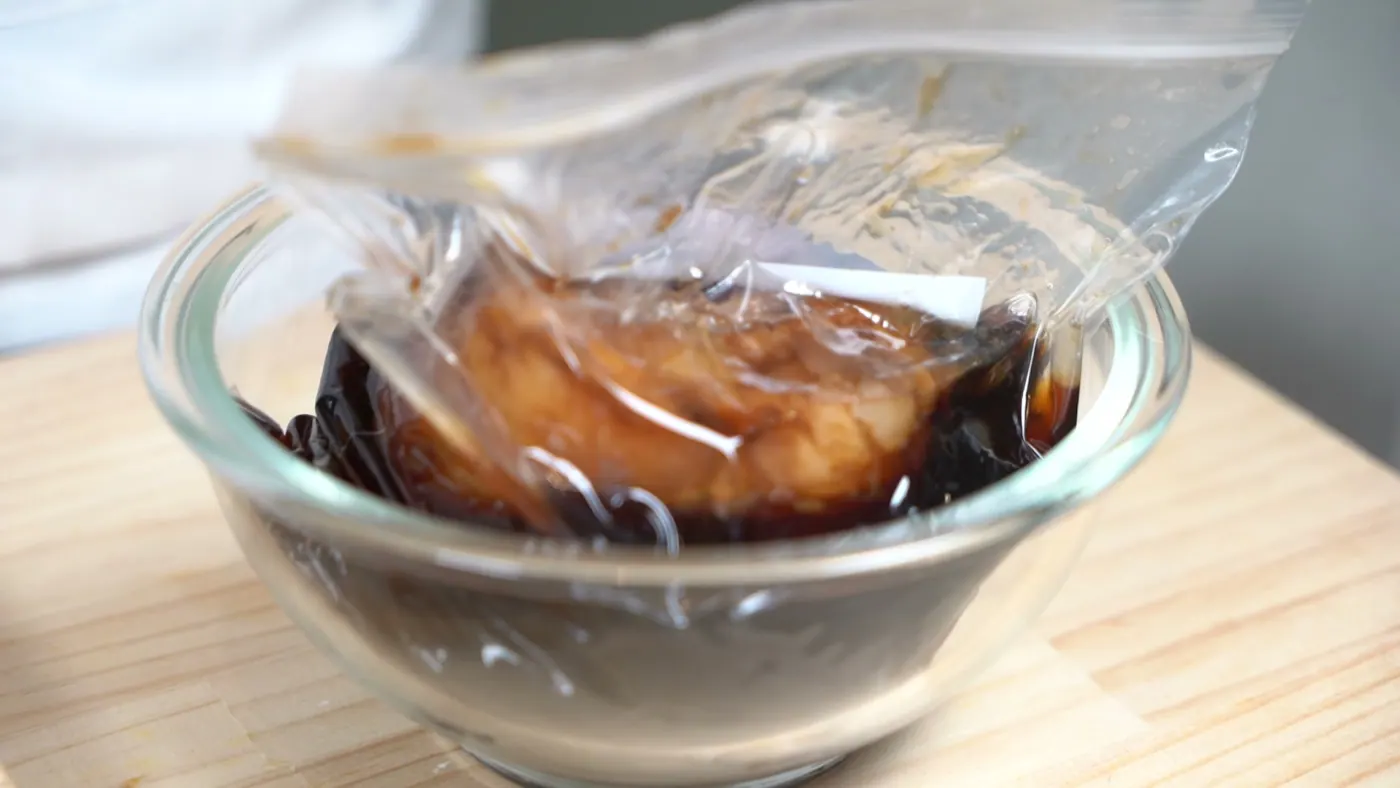
Open a zip-top bag inside a bowl. This makes it easier to fill. Carefully add the chashu and the braising liquid without spilling.
When you close the bag, press it like this to push the air out. Then the chashu stays fully in the braising liquid.
Leave it in the refrigerator for half a day so the flavor soaks in.
Slice and Finish
Remove the twine and slice
When the flavor has soaked into the chashu, take it out of the refrigerator. Don't throw away the braising liquid. You'll use it for the sauce.
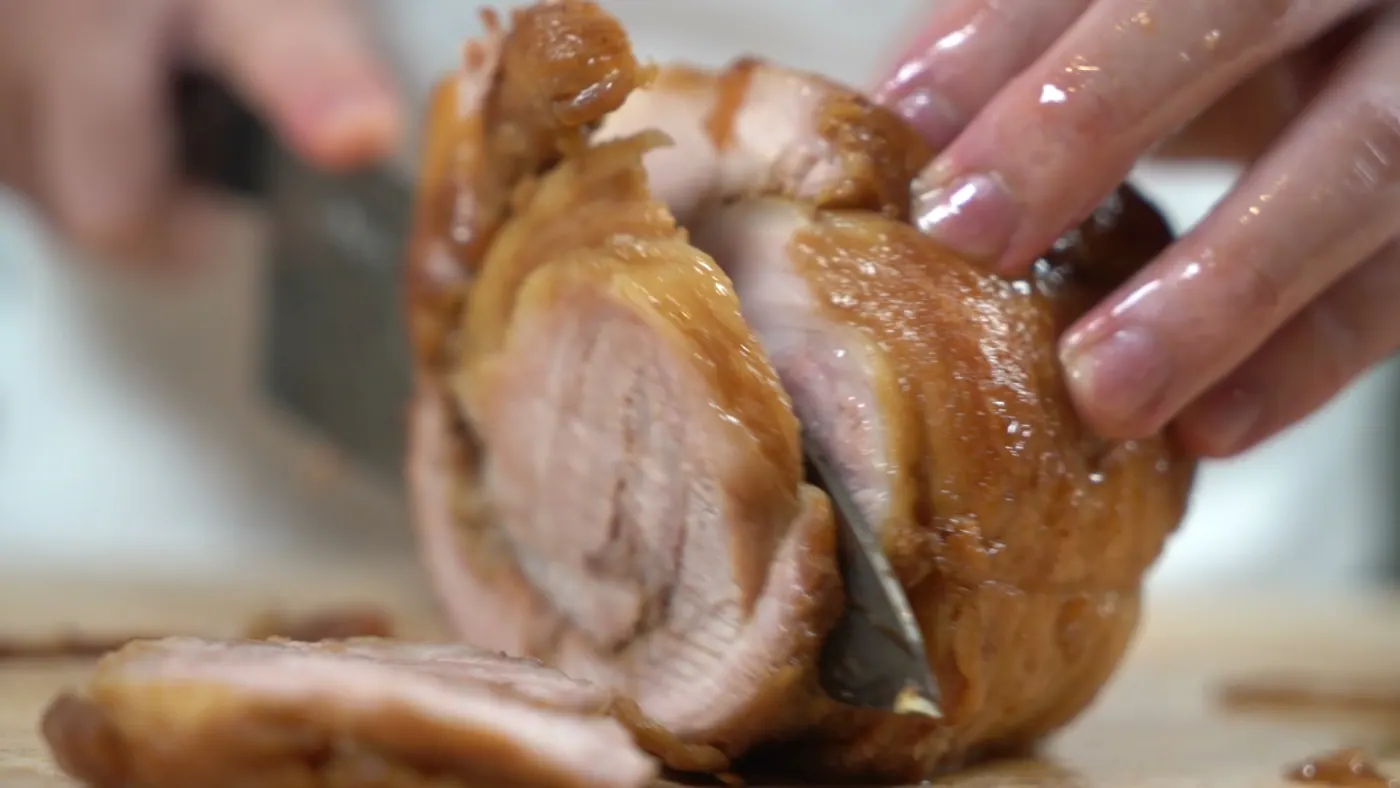
Cut the twine with scissors and carefully remove it. Then slice the chashu at even intervals. About 1cm thick gives you a satisfying bite. Cutting a little at a time makes it easy to slice without breaking the shape.
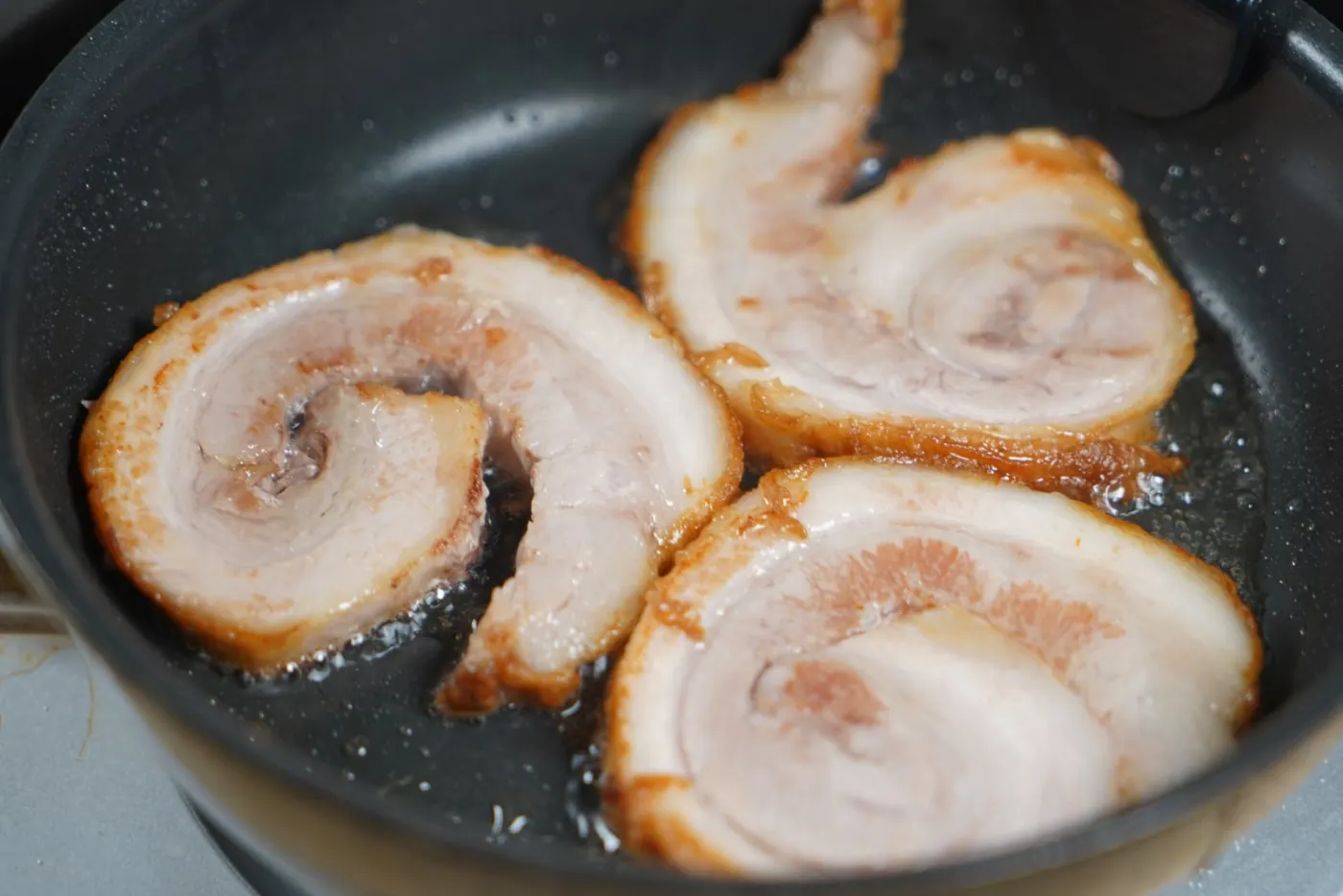
Sear the slices
You don't need to add oil to the frying pan. Sear the chashu for 1 minute on each side. This makes it fragrant and even tastier. When both sides are seared, move the slices to a plate.
Make the sauce
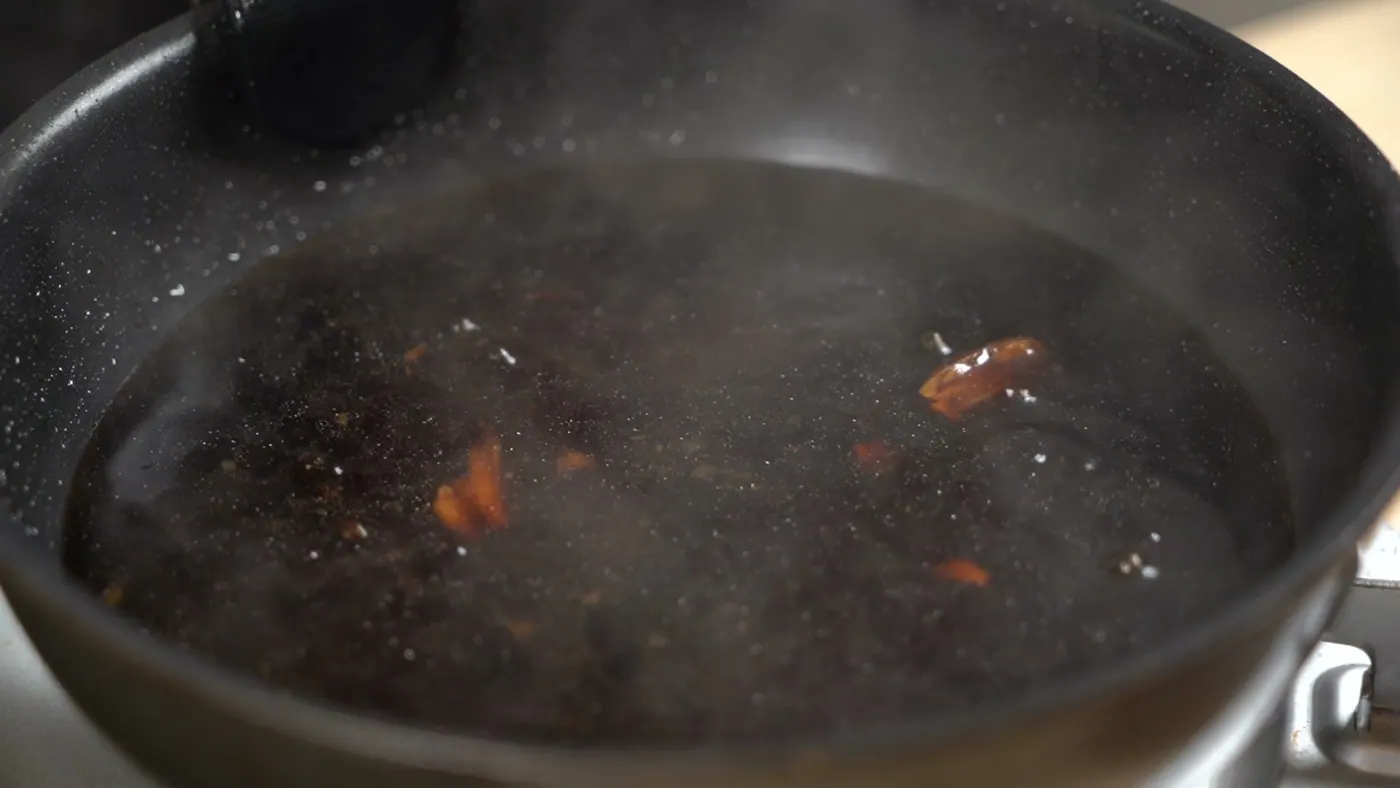
Wipe the oil out of the frying pan and pour in the braising liquid. Heat it over medium heat, taking care not to let it burn. When it thickens a little, the sauce is ready.
Serve
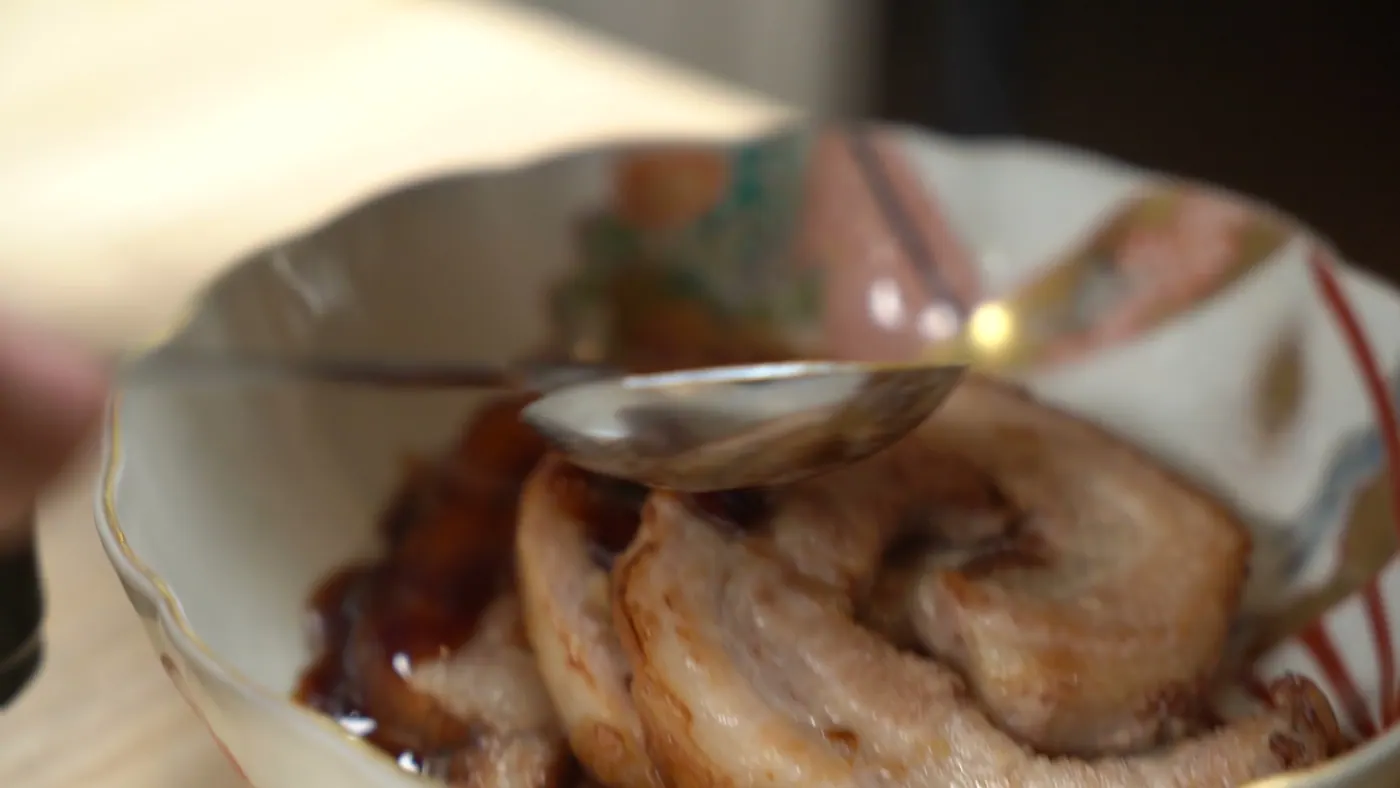
Spoon the sauce over the chashu. The slowly simmered chashu is tender, and it goes perfectly with the sweet sauce.
Serving Suggestion: Chashu Rice Bowl
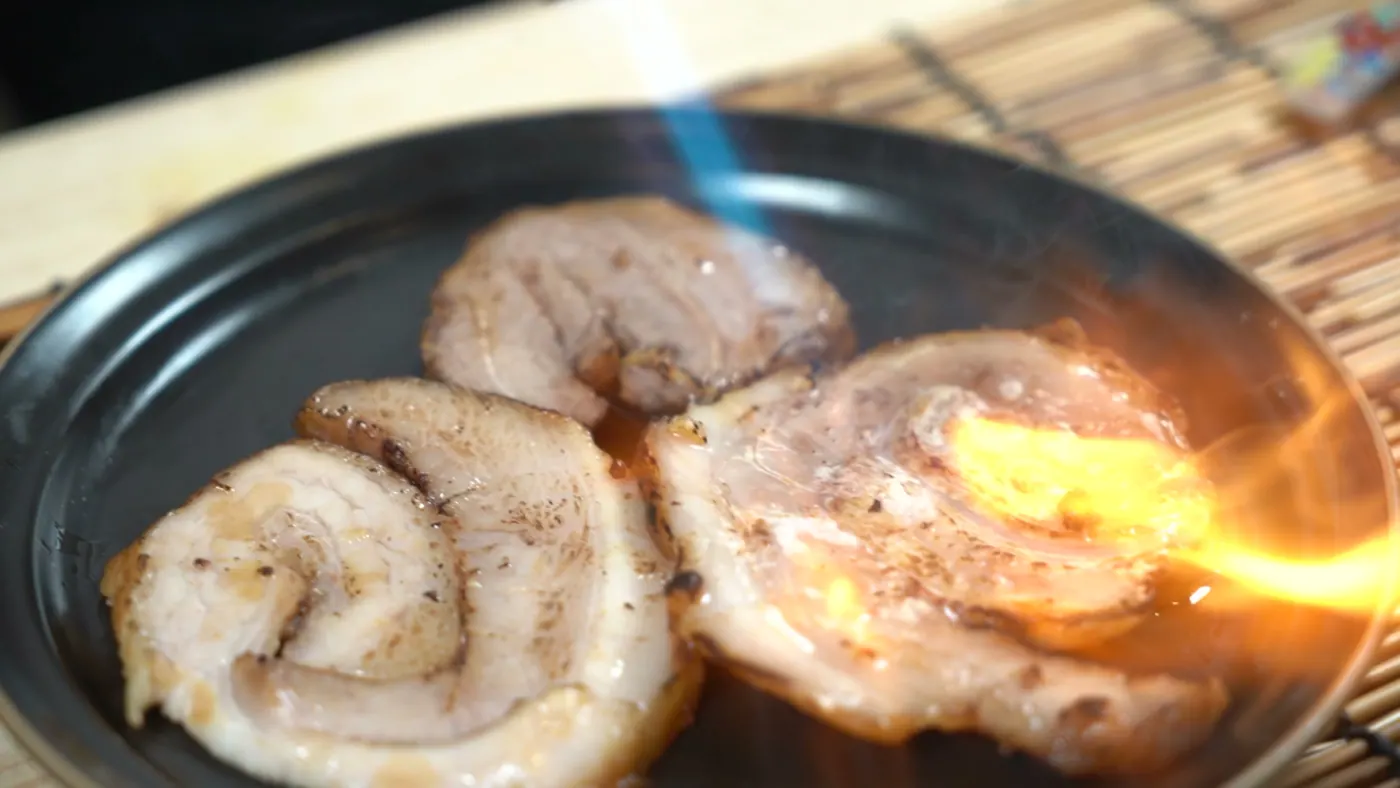
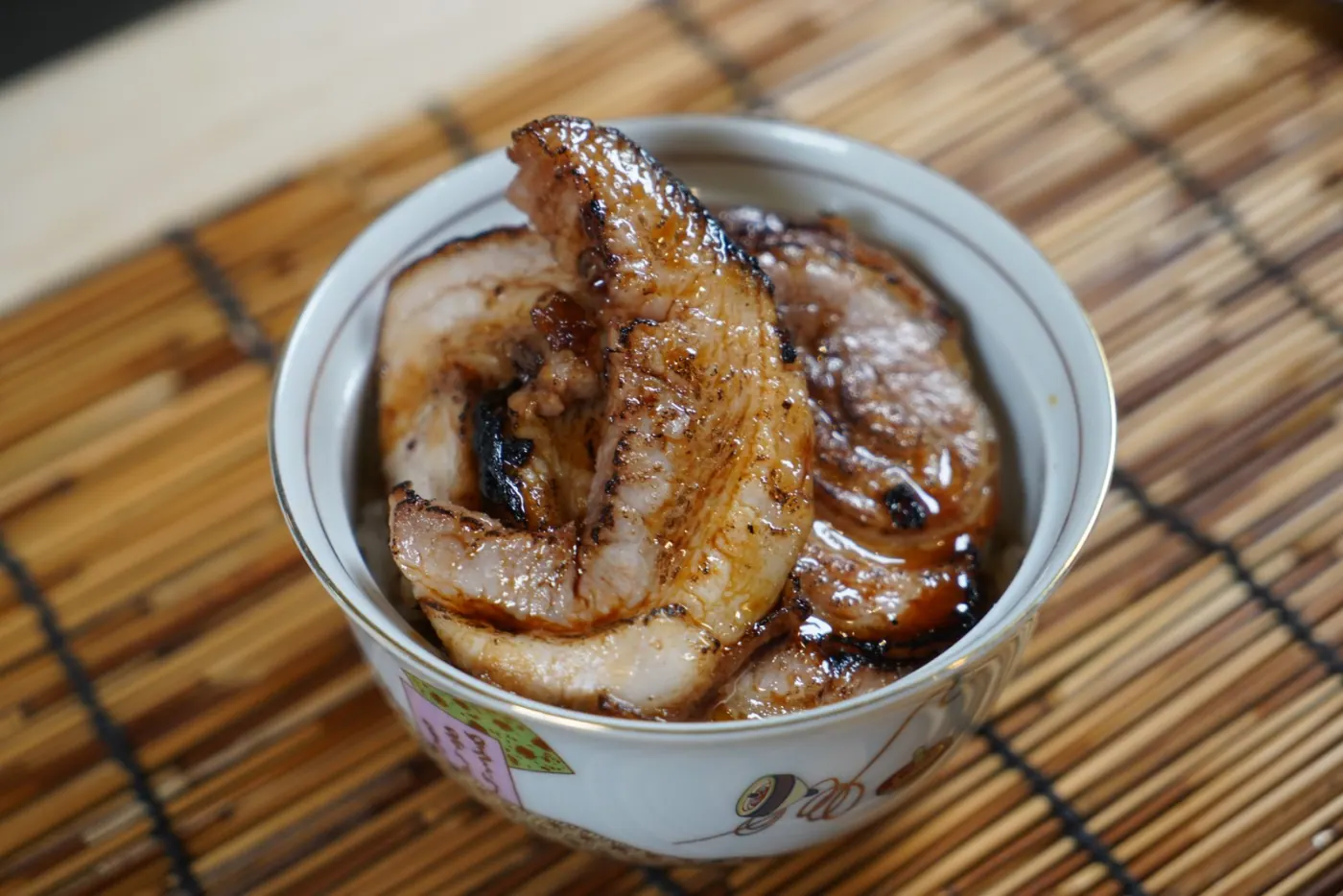
This is my favorite way to eat it. For an even more savory flavor, sear the surface of the chashu with a kitchen torch and put it on top of rice. Pour the sauce over it, and you have a chashu rice bowl (chashu don). This chashu is very juicy, so it goes really well with rice.
Tips and Key Points
Flatten the pork before rolling
If one part of the pork belly is too thick, gaps form when you roll it. Trim it flat first, then roll from the thinner end.
Use kitchen paper instead of a lid
A lid traps the odors. Kitchen paper lets them escape and absorbs the foam, so you only need to lift off the paper.
Sear after simmering
Searing after the 90-minute simmer gives the chashu a more fragrant finish than searing it first.
Give it time in the refrigerator
Half a day in the braising liquid lets the flavor soak all the way into the chashu.
Troubleshooting
Frequently Asked Questions
Why do I need to flatten the pork?
If the pork is too thick in one part, gaps form when you roll it and it won't roll well. Trim the thicker part flat with the knife held horizontally.
Why roll from the thinner end?
If you start from the thicker end, gaps form. Start from the thinner end and roll tightly.
Why not use a lid when simmering the pork?
A lid makes it harder for the odors to escape. Lay kitchen paper on top instead. It also absorbs the foam.
Should I sear the pork before or after simmering?
After. Some recipes sear the pork before simmering, but searing it after simmering gives a more fragrant result.
What can I do with the leftover cooking liquid?
You only use 200ml for the braising liquid. The rest is full of pork flavor, so use it for soups and other dishes.
How thick should I slice the chashu?
About 1cm thick gives you a satisfying bite.
Summary
Homemade chashu takes time, but each step is simple: flatten, roll and tie the pork belly, simmer it for 90 minutes with garlic, ginger and green onion, then sear it and braise it in soy sauce and sugar. Half a day in the refrigerator lets the flavor soak in, and a quick sear before serving makes it fragrant.
Serve it on ramen like our miso ramen or abura soba, with ramen eggs.
主菜Main Dishチャーシュー
Chashu (Rolled Pork Belly for Ramen)
Chashu is the rolled, braised pork you often see on top of ramen at ramen shops. It looks hard to make, but it's mostly waiting.
No ratings yet
Rate this recipe
- Prep
- 20 min
- Cook
- 2 hr
- Chilling
- 12 hr (half a day) in the refrigerator
- Total
- 14 hr 20 min (including chilling)
- Servings
- 4
- Difficulty
- Intermediate
Ingredients
Pork
For Blanching
Braising Liquid
For Searing
Ingredient amounts are multiplied; cooking times and pan size may need adjusting.
Instructions
Amounts mentioned in the steps are for the original recipe (1x) — use the scaled amounts above.
Prep: Flatten and Roll the Pork
Choose the pork belly
Use a block of pork belly weighing 500-700g. A good length is about 2-3 fists, or a little shorter than a chef's knife.
Flatten the pork
Look at the pork from the side. One side is a little thicker. If the pork is too thick, gaps form when you roll it, so it won't roll well.
Hold the knife horizontally and cut off the thicker part until the pork is flat. Also remove any excess sinew. If the pork is roughly flat, you're good to go.
Make cuts in the pork
Make shallow cuts across the meat at even intervals. This makes the pork easier to roll, and helps the flavor soak in and the pork cook evenly.
Poke holes with a fork
Poke holes all over the pork with a fork. This also helps the flavor soak in and the pork cook evenly, so don't skip it. When the front is done, do the same on the back.
Wipe off the drippings
Carefully wipe off the drippings with kitchen paper. The drippings cause odors. This finishes the prep.
Roll the pork
Roll the pork to give the chashu its round shape. One end is thinner than the other. If you start from the thicker end, gaps form, so start rolling from the thinner end.
Roll it tightly with firm pressure so there are no gaps. If there are almost no gaps, you're doing it right.
Tie the Pork
Tie the pork with twine
Tie the pork with kitchen twine so it keeps its round shape.
- Wrap the twine around the pork lengthwise once and tie it tightly. Leave a little extra twine when you tie it, because you'll use it at the end
- Wrap the twine around the pork crosswise, over and over. Wrap it in the same direction you rolled the pork so the shape doesn't fall apart. Shape the pork with your hands as you go, and keep the twine at even intervals
- When you reach the end of the pork, wrap the twine lengthwise again so it crosses the crosswise twine on the sides
- After wrapping it lengthwise one and a half times, tie it tightly to the extra twine you left at the start. Cut off any excess twine
The video has a slow version of this tying if you want to follow along.
Simmer the Pork for 90 Minutes
Add the pork and aromatics to a pot
Put the pork in a pot with enough water to cover it. Add these to take out the pork odor:
- 4 crushed garlic cloves
- 20g sliced ginger
- The green part of 1 Japanese long green onion, torn by hand
Tearing the green onion by hand helps it release more of the odor-removing compounds.
Cover with kitchen paper, not a lid
Don't put a lid on the pot. A lid makes it harder for the odors to escape. Instead, lay a sheet of kitchen paper over the top and heat over medium-high heat.
When it comes to a boil, skim the foam from the pork. The kitchen paper absorbs the foam that causes odors, so you only need to take off the kitchen paper.
Simmer on low heat for 90 minutes
Lay a new sheet of kitchen paper on top to keep removing odors, and simmer on low heat for 90 minutes.
So the pork cooks evenly, spoon the cooking liquid over it from time to time, and turn it over every 20-30 minutes.
Take out the pork and 200ml of the liquid
After 90 minutes, turn off the heat and take the pork out. Also take out 200ml of the cooking liquid for the braising liquid.
The rest of the cooking liquid is full of pork flavor, so use it for soups and other dishes.
Sear and Braise
Sear the pork
Heat a frying pan with oil over medium heat. After 30 seconds, add the chashu and sear it until it's browned all over.
- Some recipes sear the pork before simmering, but searing it after simmering gives a more fragrant result
- Excess fat splatters, so wipe it off with kitchen paper as needed
- Pressing the chashu against the edge of the pan helps it brown
Make the braising liquid
Move the chashu to a deep pot and add:
- 200ml cooking liquid
- 100ml soy sauce
- 4 tablespoons sugar
- 2 crushed garlic cloves
Heat over medium heat and bring it to a boil. Don't forget to dissolve the sugar.
Braise on low heat
When it boils, turn the heat to low and lay kitchen paper on top again. This time it isn't for removing odors. It helps the braising liquid soak into the meat. Spoon the braising liquid over the pork so it absorbs the flavor.
After 3 minutes on low heat, turn the chashu over. Put the kitchen paper back and spoon the braising liquid over it again. After another 3 minutes on low heat, turn off the heat and let it sit for a while to cool down a little.
Chill for Half a Day
Put the chashu in a bag with the liquid
Open a zip-top bag inside a bowl. This makes it easier to fill. Carefully add the chashu and the braising liquid without spilling.
When you close the bag, press it to push the air out. Then the chashu stays fully in the braising liquid.
Leave it in the refrigerator for half a day so the flavor soaks in.
Slice and Finish
Remove the twine and slice
When the flavor has soaked into the chashu, take it out of the refrigerator. Don't throw away the braising liquid. You'll use it for the sauce.
Cut the twine with scissors and carefully remove it. Then slice the chashu at even intervals. About 1cm thick gives you a satisfying bite. Cutting a little at a time makes it easy to slice without breaking the shape.
Sear the slices
You don't need to add oil to the frying pan. Sear the chashu for 1 minute on each side. This makes it fragrant and even tastier. When both sides are seared, move the slices to a plate.
Make the sauce
Wipe the oil out of the frying pan and pour in the braising liquid. Heat it over medium heat, taking care not to let it burn. When it thickens a little, the sauce is ready.
Serve
Spoon the sauce over the chashu. The slowly simmered chashu is tender, and it goes perfectly with the sweet sauce.
Video
Watch the video · 8:51Open on YouTube
Jump to a part of the video (21 chapters)
Video: https://youtu.be/L6tUzZxAcEk
Notes
Substitutions
- Leftover cooking liquid: You only use 200ml for the braising liquid. The rest is full of pork flavor, so use it for soups and other dishes
Nutrition estimated, per serving
- Calories
- 610 kcal
- Carbohydrates
- 12.1 g
- Protein
- 24 g
- Fat
- 53.1 g
- Saturated fat
- 21.9 g
- Fiber
- 0.2 g
- Sugar
- 9.4 g
- Sodium
- 1,758 mg
Estimated by us from the Standard Tables of Food Composition in Japan (MEXT, 2020). Optional ingredients and garnishes are not counted; soup and sauce are counted as fully eaten. Actual values depend on your brands and portion sizes. How we calculate this
Course: Main Dish · Cuisine: Japanese · Keyword: Chashu
Recipe from Japanese Cooking Ichie — https://japanesecookingichie.com/recipes/chashu/
Make it a meal
Add a side dish to round out the table.

Ratings & comments
No ratings yet — be the first to rate this recipe.
Comments