- Prep
- 5 min
- Cook
- 10 min
- Total
- 15 min
- Servings
- 1
- Difficulty
- Beginner
What is Negi Butadon?
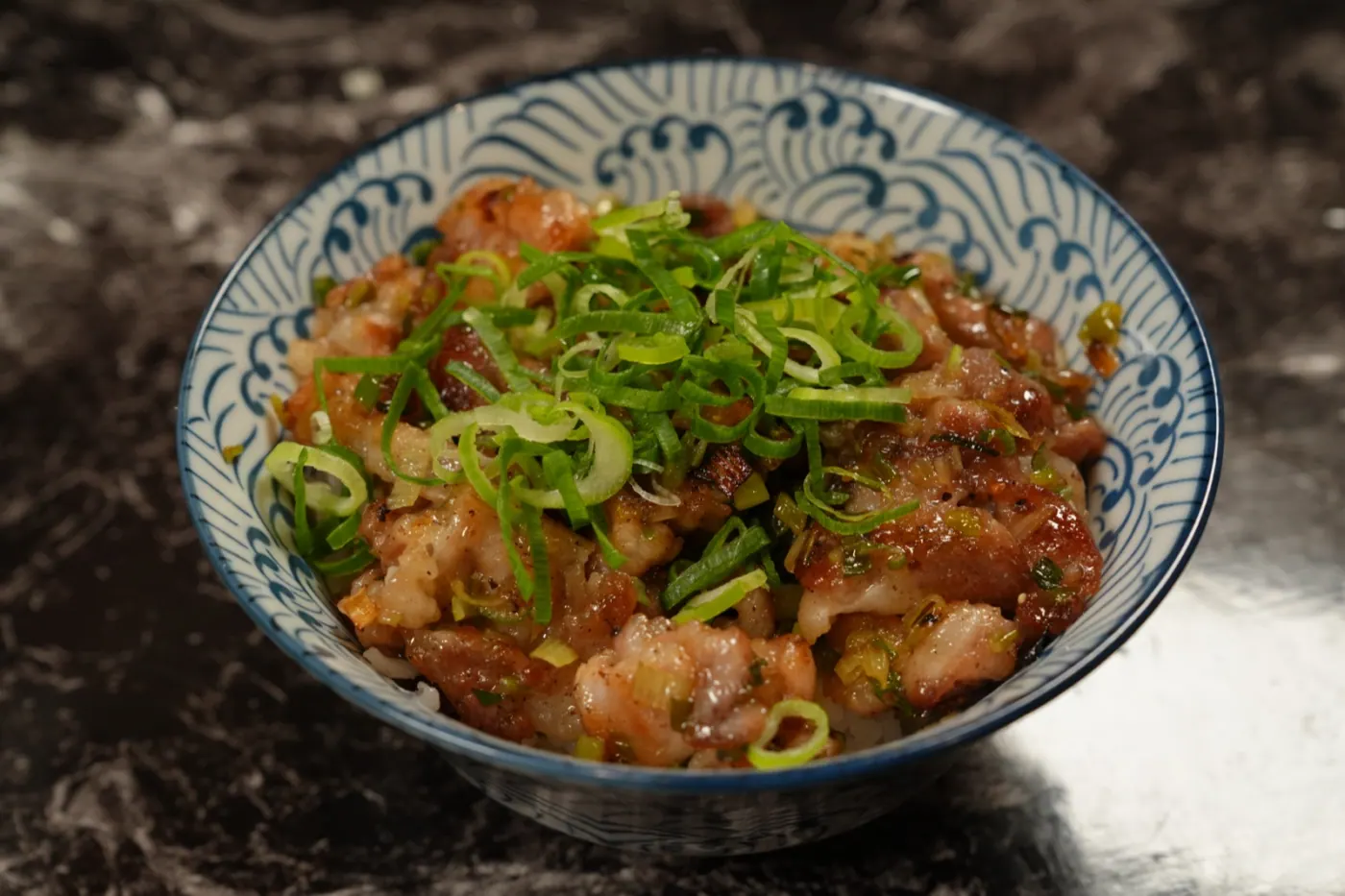
Negi butadon (negi shio butadon) is a Japanese pork bowl with a salty green onion sauce instead of the usual sweet soy glaze. It's very popular in Japan, and you'll often see it on the menu at beef bowl restaurants. This recipe makes one hearty bowl in about 15 minutes, and the secret to its texture is a light coating of potato starch on the pork.
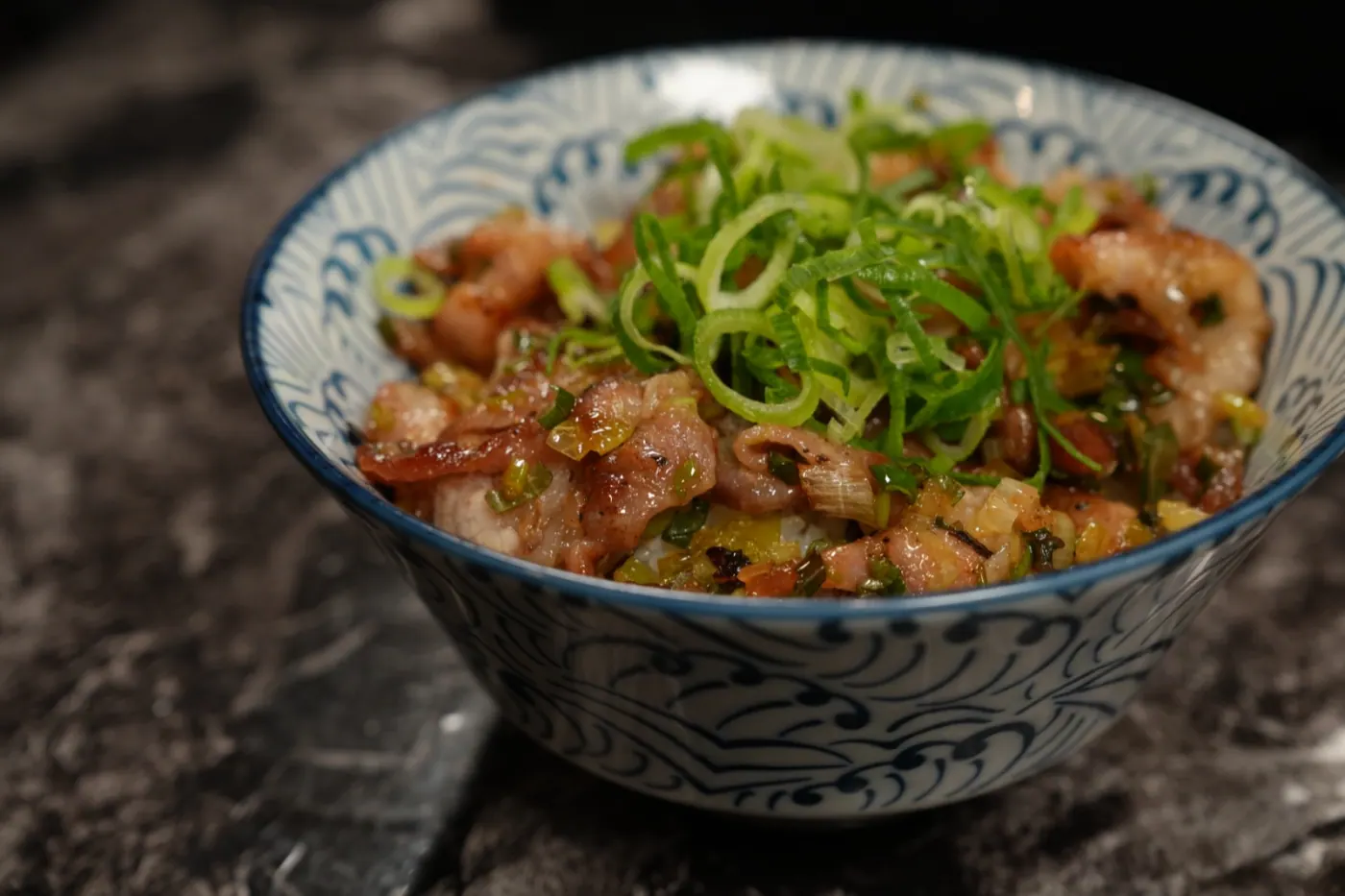
The pork turns crispy on the outside and stays juicy inside, the sauce thickens just enough to cling to the rice, and a little lemon juice at the end balances the richness of the pork fat.
Why You'll Love This Recipe
- Crispy and juicy pork - Potato starch gives the pork a crisp crust and keeps it moist inside
- A different kind of pork bowl - Salt, garlic and green onion instead of a sweet soy sauce glaze
- Bright, not heavy - A splash of lemon juice balances the richness of the pork belly
- Quick and simple - One frying pan and about 15 minutes
Key Points of This Recipe
- Use pork belly: the sweetness of the fat is what makes this bowl so good
- Coat the pork evenly with potato starch before cooking
- Cook the garlic slowly over low heat so it doesn't burn
- Mince the green onion finely so it clings to the pork
- Turn off the heat before adding the lemon juice
Required Equipment
- Cutting board and knife
- Tray or large plate (for coating the pork)
- Frying pan
- Tongs or chopsticks
- Small bowls for the prepped garlic and green onion
Negi Butadon Ingredients (Serves 1)
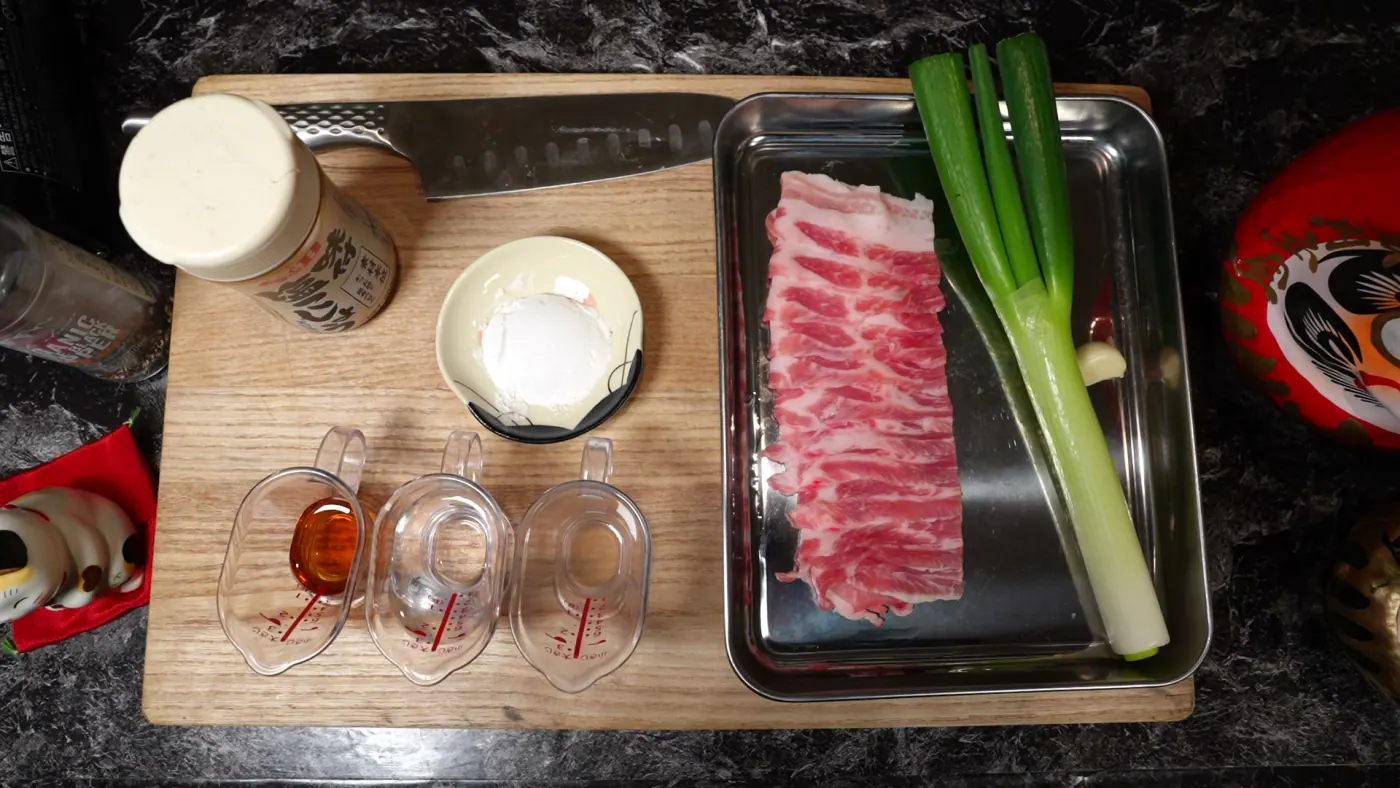
14 ingredients · 1 serving
Thinly sliced pork belly, salt and pepper, potato starch, garlic, tokyo negi, sesame oil, cooking sake, salt, sugar, black pepper, lemon juice, cooked rice, thinly sliced green onion, pickled red ginger.
From scratch: how to cook Japanese rice
Full amounts in the recipe cardIngredient Substitutions
- Cooking sake: Use dry white wine, or Japanese drinking sake of around 15% alcohol
- Without alcohol: Use the same amount of water (3 tablespoons) instead of the sake, and add 5g of grated fresh ginger to help with the pork smell
- Tokyo negi: Either the green or the white part works. See our green onion guide for the types of negi
Video Tutorial
The video shows how to mince the green onion quickly, how the potato starch coating looks, and how thick the sauce should be before you turn off the heat.

How to Make Negi Butadon
Prepare the Ingredients
Chop the garlic
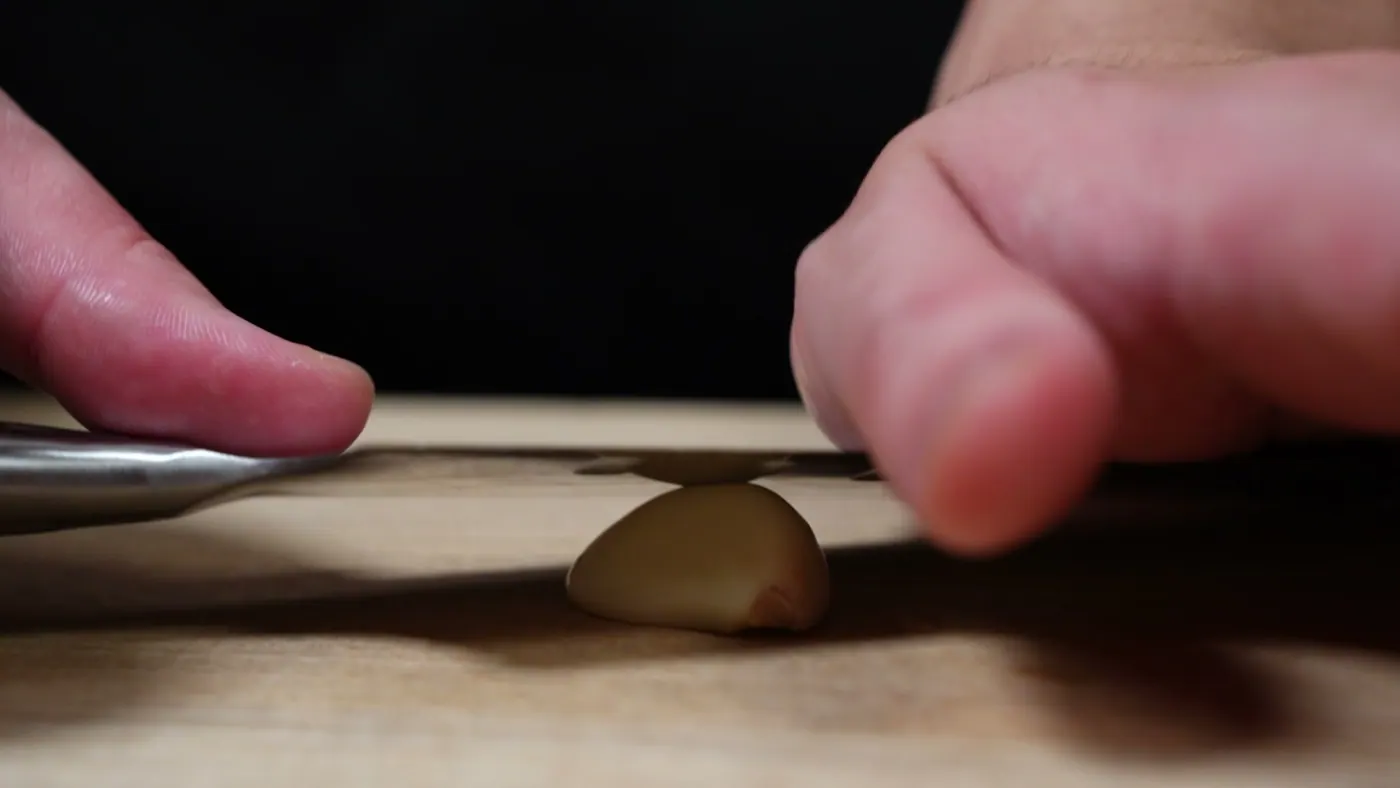
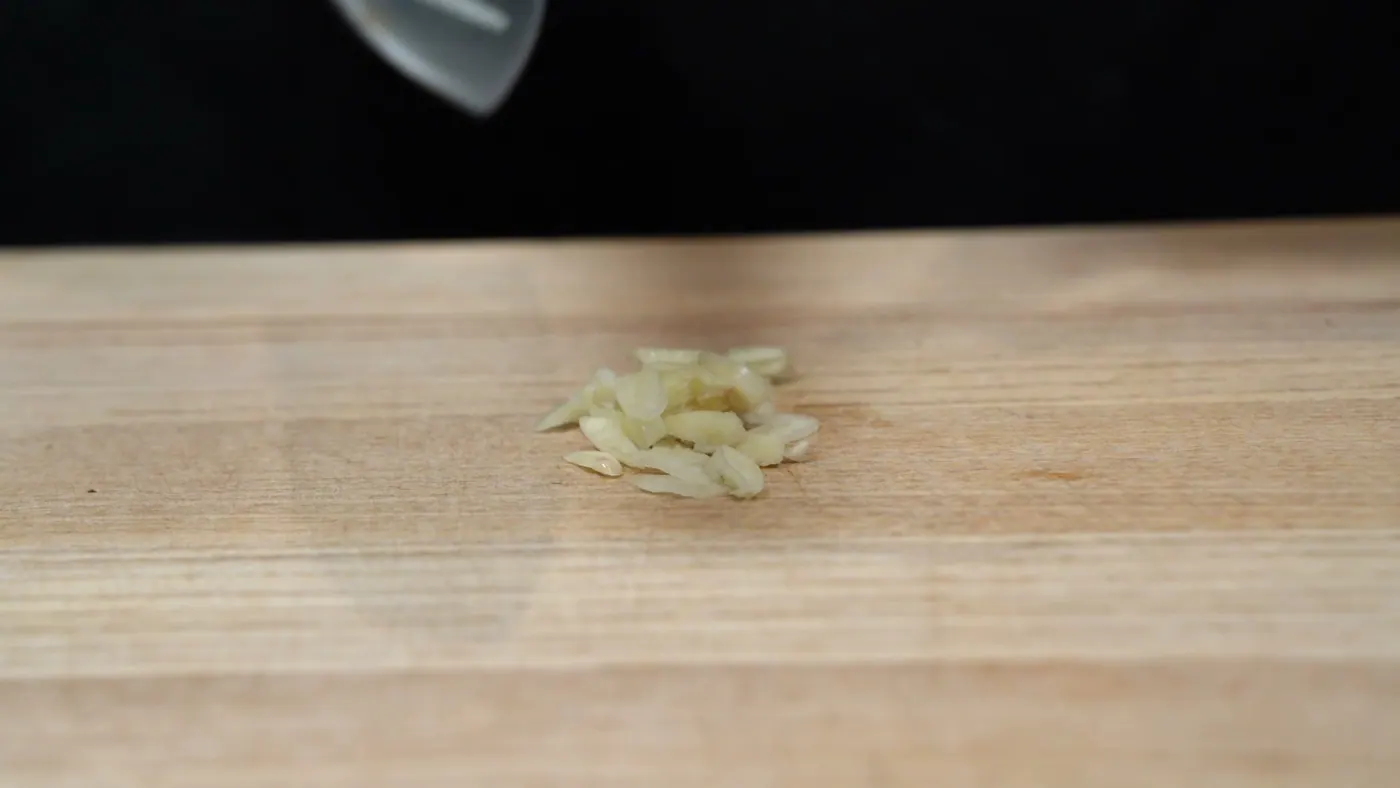
Roughly chop 1 clove of garlic. The garlic gives the bowl a bold aroma that makes you hungry. Crush the clove first with the flat side of your knife and peel it. Once it's crushed, it's much easier to chop coarsely.
Choose the part of the negi
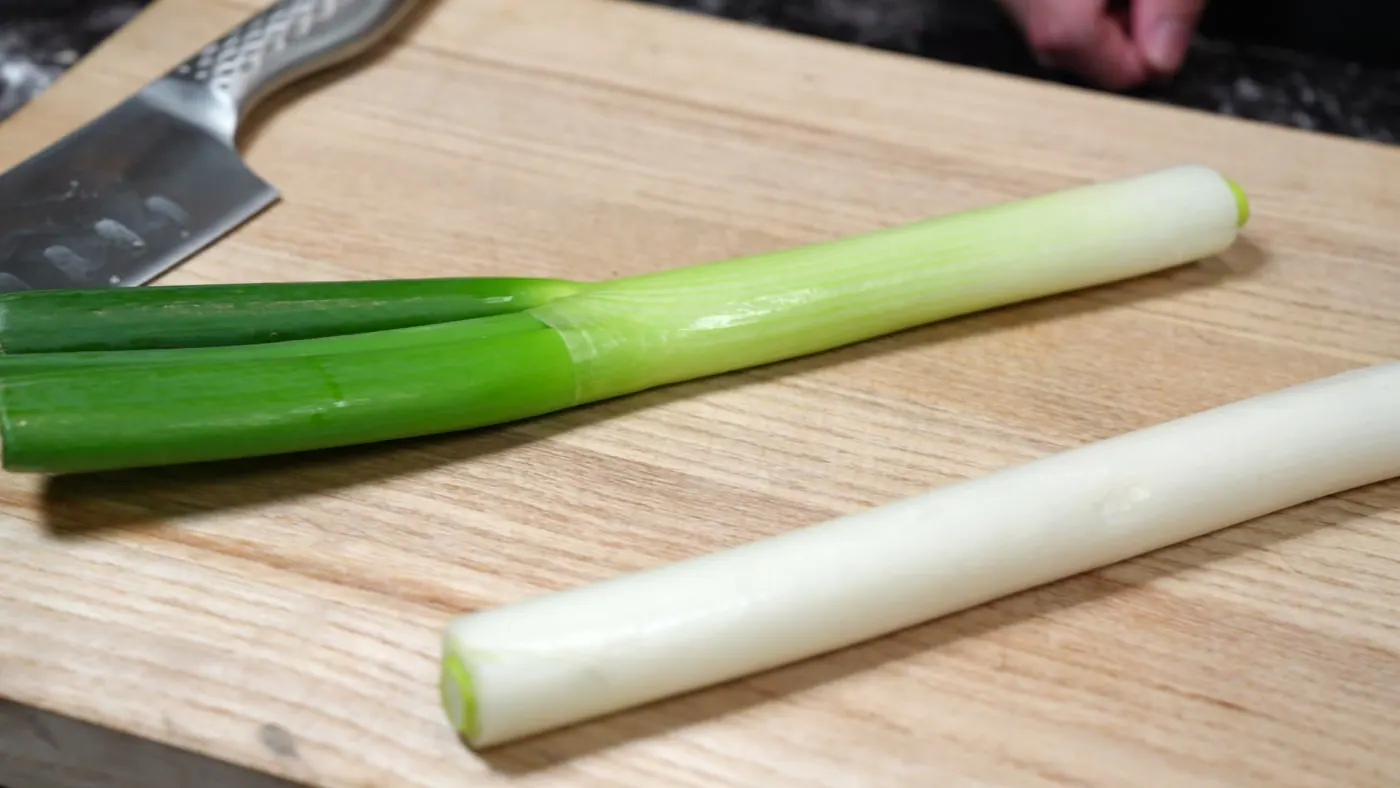
You'll use half a Tokyo negi (Japanese long green onion). You can use either the green part or the white part. The green part adds bright color and a stronger aroma.
Mince the negi
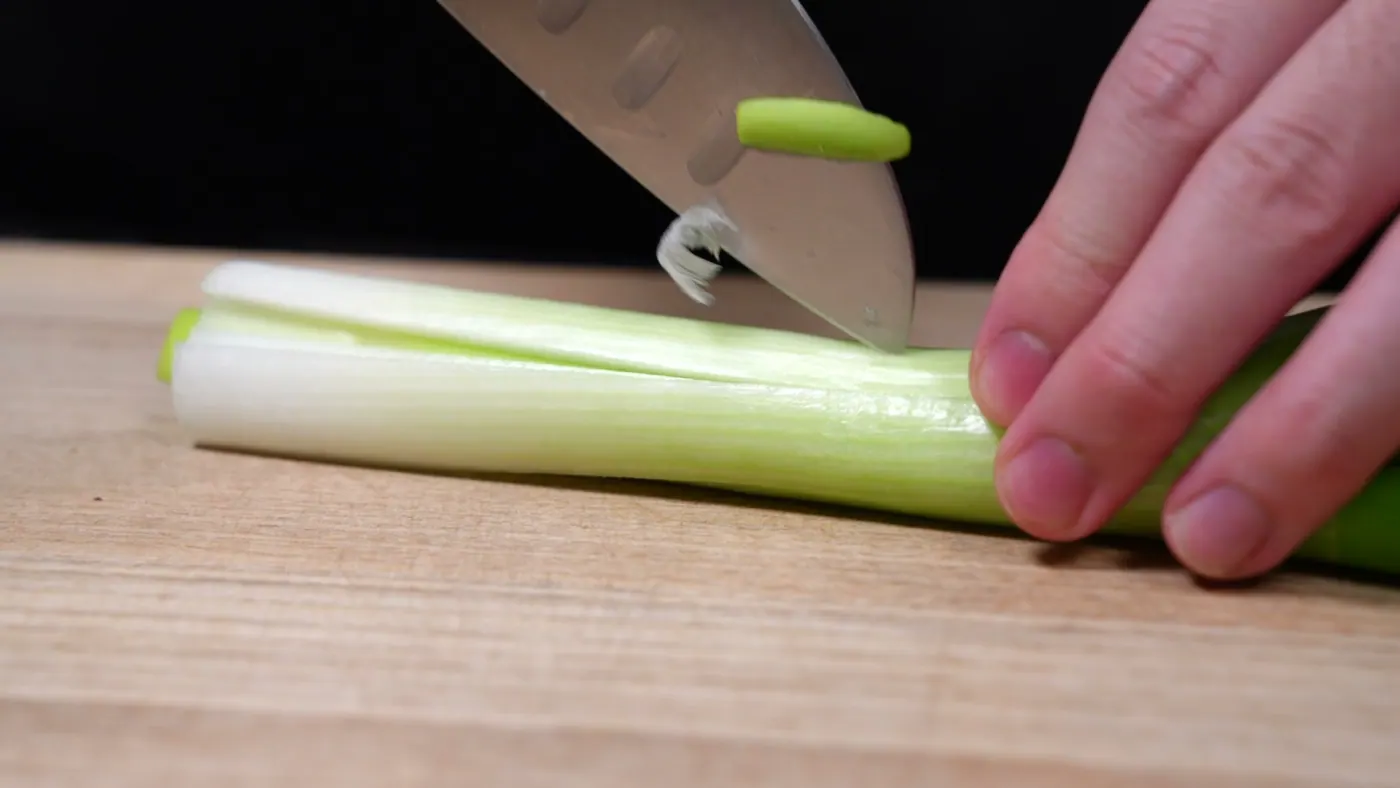
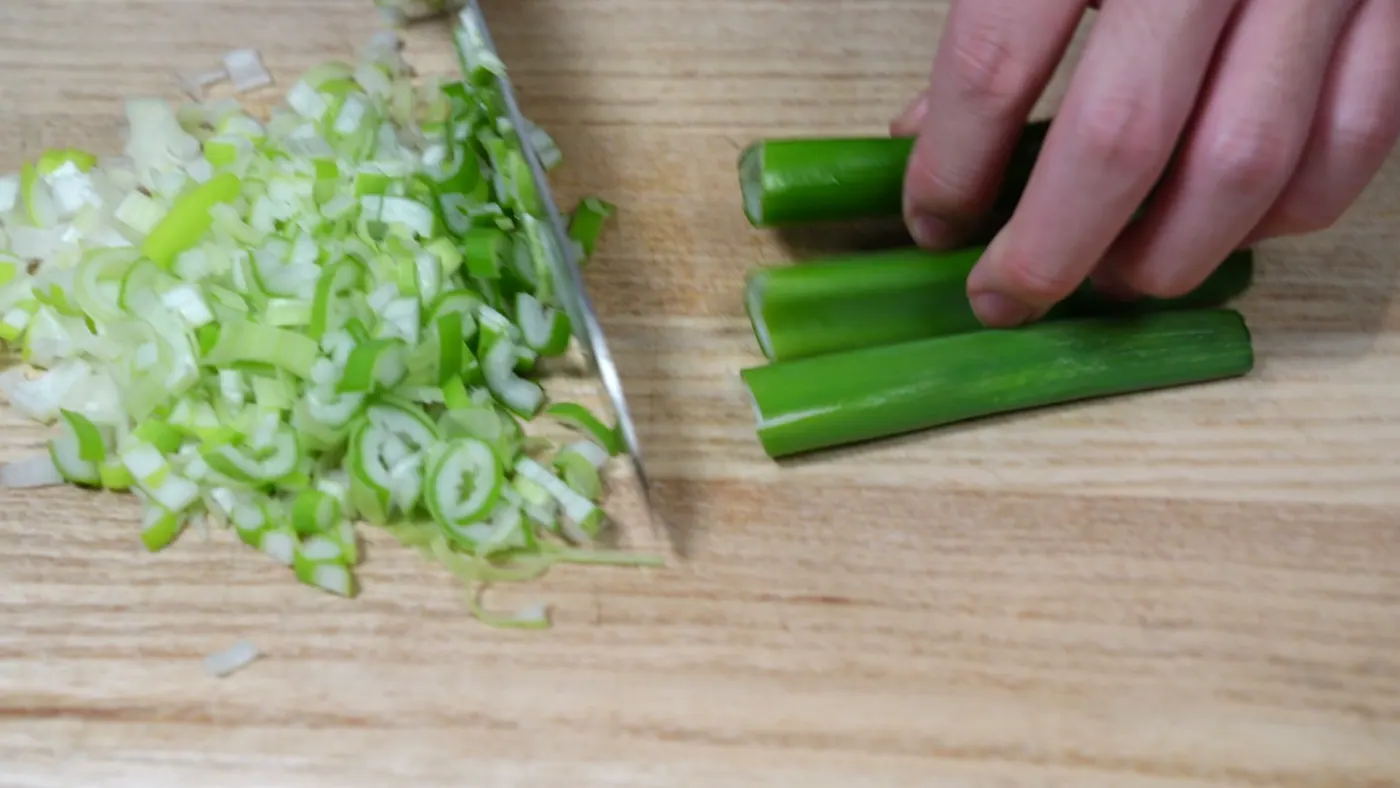
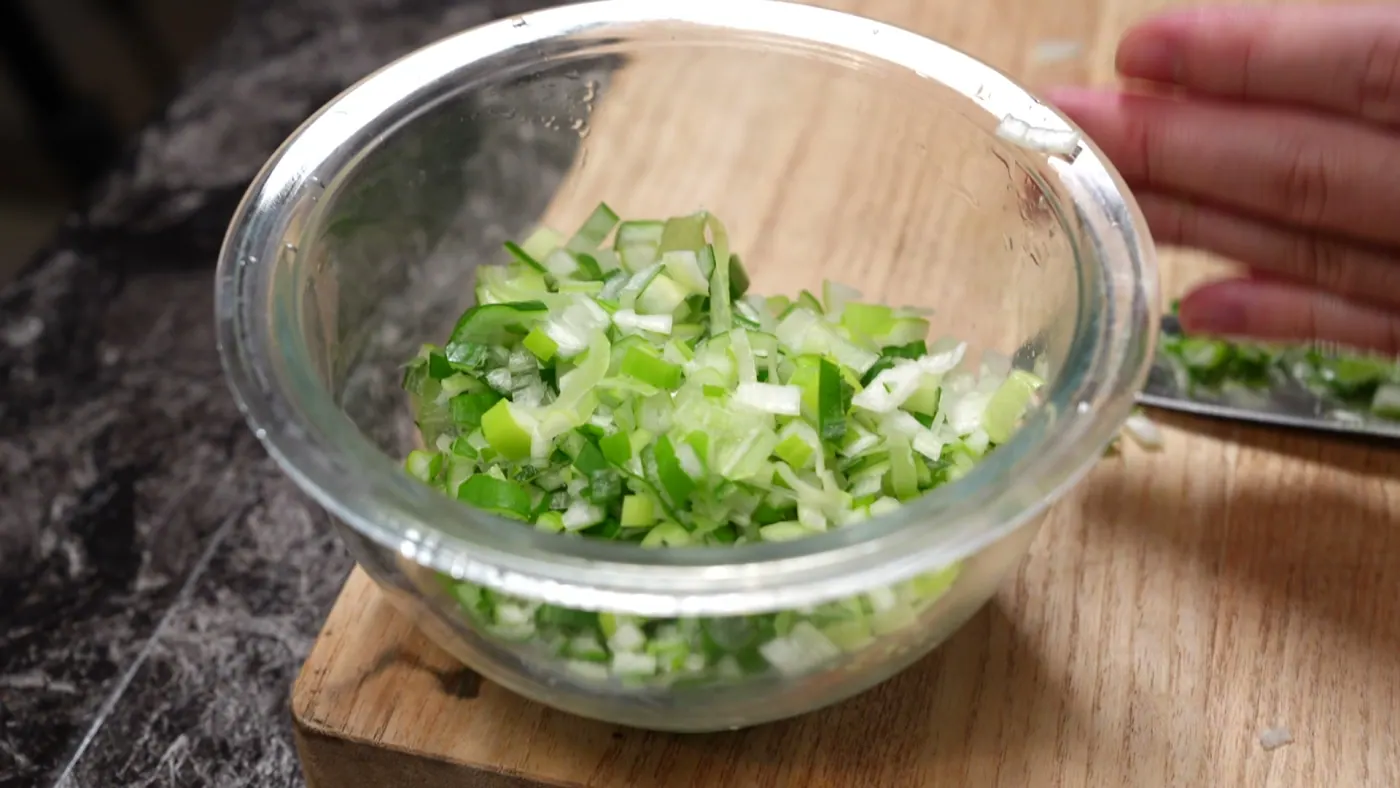
First make several lengthwise cuts in the negi, then slice across it. This makes mincing much easier. Chop it a little finer so it mixes well with the sauce and the pork, then set it aside in a bowl.
Cut the pork
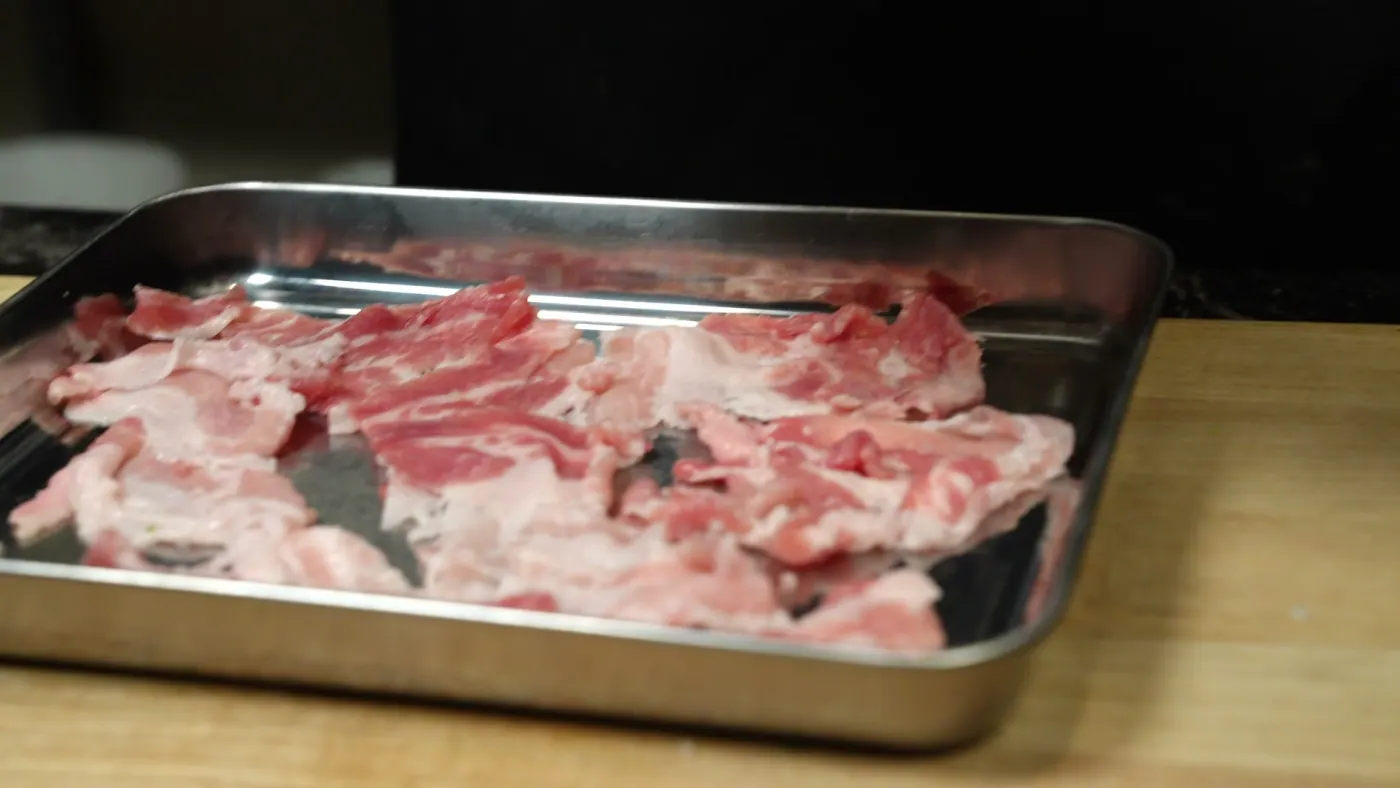
Cut 120g of thinly sliced pork belly into bite-sized pieces. The natural sweetness of the fat is what makes this bowl so delicious, so use pork belly.
Season the pork
Spread the pork out on a tray and season it lightly with salt and pepper.
Coat the pork with potato starch
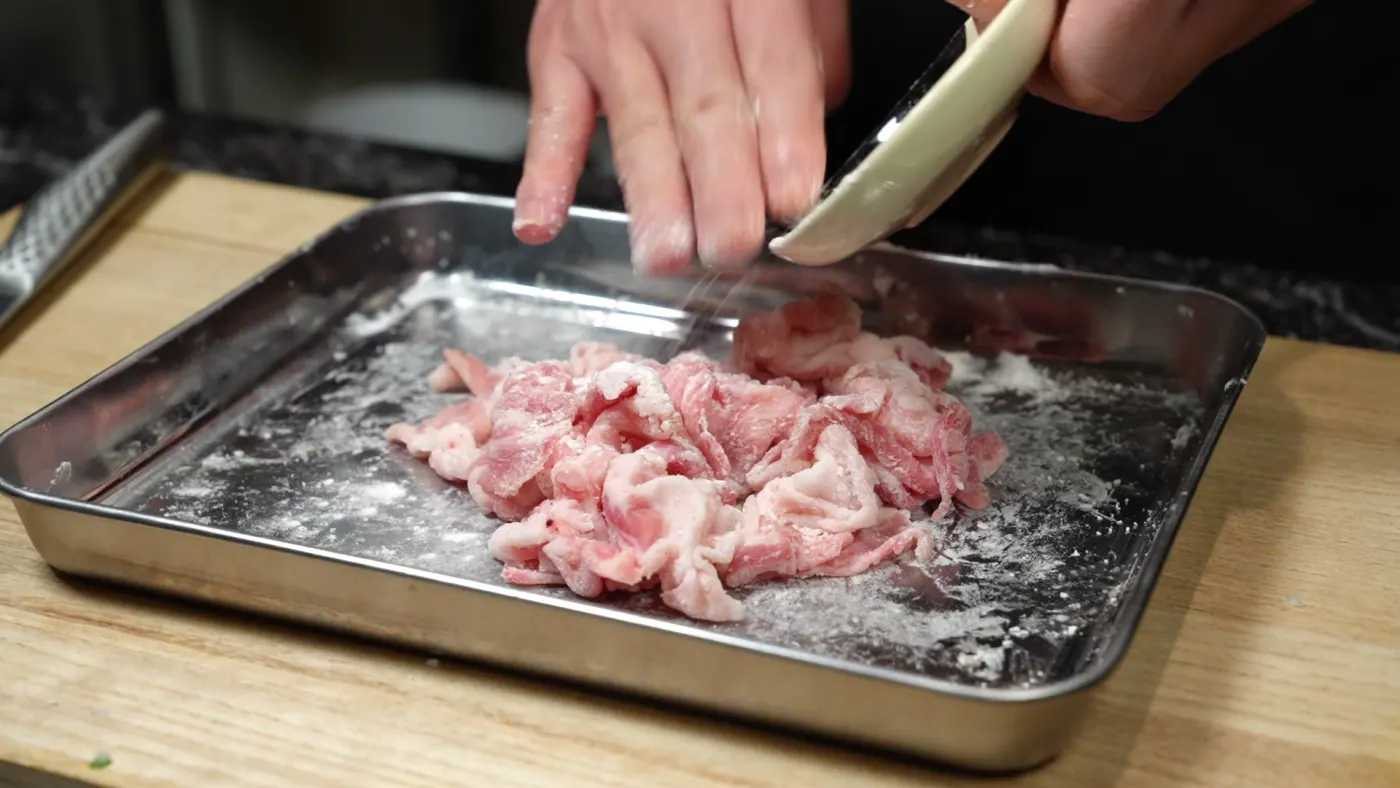
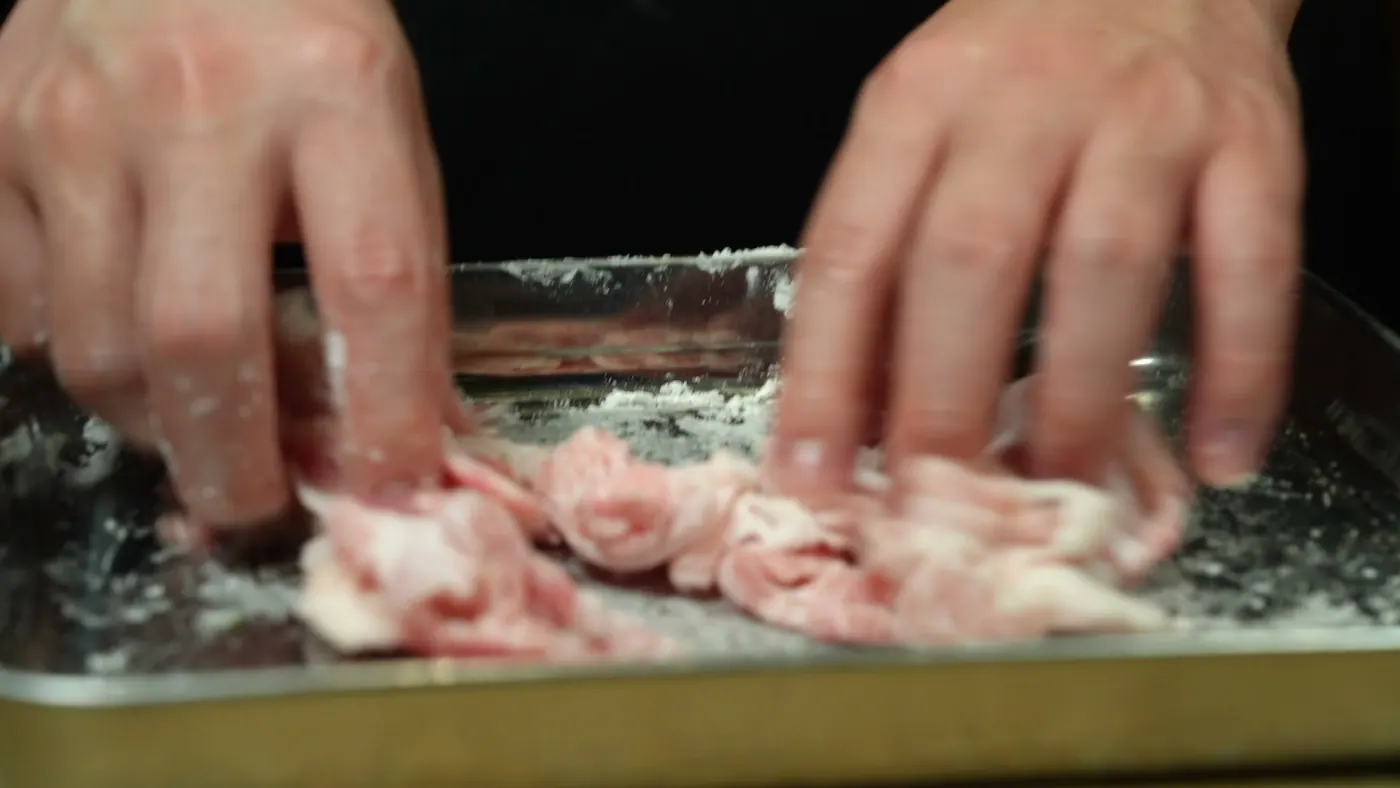
Sprinkle 1 tablespoon of potato starch over the pork and rub it in until no dry powder is left. The coating makes the surface crispy while keeping the meat juicy inside. It also thickens the sauce, so it clings to the pork and the rice.
Cook the Pork and Sauce
Cook the garlic in sesame oil
Add 2 teaspoons of sesame oil to a frying pan, add the chopped garlic and cook over low heat. Cook it slowly so the aroma goes into the oil without the garlic burning. Sesame oil and garlic together smell wonderful.
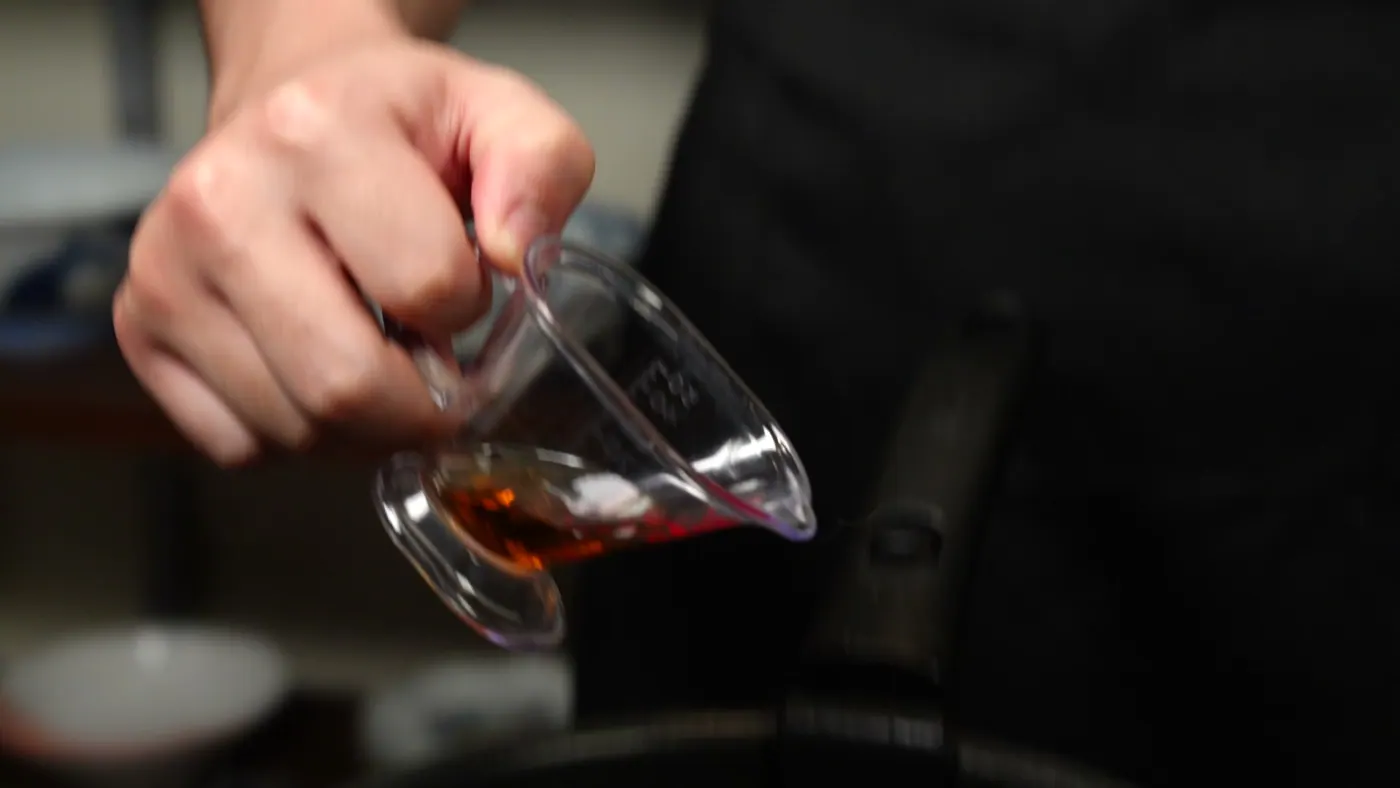
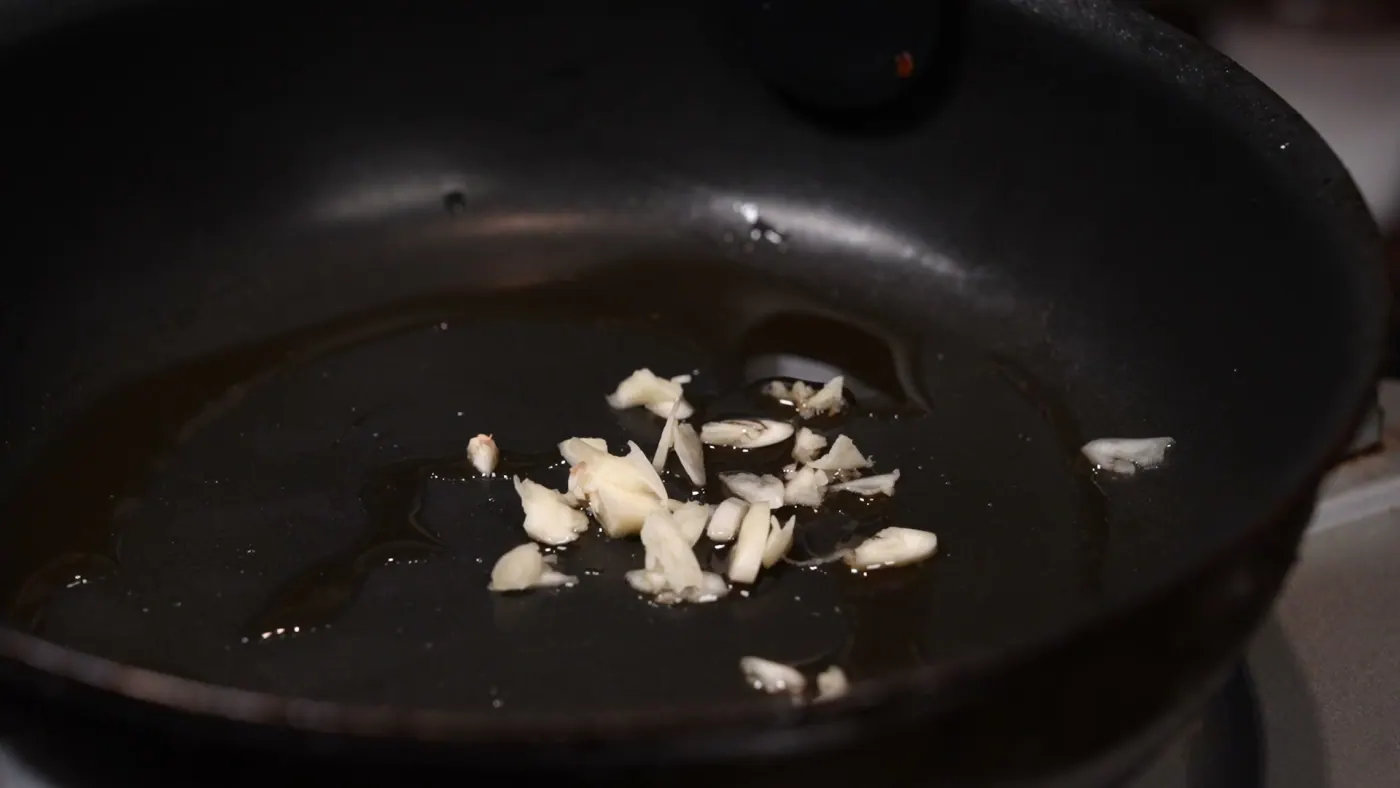
Wait until the garlic turns lightly golden
Keep cooking until the garlic is fragrant and just starts to turn golden.
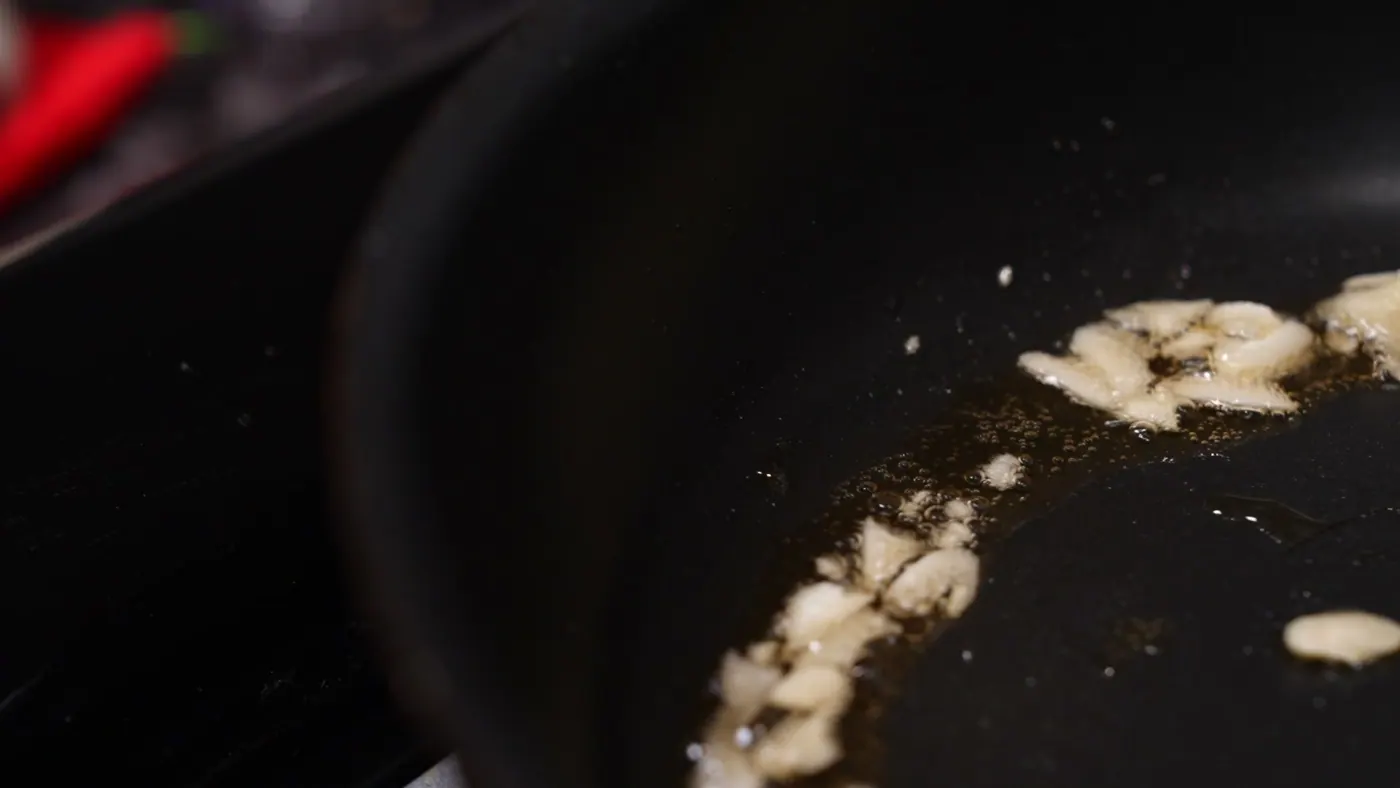
Add the pork
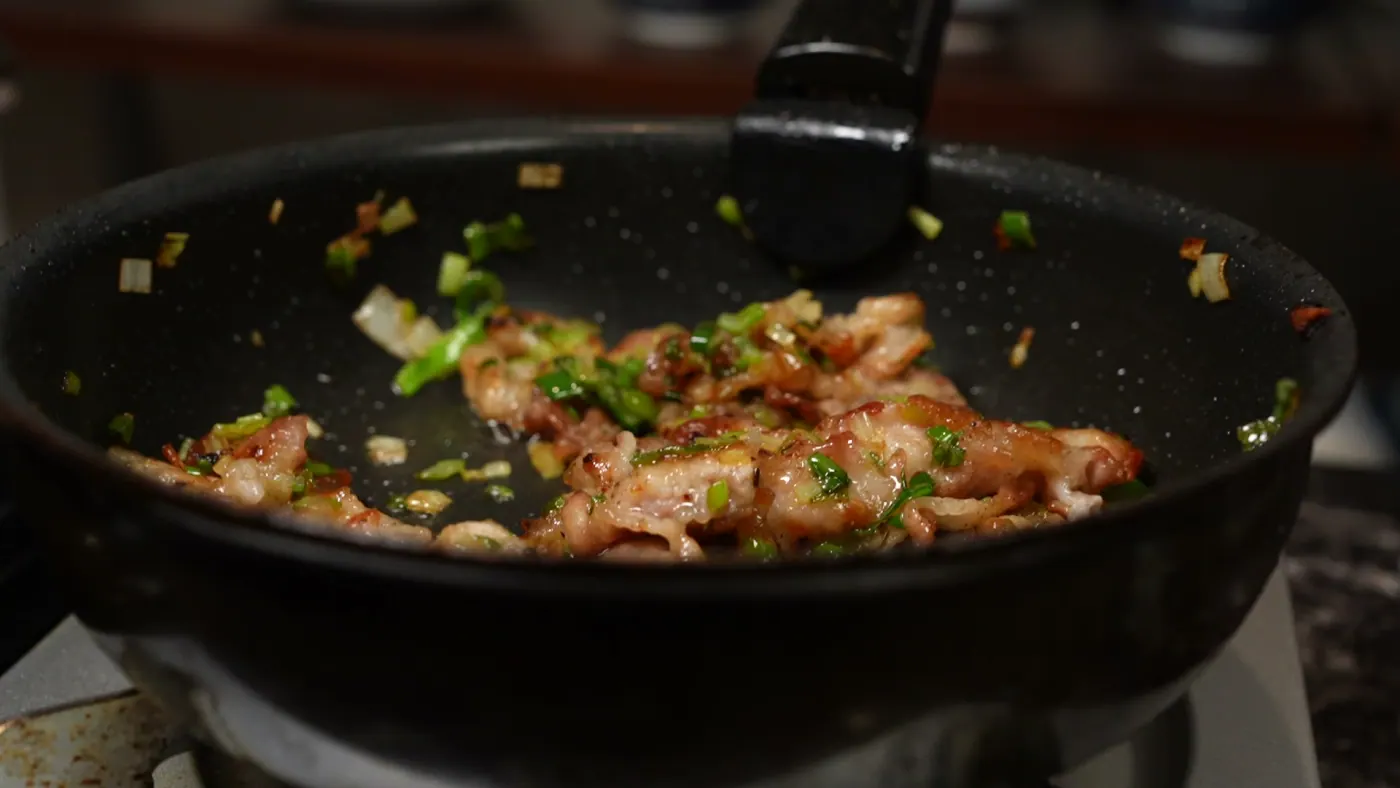
Add the pork to the pan, spreading it out. Turn the heat up to medium and cook until the pork is golden brown. Thanks to the potato starch, it gets a nice crispy crust.
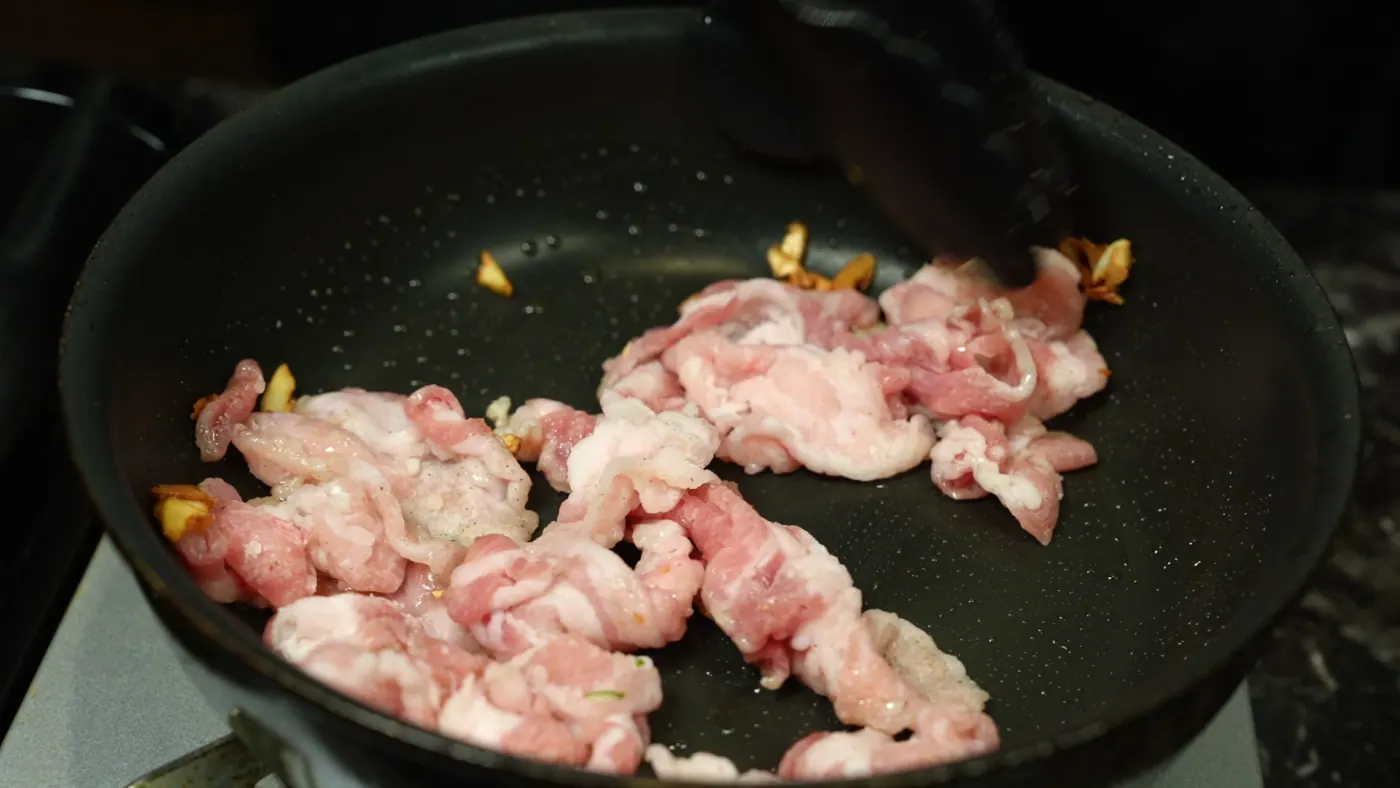
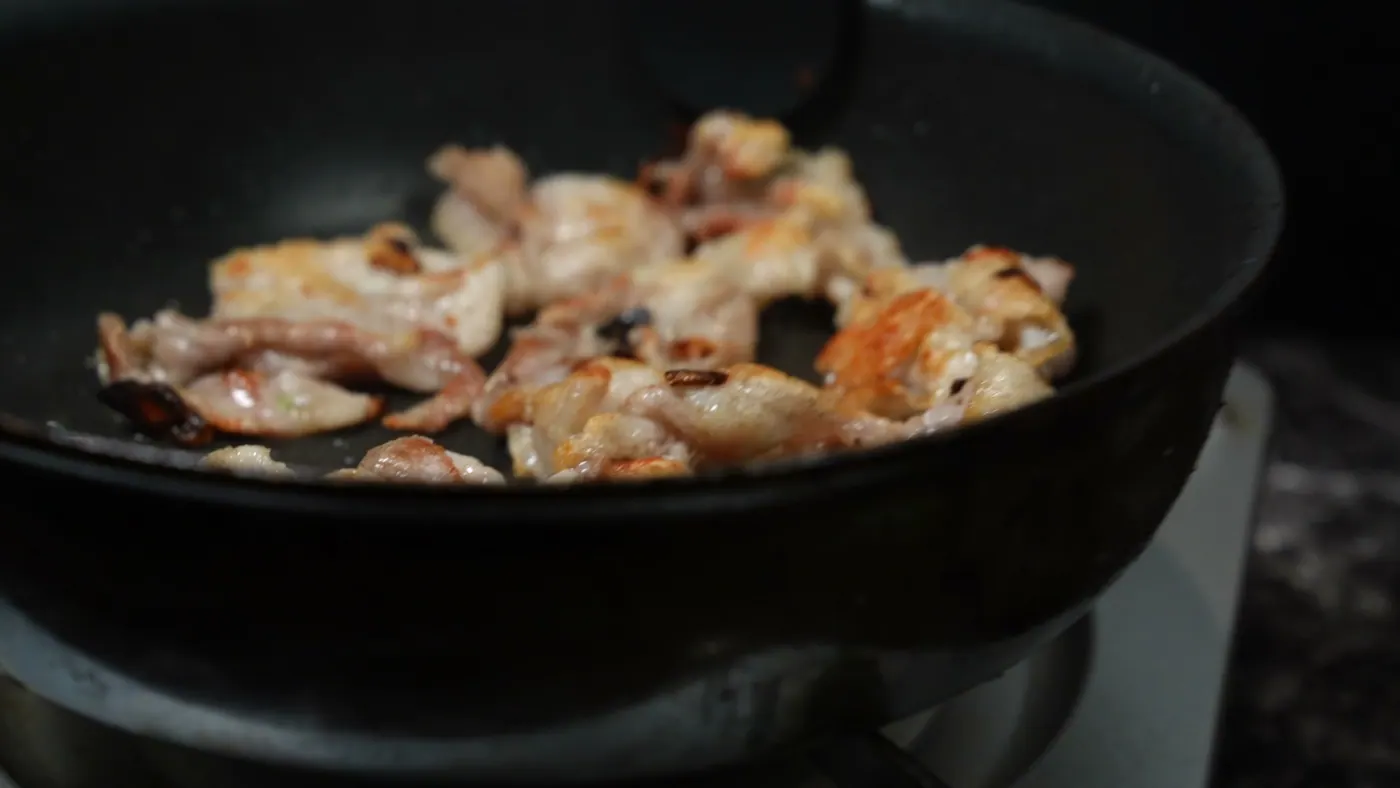
Add the negi
Once the pork is nicely browned, add the minced negi. Stir it around and cook lightly until the negi softens.
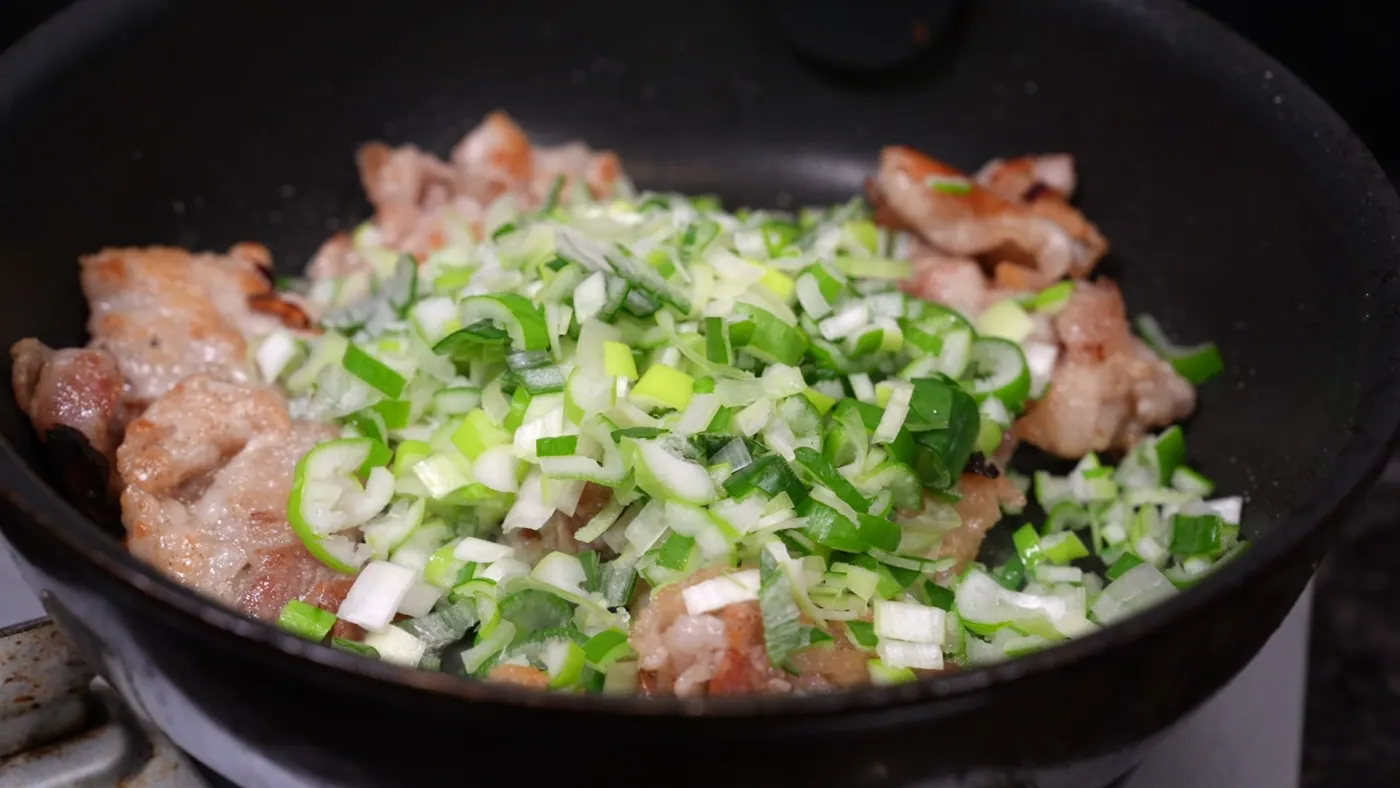
Add the sake
When the negi has softened, add 3 tablespoons of cooking sake. The sake takes away any strong pork smell and adds umami.
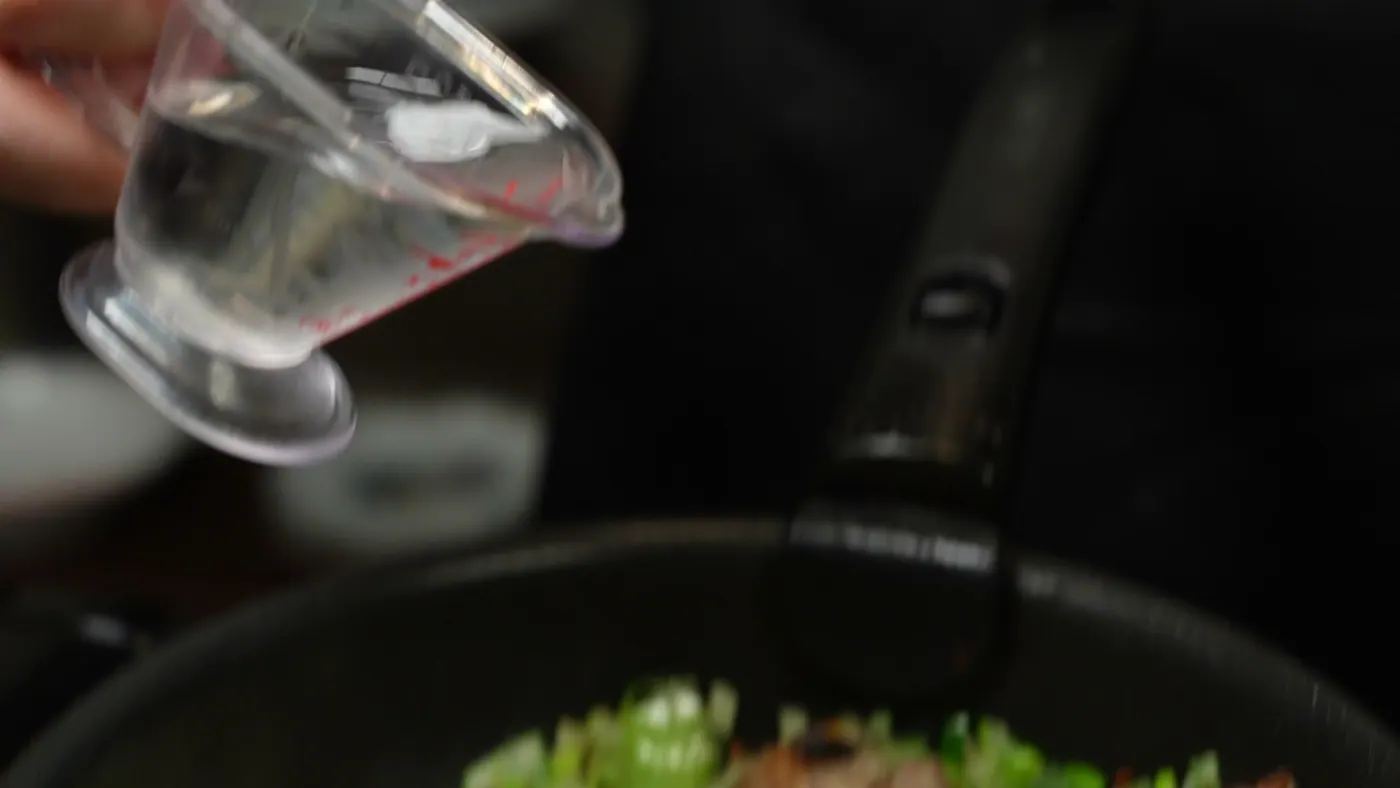
Season the sauce
Add 1/3 teaspoon of salt, 1/2 teaspoon of sugar and black pepper to taste. A little sweetness from the sugar makes the pork go even better with rice.
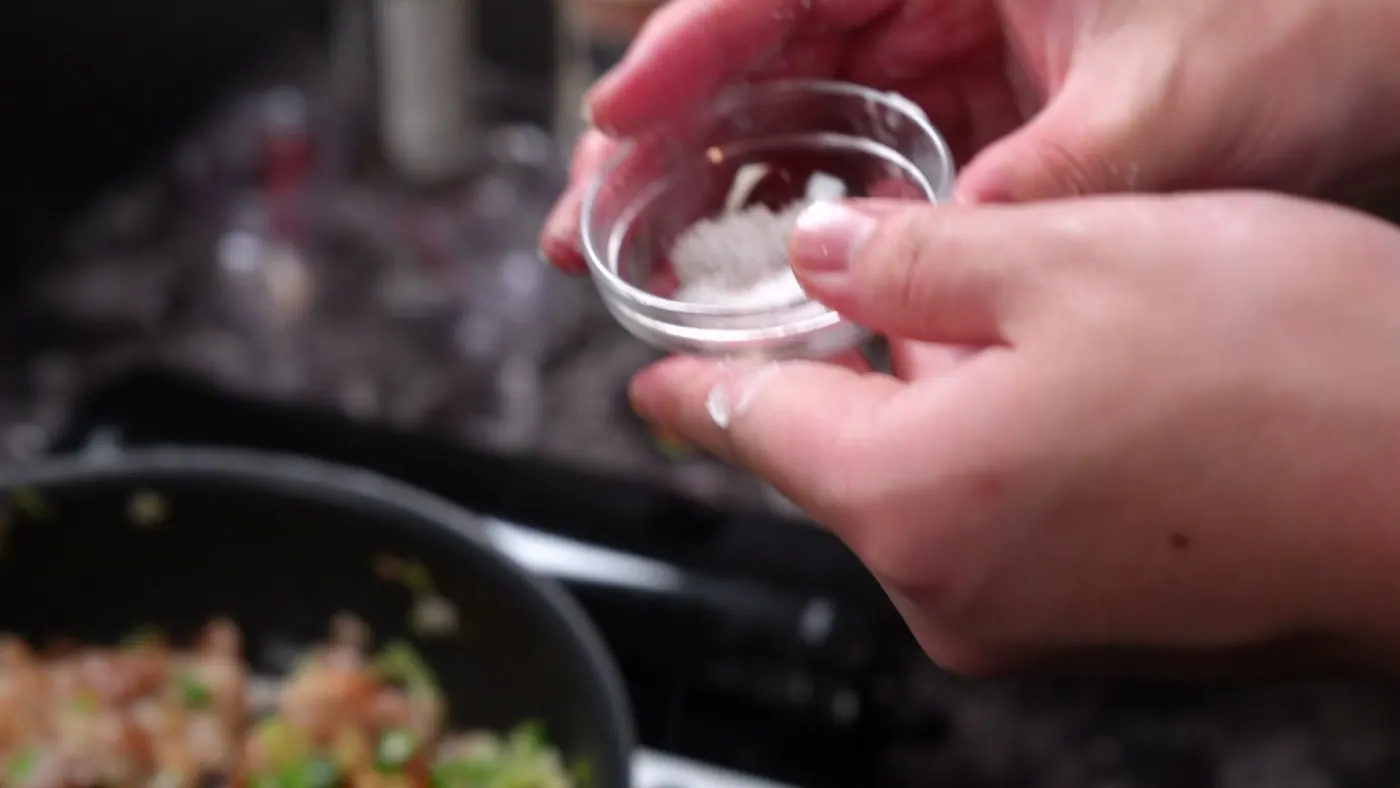
Simmer until the sauce thickens
Stir everything together so the seasoning is even, and let it simmer until the sauce thickens. Once it has thickened, turn off the heat.
Finish with lemon juice
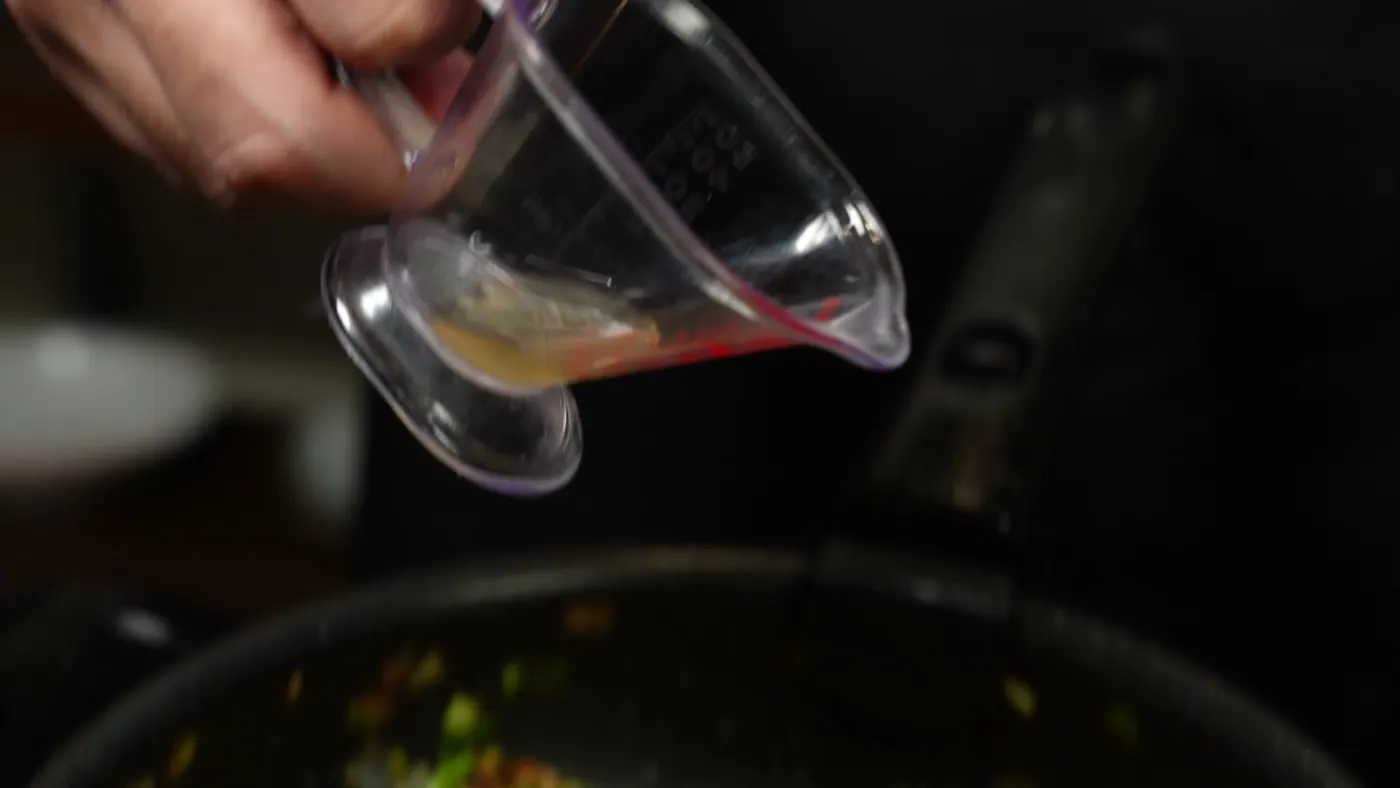
With the heat off, add 1/2 teaspoon of lemon juice and mix everything together. A little acidity tightens the flavor and cuts the greasiness, so the bowl is easier to eat.
Assemble the Bowl
Add the rice
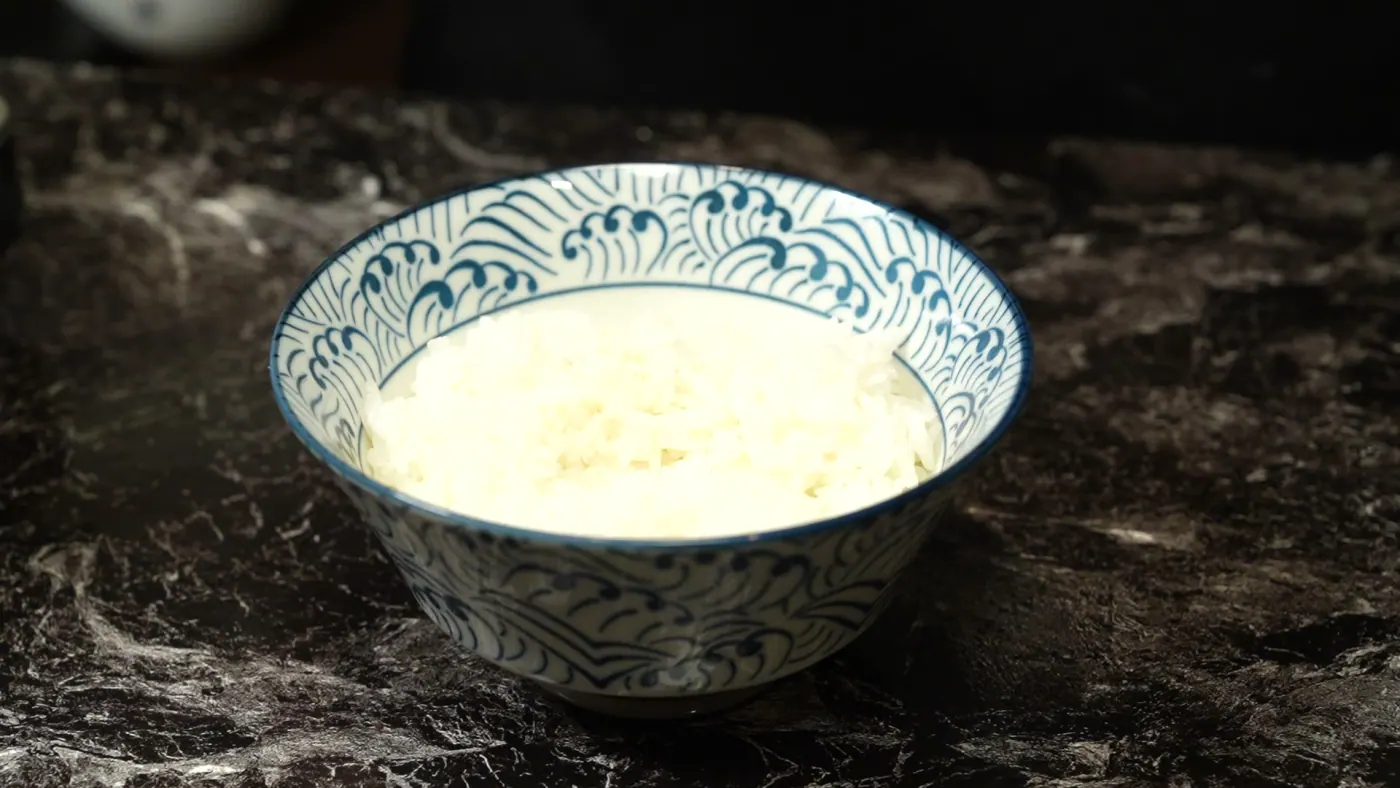
Put 200g of cooked Japanese rice into a bowl.
Top with the pork and sauce
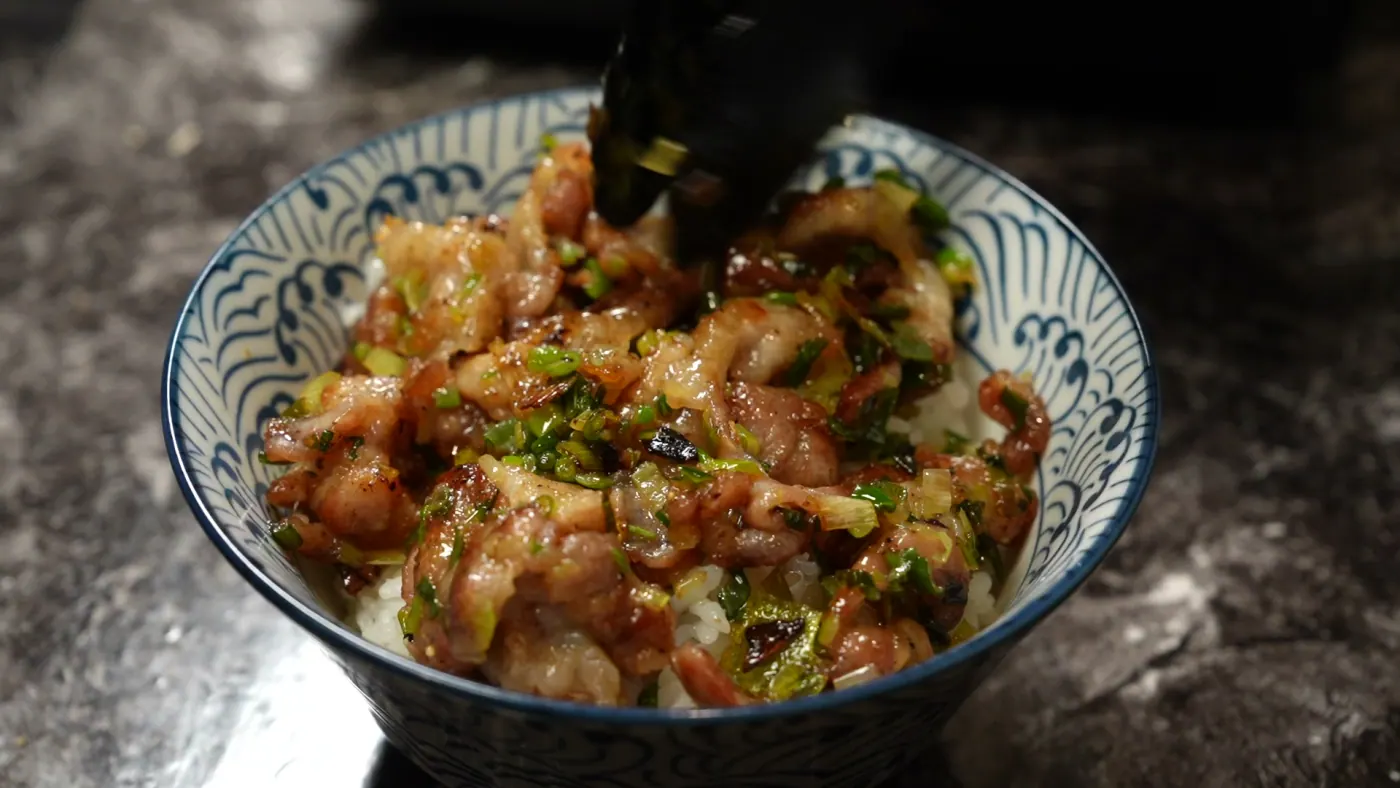
Pile the pork and plenty of the sauce on top of the rice.
Add the toppings
Top with thinly sliced green onion. If you like, add some pickled red ginger (optional) and a little more black pepper.
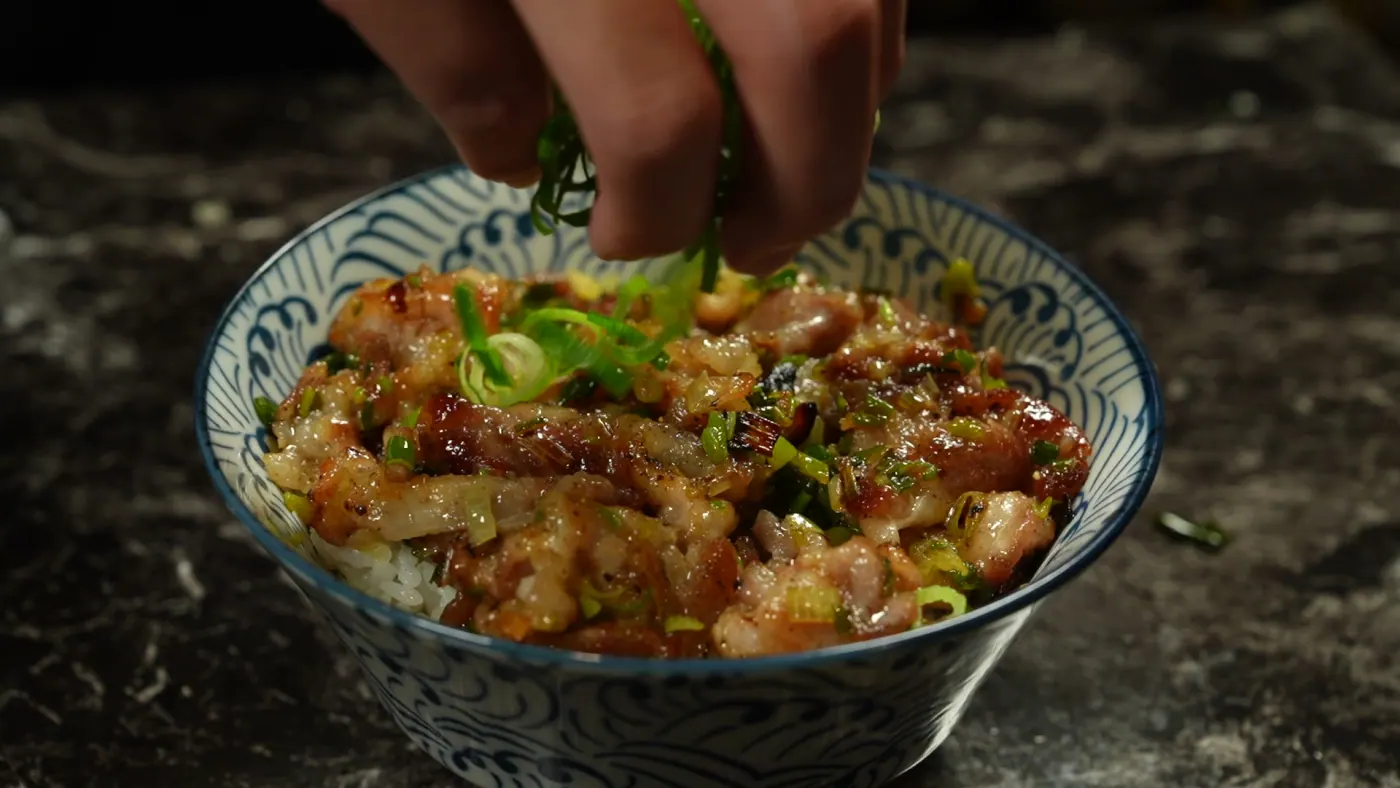
Dig in
The aroma of sesame oil and garlic is irresistible. Scoop up the pork and rice together.
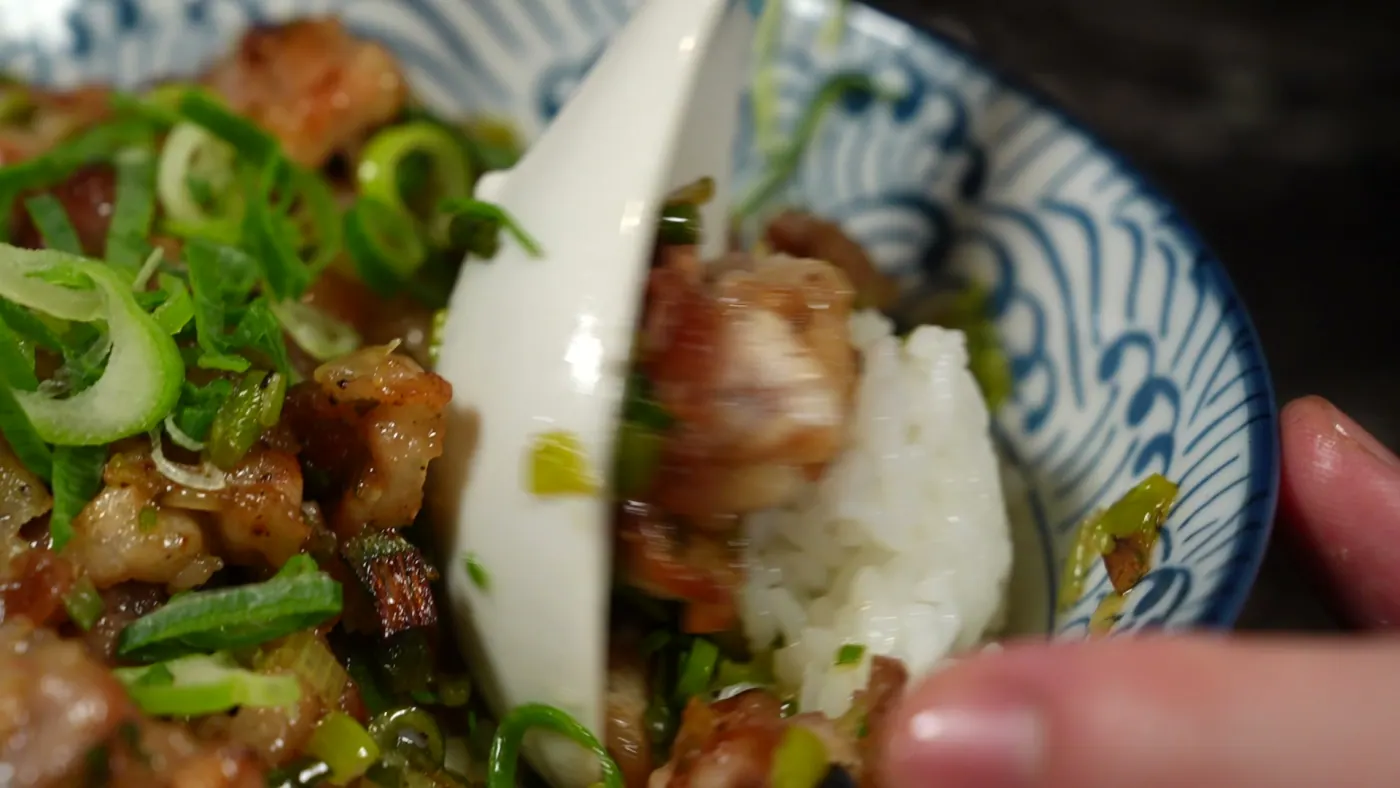
Tips and Key Points
Use pork belly
The sweetness of the fat is the heart of this bowl. Leaner cuts won't give the same rich flavor.
Don't skip the potato starch
It gives the pork a crispy crust, keeps the meat from drying out and thickens the sauce so it coats the rice.
Low heat for the garlic
Cook the garlic slowly over low heat so it flavors the oil without burning. Turn the heat up to medium only after the pork goes in.
Lemon at the end
Add the lemon juice after you turn off the heat. Just 1/2 teaspoon brightens the flavor and balances the pork fat.
Troubleshooting
Frequently Asked Questions
What is negi butadon?
A Japanese pork bowl (butadon) topped with pork in a salty green onion sauce, called negi shio. It's a popular menu item at Japanese beef bowl restaurants.
How is it different from regular butadon?
Regular butadon glazes the pork in a sweet soy sauce and mirin sauce. Negi butadon uses no soy sauce: the pork is seasoned with salt, garlic, green onion, sake and a little lemon juice.
Why coat the pork in potato starch?
The starch makes the outside crispy while the inside stays juicy. It also thickens the sauce so it clings to the pork and the rice.
Can I use the white part of the negi?
Yes. Either the green or the white part works. The green part adds more color and a stronger aroma.
Can I make it without alcohol?
Use 3 tablespoons of water instead of the cooking sake so the sauce still has liquid to simmer, and add 5g of grated fresh ginger to help with the pork smell.
What should I do if my garlic burned?
Keep the heat low while the garlic cooks in the sesame oil, and add the pork as soon as the garlic starts to turn golden.
What should I do if the pork tastes greasy?
Don't skip the lemon juice at the end. A little acidity balances the richness of the pork belly.
Summary
Negi butadon is a pork bowl with a salty green onion sauce: coat bite-sized pork belly in potato starch, brown it in garlic-scented sesame oil, then add minced negi, sake, salt, sugar and black pepper and simmer until the sauce thickens. Finish with a splash of lemon juice off the heat and pile it all on rice. One bowl is ready in about 15 minutes.
For more pork bowls, try the sweet and savory butadon or the extra-garlicky garlic butadon.
丼Rice Bowlネギ塩豚丼
Negi Butadon (Japanese Pork Bowl with Green Onion Salt Sauce)
Negi butadon (negi shio butadon) is a Japanese pork bowl with a salty green onion sauce instead of the usual sweet soy glaze.
No ratings yet
Rate this recipe
- Prep
- 5 min
- Cook
- 10 min
- Total
- 15 min
- Servings
- 1
- Difficulty
- Beginner
Ingredients
Pork
Negi Shio Sauce
To Serve
Ingredient amounts are multiplied; cooking times and pan size may need adjusting.
Instructions
Amounts mentioned in the steps are for the original recipe (1x) — use the scaled amounts above.
Prepare the Ingredients
Chop the garlic
Roughly chop 1 clove of garlic. The garlic gives the bowl a bold aroma that makes you hungry. Crush the clove first with the flat side of your knife and peel it. Once it's crushed, it's much easier to chop coarsely.
Choose the part of the negi
You'll use half a Tokyo negi (Japanese long green onion). You can use either the green part or the white part. The green part adds bright color and a stronger aroma.
Mince the negi
First make several lengthwise cuts in the negi, then slice across it. This makes mincing much easier. Chop it a little finer so it mixes well with the sauce and the pork, then set it aside in a bowl.
Cut the pork
Cut 120g of thinly sliced pork belly into bite-sized pieces. The natural sweetness of the fat is what makes this bowl so delicious, so use pork belly.
Season the pork
Spread the pork out on a tray and season it lightly with salt and pepper.
Coat the pork with potato starch
Sprinkle 1 tablespoon of potato starch over the pork and rub it in until no dry powder is left. The coating makes the surface crispy while keeping the meat juicy inside. It also thickens the sauce, so it clings to the pork and the rice.
Cook the Pork and Sauce
Cook the garlic in sesame oil
Add 2 teaspoons of sesame oil to a frying pan, add the chopped garlic and cook over low heat. Cook it slowly so the aroma goes into the oil without the garlic burning. Sesame oil and garlic together smell wonderful.
Wait until the garlic turns lightly golden
Keep cooking until the garlic is fragrant and just starts to turn golden.
Add the pork
Add the pork to the pan, spreading it out. Turn the heat up to medium and cook until the pork is golden brown. Thanks to the potato starch, it gets a nice crispy crust.
Add the negi
Once the pork is nicely browned, add the minced negi. Stir it around and cook lightly until the negi softens.
Add the sake
When the negi has softened, add 3 tablespoons of cooking sake. The sake takes away any strong pork smell and adds umami.
Season the sauce
Add 1/3 teaspoon of salt, 1/2 teaspoon of sugar and black pepper to taste. A little sweetness from the sugar makes the pork go even better with rice.
Simmer until the sauce thickens
Stir everything together so the seasoning is even, and let it simmer until the sauce thickens. Once it has thickened, turn off the heat.
Finish with lemon juice
With the heat off, add 1/2 teaspoon of lemon juice and mix everything together. A little acidity tightens the flavor and cuts the greasiness, so the bowl is easier to eat.
Assemble the Bowl
Add the rice
Put 200g of cooked Japanese rice into a bowl.
Top with the pork and sauce
Pile the pork and plenty of the sauce on top of the rice.
Add the toppings
Top with thinly sliced green onion. If you like, add some pickled red ginger (optional) and a little more black pepper.
Dig in
The aroma of sesame oil and garlic is irresistible. Scoop up the pork and rice together.
Video
Watch the video · 4:14Open on YouTube
Jump to a part of the video (6 chapters)
Video: https://youtu.be/n1BIv5Y1gnc
Notes
Substitutions
- Cooking sake: Use dry white wine, or Japanese drinking sake of around 15% alcohol
- Without alcohol: Use the same amount of water (3 tablespoons) instead of the sake, and add 5g of grated fresh ginger to help with the pork smell
- Tokyo negi: Either the green or the white part works. See our green onion guide for the types of negi
Nutrition estimated, per serving
- Calories
- 890 kcal
- Carbohydrates
- 91 g
- Protein
- 23.4 g
- Fat
- 51.2 g
- Saturated fat
- 18.9 g
- Fiber
- 4.6 g
- Sugar
- 5.2 g
- Sodium
- 1,234 mg
Estimated by us from the Standard Tables of Food Composition in Japan (MEXT, 2020). Optional ingredients and garnishes are not counted; soup and sauce are counted as fully eaten. Actual values depend on your brands and portion sizes. How we calculate this
Course: Rice Bowl · Cuisine: Japanese · Keyword: Negi Butadon
Recipe from Japanese Cooking Ichie — https://japanesecookingichie.com/recipes/negi-butadon/
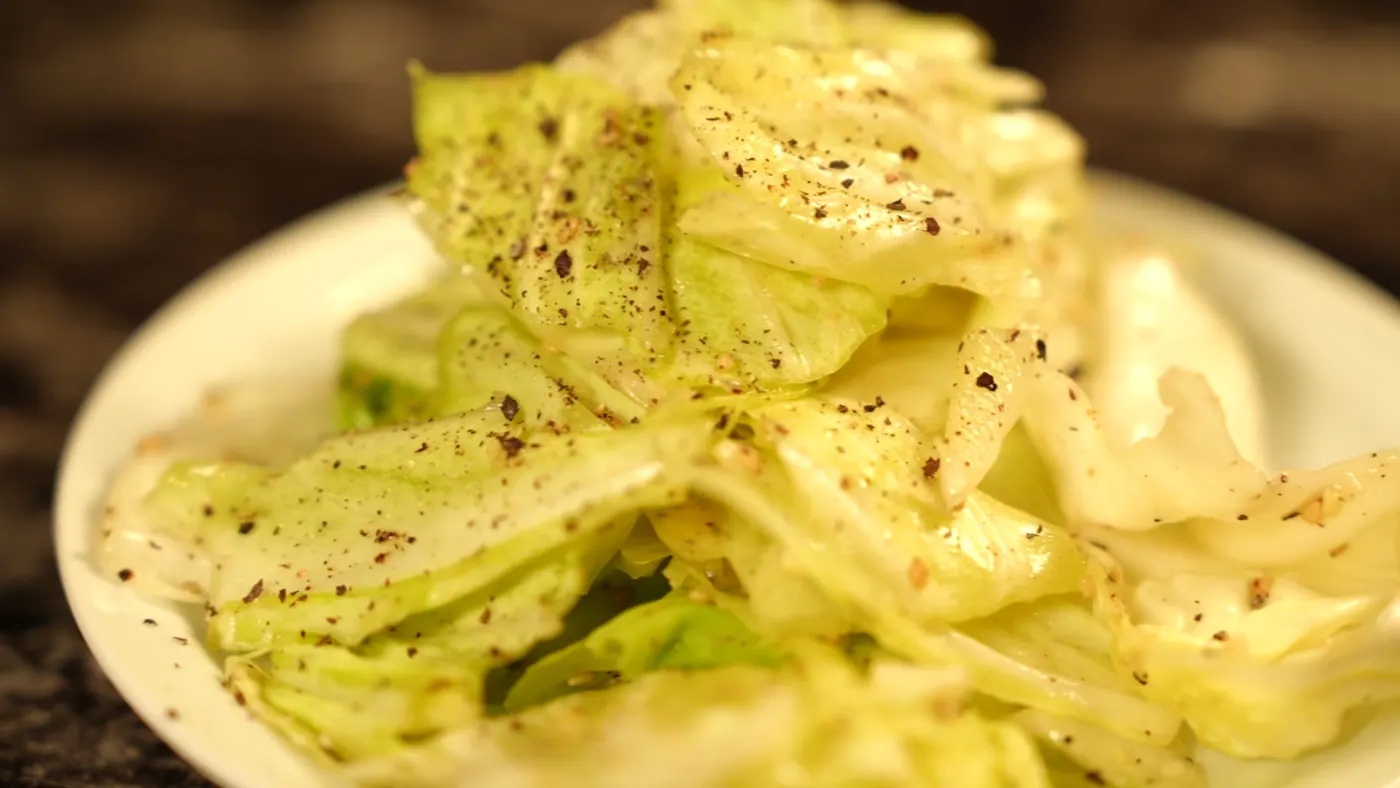
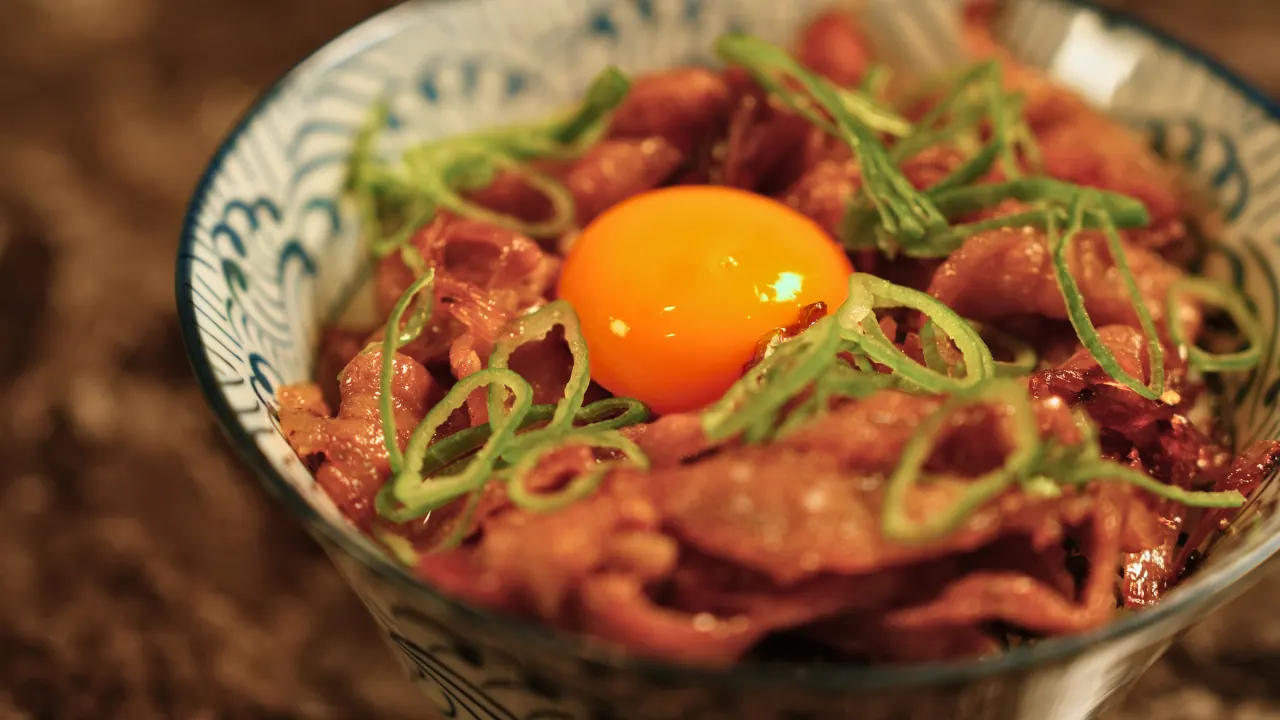
Make it a meal
Add a side dish to round out the table.


Ratings & comments
No ratings yet — be the first to rate this recipe.
Comments