What Is Mitsuba?
Mitsuba (三つ葉) means three leaves. The plant, Cryptotaenia japonica, is a perennial herb native to Japan, Korea and China, and belongs to the same family as celery, parsley and carrots. Each long, thin stem ends in a set of three soft, toothed leaflets.
In Japanese cooking it plays a role a bit like parsley in Western food: a small amount on top adds color and a fresh smell. The difference is that mitsuba is delicate. Its aroma is strongest when it has barely been heated, so it goes in at the last moment.
What Does Mitsuba Taste Like?
Mitsuba has a clean, refreshing aroma and a faint bitterness. Many people compare it to celery leaves or flat-leaf parsley, but it is lighter than either. The stems are tender and slightly crisp. Cooked for more than a few seconds, it wilts and much of the aroma fades.
How to Use Mitsuba
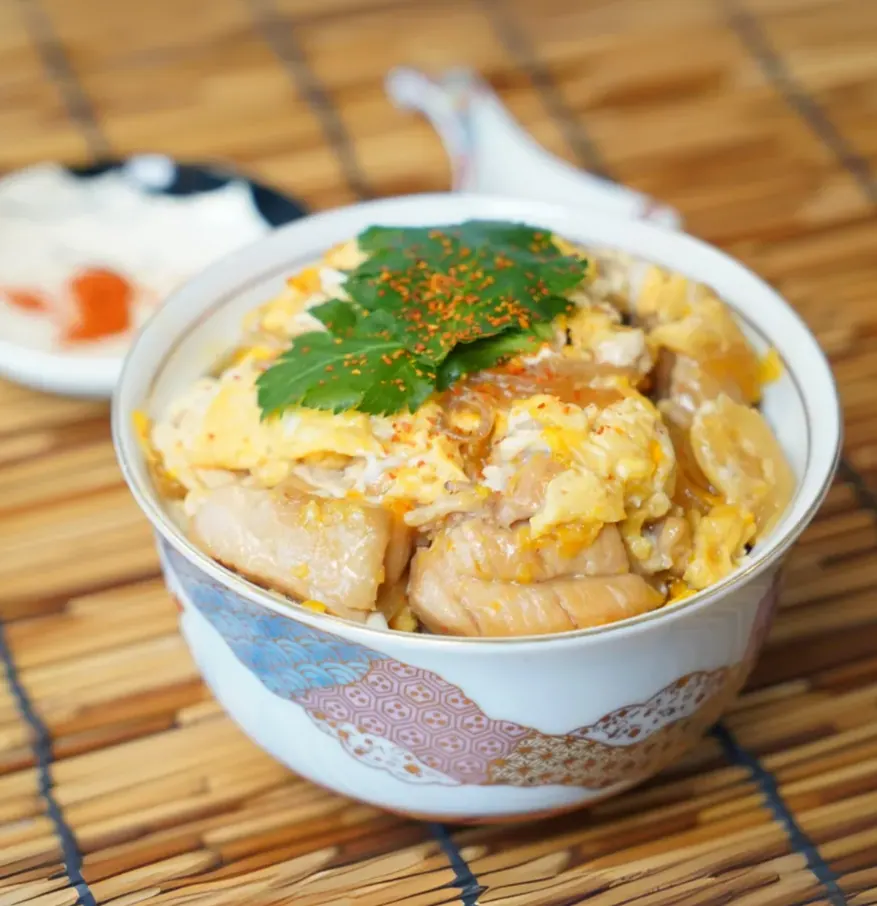
- On rice bowls. Mitsuba is the green leaf on top of our Oyakodon. Scatter it over the chicken and egg just before serving. The fresh green looks bright against the yellow egg, and the aroma lifts the sweet, savory sauce. It is also a classic topping for katsudon.
- In chawanmushi. A small sprig goes on top of this steamed savory egg custard.
- In clear soups. It is a favorite in suimono (clear dashi soup) and miso soup. Add it to the bowl, then pour the hot soup over it. For dashi basics, see our dashi recipe.
- In hot pots. Add it at the end so it just wilts.
- Raw or fried. The tender leaves can be tossed into salads, and they also make good tempura.
Where to Buy Mitsuba
Look in the produce section of Japanese and Korean grocers. The kind you are most likely to see is grown hydroponically and sold as a bunch with a small sponge at the base, which is why it is available all year. In spring, Japanese stores also sell root mitsuba with thick, pale stems and a stronger aroma.
Mitsuba is also easy to grow. It likes moist soil and partial shade, and seeds are sold by many online seed shops. Once established, it comes back year after year.
Mitsuba Substitutes
- Flat-leaf (Italian) parsley: the most common swap. It is a little stronger, so use less.
- Celery leaves: the pale inner leaves have a similar celery note.
- Green onion: a different flavor, but it gives the same fresh green finish on a rice bowl.
How to Store Mitsuba
Mitsuba wilts quickly. Cut off the roots or sponge, wrap the base of the stems in a damp paper towel, and keep it in an airtight container or bag in the refrigerator. It will last a few days this way, but the aroma is best when it is fresh, so try to use it soon after buying.
Recipes using Mitsuba
Frequently asked questions
What does mitsuba mean?
Mitsuba means three leaves in Japanese. Each stem ends in a cluster of three leaflets.
What is the green leaf on top of oyakodon?
It is usually mitsuba. It goes on just before serving, as on our oyakodon, for color and a fresh aroma.
What can I use instead of mitsuba?
Flat-leaf parsley is the most common substitute. Pale celery leaves or sliced green onion also work as a garnish.
Can you eat mitsuba raw?
Yes. The leaves and tender stems can be eaten raw in salads, or added to hot dishes at the end.